

Supreme Court considers letting Trump administration revive restrictive immigration asylum policy
Advertisement
Read this article for free:
or
Already have an account? Log in here »
To continue reading, please subscribe:

Digital Subscription
One year of digital access for only $205*
- Enjoy unlimited reading on winnipegfreepress.com
- Read the E-Edition, our digital replica newspaper
- Access News Break, our award-winning app
- Play interactive puzzles
*First annual payment billed as $205.00 + GST for one year. This annual subscription will automatically renew at $233.00 + GST every 52 weeks (10% off the regular annual price of $259.35). Offer available to new and qualified returning subscribers only. Cancel any time.
To continue reading, please subscribe:
Add Free Press access to your Brandon Sun subscription for only an additional
$1 for the first 4 weeks*
- Enjoy unlimited reading on winnipegfreepress.com
- Read the E-Edition, our digital replica newspaper
- Access News Break, our award-winning app
- Play interactive puzzles
*Your next Brandon Sun subscription payment will increase by $1.00 and you will be charged $17.95 plus GST for four weeks. After four weeks, your payment will increase to $24.95 plus GST every four weeks.
Read unlimited articles for free today:
or
Already have an account? Log in here »
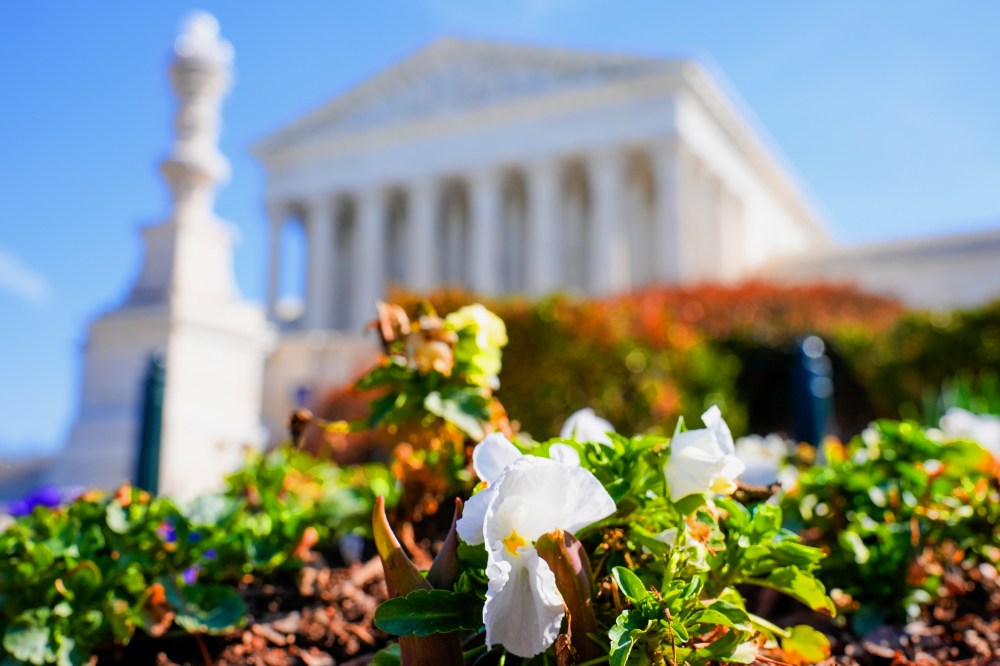
WASHINGTON (AP) — The Supreme Court grappled Tuesday with whether the Trump administration should be able to revive an immigration policy that has been used to turn back migrants seeking asylum at the U.S.-Mexico border.
Some conservative justices seemed receptive to the Justice Department’s push to overturn a lower-court ruling against the practice known as metering. Immigration authorities limited the number of people who could apply for asylum, saying it was necessary to handle an increase at the border.
Advocates say the policy created a humanitarian crisis during President Donald Trump’s first term as people who were turned away settled in makeshift camps in Mexico as they waited for a chance to seek asylum.
The policy isn’t in place now, and Trump ordered a wider suspension of the asylum system at the start of his second term.
The administration, though, argues that metering remains a “critical tool” used under administrations from both parties, and should be available if necessary in the future.
Some justices seemed open to that argument, though others raised questions about whether the policy would allow people who entered the country illegally to apply for asylum while new arrivals seeking legal entry at the border could be blocked.
“Why would Congress privilege someone who illegally enters the United States?” Justice Brett Kavanaugh asked.
An attorney for the Trump administration maintained that people turned away one day could potentially come back later. “It’s saying our port is at capacity today, try again some other day,” said Vivek Suri, assistant to the solicitor general.
The Associated Press found thousands of immigrants on waiting lists when the policy was in place in 2019.
Under the Immigration and Nationality Act, migrants who arrive in the U.S. must be able to apply for asylum if they fear persecution in their home countries. The legal dispute at the heart of the metering case centers around the meaning of the words “arrive in.”
The Justice Department argues it means anyone who is in the United States already, so it doesn’t apply to people authorities stop on the Mexico side of the border. But immigration attorneys say the law has long meant anyone who comes to a port of entry must be able to apply, and it should stay that way.
“This life saving protection and more importantly, access to it is enshrined in our laws and has been for decades now,” said Rebecca Cassler, an attorney for the American Immigration Council, after arguments.
Chief Justice John Roberts peppered an attorney for the migrants with questions on exactly where someone must be to claim asylum. But Justice Ketanji Brown Jackson suggested that those questions are hard to answer when the policy isn’t being used.
“It just seems to me that we have a lot of hypotheticals regarding how this policy may have worked in the past, how it’s possibly going to work in the future, but we don’t have a policy in effect right now that we can actually rule on,” she said.
Metering was first used during President Barack Obama’s administration when large numbers of Haitians appeared at the main crossing to San Diego from Tijuana, Mexico. It was expanded to all border crossings from Mexico during Trump’s first term in the White House.

The practice ended in 2020 when the coronavirus pandemic led the government to greater restrictions on asylum-seekers. President Joe Biden formally rescinded the use of metering in 2021.
Also that year, U.S. District Judge Cynthia Bashant, an Obama nominee, ruled that metering violated the migrants’ constitutional rights and a federal law requiring officials to screen anyone who arrives at the border seeking asylum.
A divided 9th U.S. Circuit Court of Appeals affirmed her ruling, but nearly half of the judges on the full San Francisco-based appeals court voted to rehear the case, a strong signal that may have caught the justices’ attention.
People seeking refuge in the U.S. are able to apply for asylum once they are on American soil, regardless of whether they came legally. To qualify, they have to show a fear of persecution in their own country because of specific reasons, such as their race, religion, nationality, membership in a particular social group or political opinion.
Once people are granted asylum, they can’t be deported. They can work legally, bring immediate family into the country, apply for legal residency and eventually seek U.S. citizenship.
The metering case is one of several immigration suits the court is considering this term, including Trump’s push to end birthright citizenship for babies born to people in the U.S. illegally and the administration’s effort to strip legal protections for migrants fleeing from instability and armed conflict.
___
Video journalist Nathan Ellgren contributed to this report.