

Nepal’s newly elected parliament is sworn in months after a youth-led revolt
Advertisement
Read this article for free:
or
Already have an account? Log in here »
To continue reading, please subscribe:

Digital Subscription
One year of digital access for only $205*
- Enjoy unlimited reading on winnipegfreepress.com
- Read the E-Edition, our digital replica newspaper
- Access News Break, our award-winning app
- Play interactive puzzles
*First annual payment billed as $205.00 + GST for one year. This annual subscription will automatically renew at $233.00 + GST every 52 weeks (10% off the regular annual price of $259.35). Offer available to new and qualified returning subscribers only. Cancel any time.
To continue reading, please subscribe:
Add Free Press access to your Brandon Sun subscription for only an additional
$1 for the first 4 weeks*
- Enjoy unlimited reading on winnipegfreepress.com
- Read the E-Edition, our digital replica newspaper
- Access News Break, our award-winning app
- Play interactive puzzles
*Your next Brandon Sun subscription payment will increase by $1.00 and you will be charged $17.95 plus GST for four weeks. After four weeks, your payment will increase to $24.95 plus GST every four weeks.
Read unlimited articles for free today:
or
Already have an account? Log in here »
Hey there, time traveller!
This article was published 26/03/2026 (199 days ago), so information in it may no longer be current.
KATHMANDU, Nepal (AP) — Nepal’s newly elected members of parliament were sworn in Thursday with nearly two-thirds of them from a political party that is less than four years old.
The 275 members of the House of Representatives, the powerful lower chamber of parliament, will be in their positions for the next five years.
The election — the country’s first since last year’s youth-led revolt — was won by the Rastriya Swatantra Party, or RSP, led by rapper-turned-politician Balendra Shah.
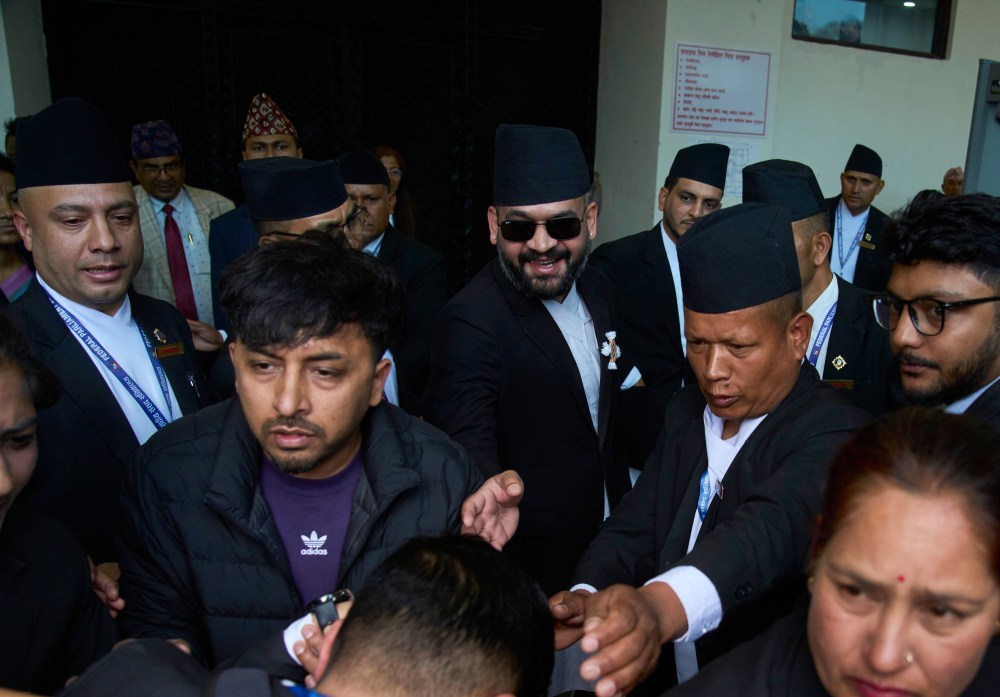
Shah is expected to be chosen as the leader by the elected members from his party later on Thursday and formally inform President Ram Chandra Poudel. The president will then appoint Shah as the prime minister of Nepal.
Shah is scheduled to take the oath of office on Friday.
The RSP won 125 directly elected seats plus a further 57 through proportional representation, giving it a total 182 seats in the 275-member House of Representative. The Nepali Congress party came second, with 38 seats.
In Nepal, voters directly elect 165 members to the House of Representatives. The remaining 110 seats are allocated through a proportional representation system, under which political parties are assigned seats based on their share of the vote.
Shah, who is the RSP’s prime ministerial candidate, won the 2022 Kathmandu mayoral race. He emerged as a leading figure in the 2025 uprising that ousted former Prime Minister Khadga Prasad Oli.
The RSP, which was founded in 2022, gained huge support in the parliamentary election, posing a strong challenge to two long-dominant parties — the Nepali Congress and the Communist Party of Nepal (Unified Marxist–Leninist)
Last year’s protests against corruption and poor governance were triggered by a social media ban before snowballing into a popular revolt against the government. Dozens of people were killed and hundreds more injured when protesters attacked government buildings and police opened fire on them.