

These men carry towers of birds through Mexico’s streets. They say their tradition is dying
Advertisement
Read this article for free:
or
Already have an account? Log in here »
To continue reading, please subscribe:
Digital Subscription
One year of digital access for only $1.44 a week*
- Enjoy unlimited reading on winnipegfreepress.com
- Read the E-Edition, our digital replica newspaper
- Access News Break, our award-winning app
- Play interactive puzzles
*Billed as $5.77 plus GST every four weeks. After 52 weeks, price increases to the regular rate of $19.95 plus GST every four weeks. Offer available to new and qualified returning subscribers only. Cancel any time.
To continue reading, please subscribe:
Add Free Press access to your Brandon Sun subscription for only an additional
$1 for the first 4 weeks*
- Enjoy unlimited reading on winnipegfreepress.com
- Read the E-Edition, our digital replica newspaper
- Access News Break, our award-winning app
- Play interactive puzzles
*Your next Brandon Sun subscription payment will increase by $1.00 and you will be charged $17.95 plus GST for four weeks. After four weeks, your payment will increase to $24.95 plus GST every four weeks.
Read unlimited articles for free today:
or
Already have an account? Log in here »
Hey there, time traveller!
This article was published 29/03/2026 (208 days ago), so information in it may no longer be current.
SAN BARTOLO MORELOS, Mexico (AP) — For 32 years, Cruz Monroy has walked the streets of a small town on the fringes of Mexico’s capital with a tower of small cages filled with a rainbow of birds.
The melodies of red cardinals, green and blue parakeets and multicolored finches fill the days of “pajareros,” or street bird vendors, like him.
The act of selling birds in stacks of cages — sometimes far taller than the men who carry them — goes back generations. They’ve long been a fixture in Mexican markets and are among 1.5 million street vendors that work on the streets of Mexico.
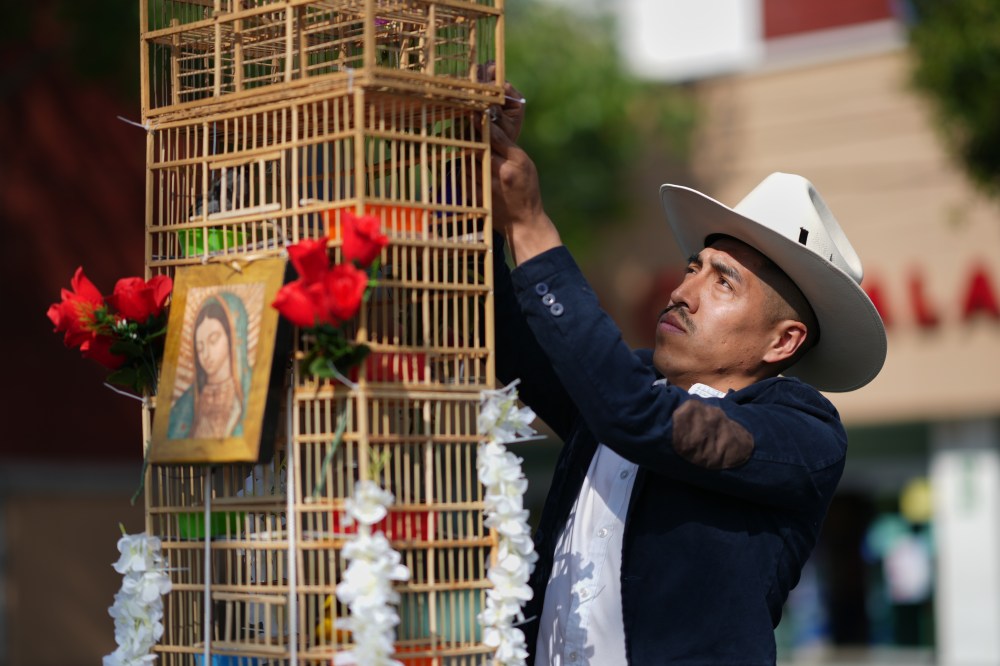
“Hearing their songs, it brings people joy,” Monroy said, the sounds of dozens of birdsongs echoing over him from his home in his small town outside Mexico’s capital, where he cares for and raises the birds. “This is our tradition, my father was also a bird-seller.”
During the Catholic holiday of Palm Sunday, hundreds of pajareros from across the country flock to Mexico City and decorate 10-foot-tall stacks of cages, adorning them with bright flowers, tinsel and images of the Virgin of Guadalupe, Mexico’s patron saint.
They walk miles through the streets of the capital with their birds and their families to the city’s iconic basilica.
But pajareros have slowly disappeared from the streets in recent years in the face of mounting restrictions by authorities and sharp criticisms by animal rights groups, who call the practice an act of animal abuse and trafficking.
Monroy and others say they don’t capture birds like parrots and others prohibited by Mexican authorities — which say tropical species are “wild birds, not pets” — often breed the birds they own themselves and take good care of their animals. Despite that, Monroy said in his family, the tradition is dying out.
In the face of harassment by authorities and mounting criticisms, he said he wants his own sons to find more stable work.
“Because of the restrictions, harassment by certain authorities, many friends have left selling birds behind,” Monroy said. “For my children, it’s not stable work anymore. We have to look for other alternatives.”