

US lawmakers express support for stalled Taiwan special defense budget
Advertisement
Read this article for free:
or
Already have an account? Log in here »
To continue reading, please subscribe:
Digital Subscription
One year of digital access for only $1.44 a week*
- Enjoy unlimited reading on winnipegfreepress.com
- Read the E-Edition, our digital replica newspaper
- Access News Break, our award-winning app
- Play interactive puzzles
*Billed as $5.77 plus GST every four weeks. After 52 weeks, price increases to the regular rate of $19.95 plus GST every four weeks. Offer available to new and qualified returning subscribers only. Cancel any time.
To continue reading, please subscribe:
Add Free Press access to your Brandon Sun subscription for only an additional
$1 for the first 4 weeks*
- Enjoy unlimited reading on winnipegfreepress.com
- Read the E-Edition, our digital replica newspaper
- Access News Break, our award-winning app
- Play interactive puzzles
*Your next Brandon Sun subscription payment will increase by $1.00 and you will be charged $17.95 plus GST for four weeks. After four weeks, your payment will increase to $24.95 plus GST every four weeks.
Read unlimited articles for free today:
or
Already have an account? Log in here »
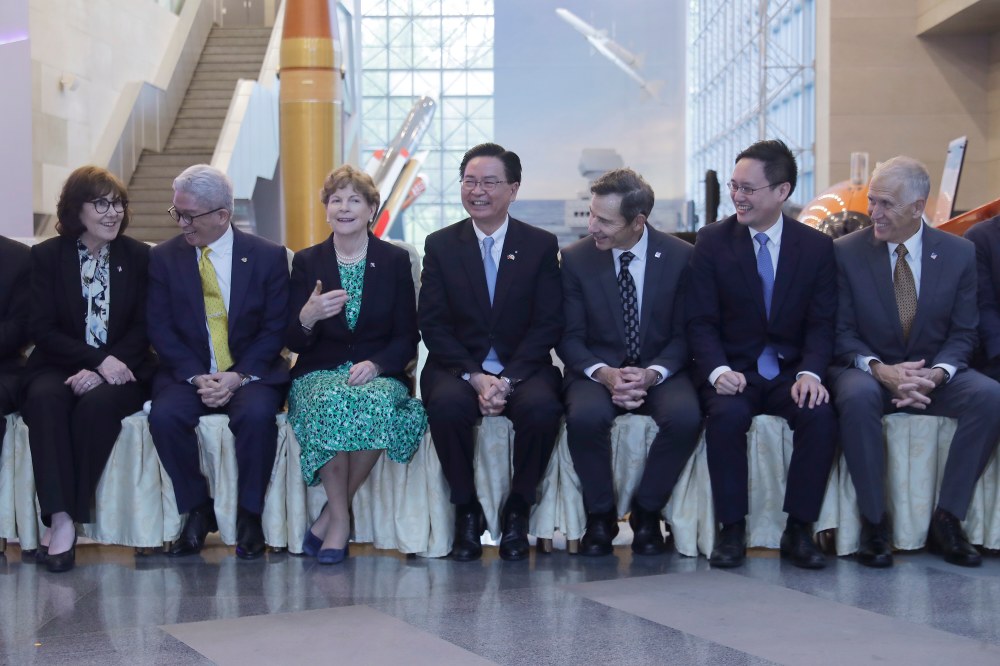
TAIPEI, Taiwan (AP) — The United States supports efforts by Taiwan’s government to pass a $40 billion special defense budget that is being stalled in the opposition-controlled parliament, a group of visiting U.S. lawmakers said Monday in Taipei.
A bipartisan group of four senators arrived in Taiwan as part of an Asia trip meant to bolster U.S. alliances and counter China’s influence in the region, ahead of a summit planned in May between U.S. President Donald Trump and Chinese leader Xi Jinping.
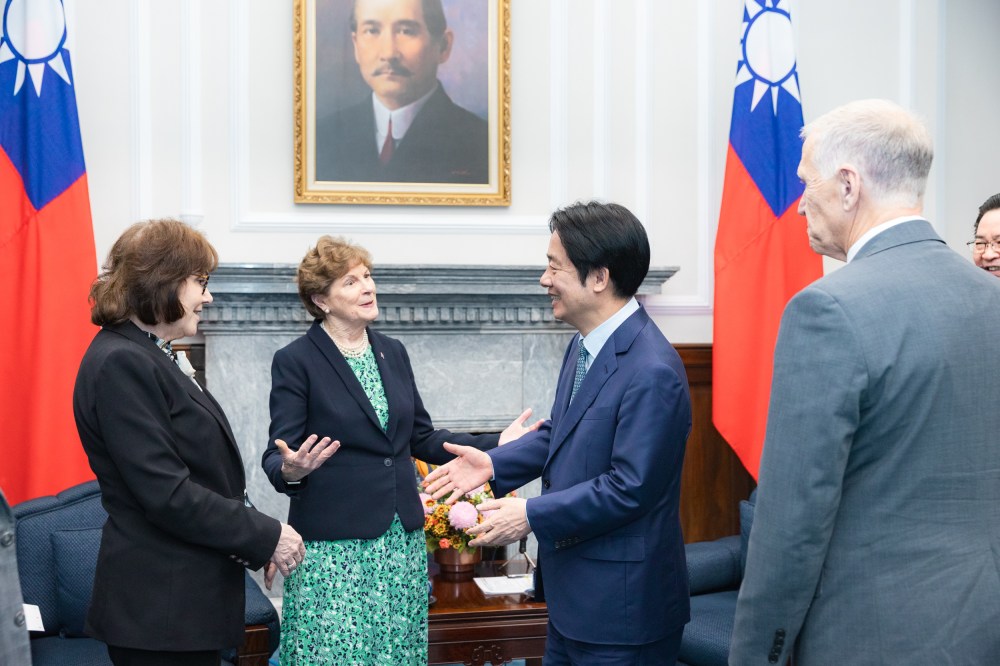
Democratic Senators Jeanne Shaheen (New Hampshire) and Jacky Rosen (Nevada) and Republican Senators John Curtis (Utah) and Thom Tillis (North Carolina) on Monday met with Taiwanese President Lai Ching-te at the start of a two-day trip focused on bolstering the two sides’ informal ties.
China claims self-ruled Taiwan as its own breakaway province, to be retaken by force if necessary and prohibits all its diplomatic partners, including the U.S., from maintaining formal ties with Taipei.
The U.S., while not recognizing Taiwan as a country, is the island’s strongest informal backer and arms provider.
Massive U.S. arms sales to Taiwan are expected to be discussed at the Xi-Trump summit, with China pushing against the sales.
A Chinese Foreign Ministry spokesperson on Monday criticized the congressional visit, urging the U.S. to “handle the Taiwan question prudently and properly, stop all forms of official exchanges with Taiwan, and stop sending any wrong signals to Taiwan independence separatist forces.”
“China’s position on the Taiwan-related issue is consistent and clear,” spokesperson Mao Ning said. “China will take necessary measures to firmly safeguard its sovereignty and territorial integrity.”
Taiwan’s $40 billion special defense budget is stalled in parliament
During the meeting with Lai, Curtis praised Taiwan’s progress “on strengthening its defense, whole society preparedness and energy security, especially over the last year.”
“The seriousness is noticed in Washington D.C., and your efforts on the special defense budget are also noticed and supported,” he said.
Taiwan’s government is trying to push forward a $40 billion special defense budget that over eight years would see investments in building a sophisticated missile defense system dubbed the “T-dome,” integrating artificial intelligence into national defense and developing Taiwan’s indigenous defense industry, among others.
The budget is currently being stalled in parliament, with opposition parties proposing smaller defense budgets.
Lai renewed calls for the parliament to pass the special defense budget “without delay.”
“I want to reassure you and all of our friends in the United States that my government’s resolve and commitment to enhancing our self-defense capabilities, strengthening Taiwan-U.S. cooperation and ensuring national security remain unwavering,” he told the visiting lawmakers.
The opposition leader, KMT chairwoman Cheng Li-wun, said Monday she would be visiting China next month in an attempt to promote “peaceful” relations with Beijing. Cheng had previously expressed interest in meeting with Xi, though it wasn’t clear if a meeting with the Chinese leader was on her trip’s agenda.
Beijing refuses to speak to Lai and has labeled him a separatist who wants to turn Taiwan into a “powder keg.”