

Tennessee high court blocks order allowing media witnesses to view more parts of executions
Advertisement
Read this article for free:
or
Already have an account? Log in here »
To continue reading, please subscribe:
Digital Subscription
One year of digital access for only $1.44 a week*
- Enjoy unlimited reading on winnipegfreepress.com
- Read the E-Edition, our digital replica newspaper
- Access News Break, our award-winning app
- Play interactive puzzles
*Billed as $5.77 plus GST every four weeks. After 52 weeks, price increases to the regular rate of $19.95 plus GST every four weeks. Offer available to new and qualified returning subscribers only. Cancel any time.
To continue reading, please subscribe:
Add Free Press access to your Brandon Sun subscription for only an additional
$1 for the first 4 weeks*
- Enjoy unlimited reading on winnipegfreepress.com
- Read the E-Edition, our digital replica newspaper
- Access News Break, our award-winning app
- Play interactive puzzles
*Your next Brandon Sun subscription payment will increase by $1.00 and you will be charged $17.95 plus GST for four weeks. After four weeks, your payment will increase to $24.95 plus GST every four weeks.
Read unlimited articles for free today:
or
Already have an account? Log in here »
NASHVILLE, Tenn. (AP) — The Tennessee Supreme Court on Wednesday temporarily blocked a lower court’s order that would have let media witnesses view more parts of state-run executions.
The ruling restores the prior process ahead of the May 21 scheduled execution of Tony Carruthers, and it will remain in place during an ongoing appeal. The order expanding access had not yet been in effect during any execution.
In January, a Nashville judge issued a temporary injunction favoring a coalition of news organizations including The Associated Press. The group sued over claims that state execution protocols unconstitutionally limit thorough and accurate reporting.
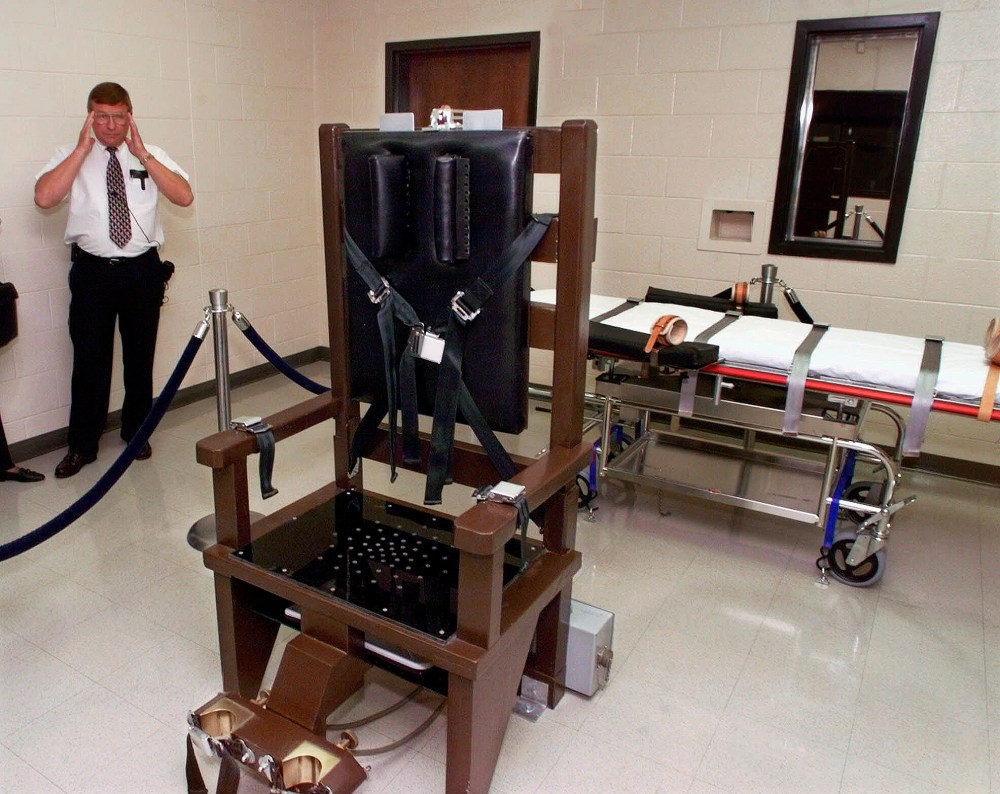
The judge had ordered that the curtains to the official witness room be opened earlier during a lethal injection, allowing witnesses to observe the inmate being secured with restraints to a gurney and the IV insertion process itself. The curtains would have to remain open longer as well, until the pronouncement of death, under the judge’s ruling.
The judge also had ruled that, in to protect execution team members’ identities, they would have had to wear a disposable protective suit covering the members’ regular work uniform, identification badge and hair, and must be offered a mask to further conceal themselves.
While arguing to block the new rules during its appeal, the state attorney general’s office has said the media plaintiffs don’t have a right under the First Amendment to watch executions, let alone to see the additional segments ordered viewable by the trial court judge. The state also argued that the order that would have expanded the media’s view significantly risks exposing the identities of execution team members, introduces “untested” procedures and relies on an erroneous analysis of state statutes.
In response, attorneys for the media organizations contended that blocking the expanded access would deprive the public of valuable information about upcoming scheduled executions. They have said they have a constitutional and statutory right to observe executions in their entirety and that wearing PPE would shield the execution team’s identities.
The order reinstates the process from previous executions, when media members begin seeing what happens once the condemned person is already strapped to a gurney and hooked up to IV lines. Witnesses also don’t know at which precise moment the injections begin and those administering the injections are in a separate room.
The protocol says that after the syringes of saline and pentobarbital are administered, a team leader signals to the warden and a five-minute waiting period begins. After that period, the blinds are closed, the camera is turned off and then the doctor comes in to determine if the person is dead. If that is the case, the warden announces on the intercom system that the sentence was carried out and witnesses are directed to exit.
The camera and closed circuit TV are viewed by the execution team, not media witnesses.
In addition to AP, the media coalition includes Gannett Co., Inc.; Nashville Public Media, Inc.; Nashville Public Radio; Scripps Media, Inc.; Six Rivers Media, LLC; and TEGNA INC.