

Mali backs Morocco’s plan for disputed Western Sahara, ending support for the Sahrawi Republic
Advertisement
Read this article for free:
or
Already have an account? Log in here »
To continue reading, please subscribe:
Digital Subscription
One year of digital access for only $1.44 a week*
- Enjoy unlimited reading on winnipegfreepress.com
- Read the E-Edition, our digital replica newspaper
- Access News Break, our award-winning app
- Play interactive puzzles
*Billed as $5.77 plus GST every four weeks. After 52 weeks, price increases to the regular rate of $19.95 plus GST every four weeks. Offer available to new and qualified returning subscribers only. Cancel any time.
To continue reading, please subscribe:
Add Free Press access to your Brandon Sun subscription for only an additional
$1 for the first 4 weeks*
- Enjoy unlimited reading on winnipegfreepress.com
- Read the E-Edition, our digital replica newspaper
- Access News Break, our award-winning app
- Play interactive puzzles
*Your next Brandon Sun subscription payment will increase by $1.00 and you will be charged $17.95 plus GST for four weeks. After four weeks, your payment will increase to $24.95 plus GST every four weeks.
Read unlimited articles for free today:
or
Already have an account? Log in here »
BAMAKO, Mali (AP) — Mali on Friday backed Morocco’s plan to offer autonomy to Western Sahara but establish sovereignty over the disputed region, endorsing a plan to end a decades-long conflict between the Moroccan government and the indigenous Sahrawi people.
The Malian transitional government said Friday it was withdrawing its recognition of the pro-independence Sahrawi Arab Democratic Republic as part of its backing for the Moroccan plan, which has growing support from African allies, the Trump administration in the U.S. and most European Union members.
In a statement released by the Malian Ministry of Foreign Affairs, the government said “the Republic of Mali supports the autonomy plan proposed by Morocco as the only serious and credible basis for resolving this dispute and considers that genuine autonomy under Moroccan sovereignty is the most realistic solution.”
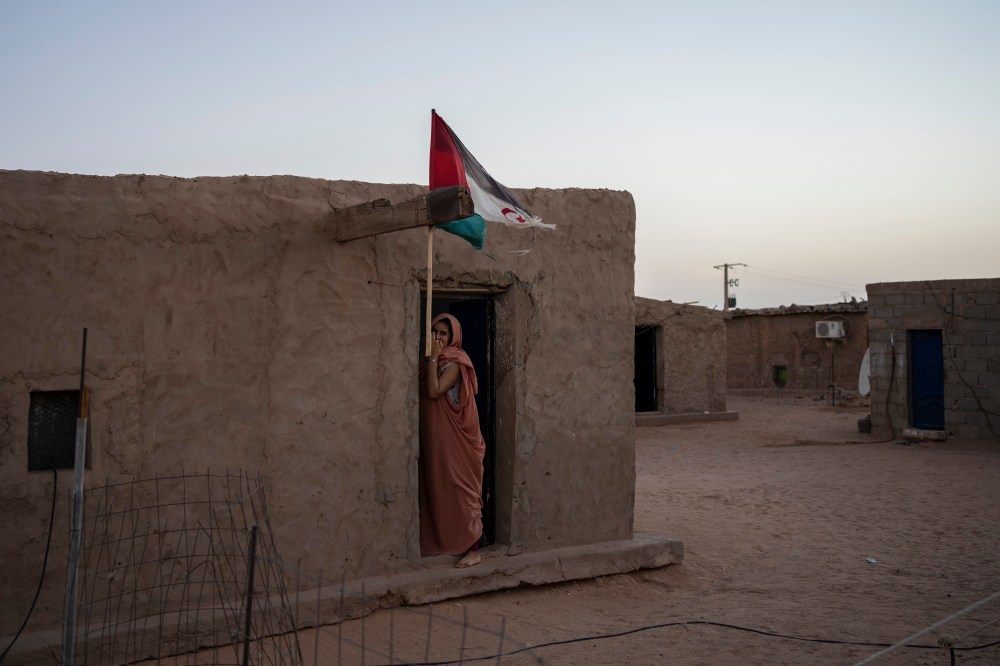
Western Sahara is a phosphate-rich stretch of coastal desert the size of Colorado that was under Spanish rule until 1975. It’s claimed by both Morocco and the Polisario Front, which operates out of refugee camps in southwestern Algeria and claims to represent the Sahrawi people indigenous to the disputed territory.
In October of 2025, the United Nations Security Council adopted a resolution placing Morocco’s proposed autonomy plan for Western Sahara at the center of efforts to resolve the conflict. The resolution does not determine the territory’s final status, but describes the Moroccan initiative as a “serious, credible, and realistic” basis for reaching a political solution.
The resolution referred to Morocco’s plan as a basis for negotiation. As with similar resolutions in previous years, the text made no mention of a referendum on self-determination that includes independence as an option, which is the solution long favored by the pro-independence Polisario Front and its allies, including Algeria, Russia, and China.
After years of conflict, Western Sahara has recently emerged as a hot spot for investment, drawing European and American firms interested in fishing, agriculture and infrastructure projects that would allow for the transmission of wind and solar power.