

Djibouti President Ismaïl Omar Guelleh is reelected for a sixth term
Advertisement
Read this article for free:
or
Already have an account? Log in here »
To continue reading, please subscribe:

Digital Subscription
One year of digital access for only $205*
- Enjoy unlimited reading on winnipegfreepress.com
- Read the E-Edition, our digital replica newspaper
- Access News Break, our award-winning app
- Play interactive puzzles
*First annual payment billed as $205.00 + GST for one year. This annual subscription will automatically renew at $233.00 + GST every 52 weeks (10% off the regular annual price of $259.35). Offer available to new and qualified returning subscribers only. Cancel any time.
To continue reading, please subscribe:
Add Free Press access to your Brandon Sun subscription for only an additional
$1 for the first 4 weeks*
- Enjoy unlimited reading on winnipegfreepress.com
- Read the E-Edition, our digital replica newspaper
- Access News Break, our award-winning app
- Play interactive puzzles
*Your next Brandon Sun subscription payment will increase by $1.00 and you will be charged $17.95 plus GST for four weeks. After four weeks, your payment will increase to $24.95 plus GST every four weeks.
Read unlimited articles for free today:
or
Already have an account? Log in here »
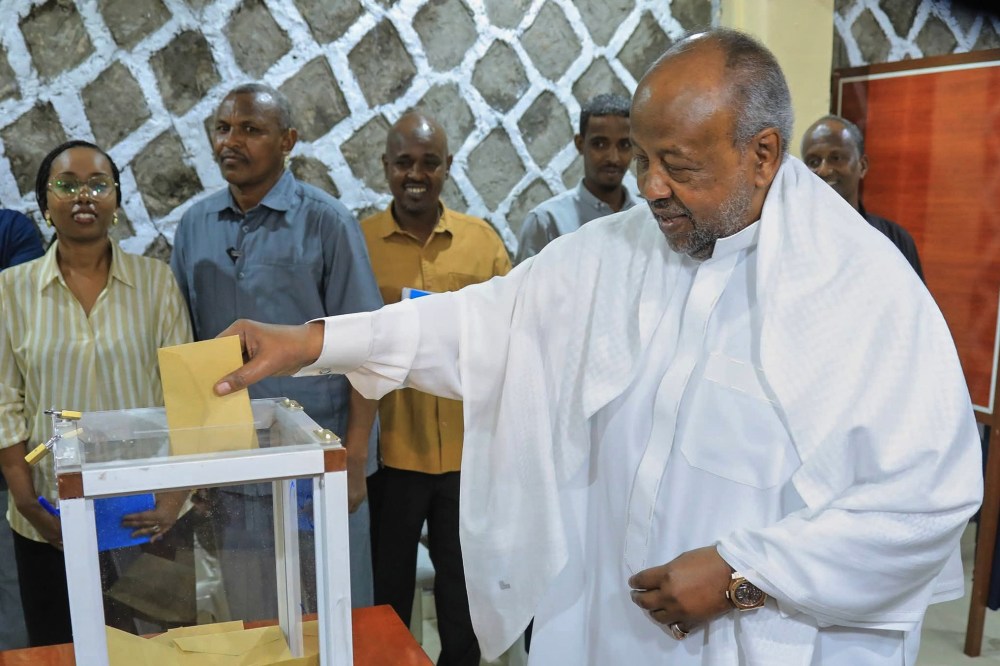
MOGADISHU, Somalia (AP) — Djibouti President Ismaïl Omar Guelleh was reelected for a sixth term after official results showed him winning 97.81% of the vote in Friday’s election.
Guelleh, 78, has ruled the small Horn of Africa nation of about 1 million for more than two decades. Last year, the country’s lawmakers scrapped presidential age limits.
Election officials said the vote was peaceful. At the presidential palace, supporters on Saturday celebrated and offered congratulations.
Guelleh faced a single challenger, Mohamed Farah Samatar, a former ruling party member, in a race analysts say offered little genuine competition. Opposition groups frequently boycott elections, citing restrictions on political freedoms.
Guelleh succeeded his uncle, former President Hassan Gouled Aptidon, in 1999, extending a family-led system that has shaped the country’s politics for decades.
Djibouti hosts multiple foreign military bases, including those of the U.S., China, France and Japan, underscoring its strategic importance along a key global shipping route linking the Red Sea and the Gulf of Aden. Revenues from these arrangements, along with port services for neighboring Ethiopia, underpin the economy.