

Hong Kong government seeks to seize millions from jailed activist Jimmy Lai
Advertisement
Read this article for free:
or
Already have an account? Log in here »
To continue reading, please subscribe:

Digital Subscription
One year of digital access for only $205*
- Enjoy unlimited reading on winnipegfreepress.com
- Read the E-Edition, our digital replica newspaper
- Access News Break, our award-winning app
- Play interactive puzzles
*First annual payment billed as $205.00 + GST for one year. This annual subscription will automatically renew at $233.00 + GST every 52 weeks (10% off the regular annual price of $259.35). Offer available to new and qualified returning subscribers only. Cancel any time.
To continue reading, please subscribe:
Add Free Press access to your Brandon Sun subscription for only an additional
$1 for the first 4 weeks*
- Enjoy unlimited reading on winnipegfreepress.com
- Read the E-Edition, our digital replica newspaper
- Access News Break, our award-winning app
- Play interactive puzzles
*Your next Brandon Sun subscription payment will increase by $1.00 and you will be charged $17.95 plus GST for four weeks. After four weeks, your payment will increase to $24.95 plus GST every four weeks.
Read unlimited articles for free today:
or
Already have an account? Log in here »
HONG KONG (AP) — The Hong Kong government is seeking to confiscate millions of dollars in funds and corporate shares it says are linked to crimes committed by jailed former media tycoon Jimmy Lai, according to a court document seen by The Associated Press on Tuesday.
The filing does not explain how the property, which it estimates to be worth over 127 million Hong Kong dollars ($16 million), is linked to Lai’s crimes. The government previously announced that it was seeking asset forfeitures in the case but did not disclose the amount.
Lai, an outspoken critic of China’s ruling Communist Party who founded the now-defunct newspaper Apple Daily, was convicted in December of conspiracy to collude with foreign forces and conspiring with others to publish seditious articles. He was sentenced to 20 years in prison in February, the toughest sentence given so far under a Beijing-imposed national security law.
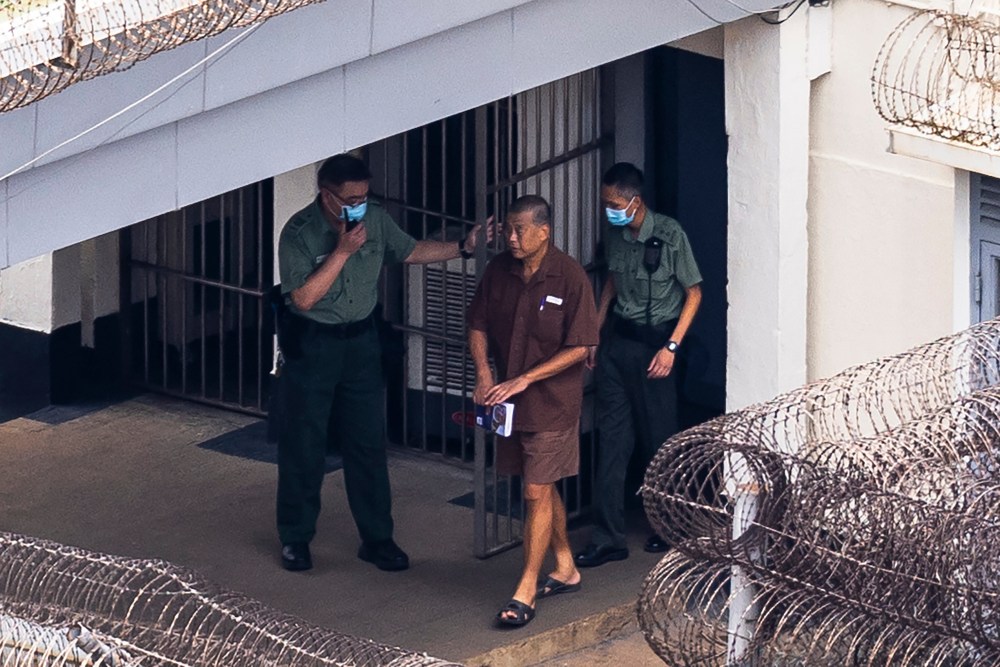
Critics say his conviction reflected the decline of press and other freedoms in the city, a former British colony that returned to Chinese rule in 1997. The government insists the case has nothing to do with a free press, saying the defendants used news reporting as a pretext for years to commit acts that harmed China and Hong Kong.
According to a document sent to the city’s court system earlier this month, the Department of Justice is seeking an order for Lai to forfeit to the government money held in 15 bank accounts under his name, money held in bank accounts under various companies, as well as shares in various companies held by him or others.
The shares included Lai’s shares in Next Digital, the parent company of Apple Daily, and Dico Consultants, which was involved in a previous fraud case against Lai in which his conviction was later overturned.
The money the government is seeking to seize also includes bail money deposited in the court system and a fine of 2 million Hong Kong dollars ($255,440) imposed on Lai after the 2022 fraud conviction, which could be refunded to him after the convictions were quashed in February.
The government announced that it had applied to seize the properties linked to Lai’s crimes on April 2 in a statement. At that time, the government cited the security law, saying that the funds and tools used or intended to be used in committing an offense shall be confiscated, as well as proceeds obtained in the commission of an offense.
The government said an order made for the purpose of safeguarding national security can prevent convicts, their accomplices or agents from continuing to use their offense-related properties to engage in acts and activities endangering security.
A hearing on the case is scheduled for July.