

A sudden shift: ICE arrests drop nearly 12% after Minneapolis killings and immigration shake-up
Advertisement
Read this article for free:
or
Already have an account? Log in here »
To continue reading, please subscribe:
Digital Subscription
One year of digital access for only $1.44 a week*
- Enjoy unlimited reading on winnipegfreepress.com
- Read the E-Edition, our digital replica newspaper
- Access News Break, our award-winning app
- Play interactive puzzles
*Billed as $5.77 plus GST every four weeks. After 52 weeks, price increases to the regular rate of $19.95 plus GST every four weeks. Offer available to new and qualified returning subscribers only. Cancel any time.
To continue reading, please subscribe:
Add Free Press access to your Brandon Sun subscription for only an additional
$1 for the first 4 weeks*
- Enjoy unlimited reading on winnipegfreepress.com
- Read the E-Edition, our digital replica newspaper
- Access News Break, our award-winning app
- Play interactive puzzles
*Your next Brandon Sun subscription payment will increase by $1.00 and you will be charged $17.95 plus GST for four weeks. After four weeks, your payment will increase to $24.95 plus GST every four weeks.
Read unlimited articles for free today:
or
Already have an account? Log in here »
At the peak of the crackdown, carloads of masked immigration officers were a common sight in the streets of Minneapolis, while thousands of people were being arrested every week in Texas, Florida and California.
“Turn and burn,” top Border Patrol commander Gregory Bovino called the strategy, with relentless displays of force and teams of agents descending on restaurant kitchens, bus stops and Home Depot parking lots.
In December, arrests by Immigration and Customs Enforcement agents peaked at nearly 40,000 nationwide and were nearly as high the next month, according to data provided to UC Berkeley’s Deportation Data Project and analyzed by The Associated Press.
In late January, the killings in Minneapolis of two American citizens by immigration officers and growing concerns over the government’s heavy-handed tactics led to a shake-up of top immigration officials. In the weeks that followed, ICE arrests across the country dropped on average by nearly 12%.
Polling has found the general public felt the immigration enforcement operation in Minnesota went too far, a factor that may have contributed to the abrupt firing of Homeland Security Secretary Kristi Noem in early March.
The numbers don’t follow the same pattern everywhere
Bovino, who swaggered through raid scenes in tactical gear and was the public face of the Trump administration crackdown, was pushed aside following the killings in Minneapolis of Renee Good and Alex Pretti. Border czar Tom Homan was then sent to the Twin Cities to chart a new course for immigration enforcement, and he announced the drawdown of immigration agents in the state on Feb. 4.
An AP analysis of ICE arrest records show the department averaged 7,369 weekly arrests nationwide in the five weeks after Homan’s drawdown announcement, , the most recent period for which data is available, down from 8,347 per week in the previous five weeks. Those arrest numbers were still higher on average than during much of the first year of President Donald Trump’s second term, and were dramatically higher than during the Biden administration.
The numbers were not, however, uniform across the country.
ICE arrests rose significantly in Kentucky, Indiana, North Carolina and Florida during those five weeks, in some cases hitting their highest weekly count since the start of Trump’s second term.. In Kentucky alone, weekly arrests more than doubled, reaching 86 by early March.
Those increases were offset by steep drops in a handful of large states, including Minnesota and Texas.
Many arrested were not Trump’s ‘worst of the worst’
The Trump administration insists it is targeting the most vicious criminals living illegally in the U.S., and the president has referred to them as “the worst of the worst.”
In some cases the description is accurate, but the reality is complicated.
Many of the toughest criminals taken into ICE custody were already in prison, but many others who were arrested have no criminal history.
Nationally, some 46% of the people ICE arrested in the five weeks before Feb. 4 had no criminal charges or convictions, dropping to 41% in the five weeks that followed.
Yet that’s still above the 35% weekly average for the time since Trump returned to office. And in a number of states, even after Feb. 4, the share of noncriminals being arrested went up, not down.
Has there been a change in approach?
Across the country, thousands of federal court filings offer an imperfect window into how the Trump administration’s deportation tactics remain in high gear, even if activity has waned.
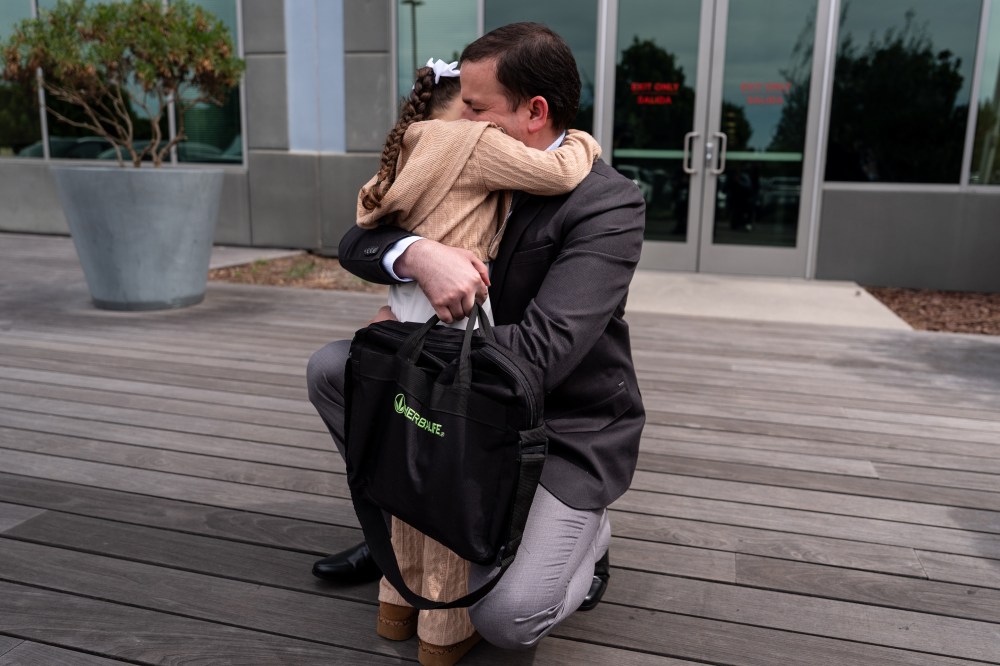
Like the 21-year-old Honduran man with no criminal record who has filed a petition for release after being arrested Feb. 22 in a suburban San Diego traffic stop. The father of three U.S. citizen children — ages 5, 3 and 10 months — had been under ICE surveillance, the petition says, before officers in tactical gear pulled him over.
Or the 33-year-old Venezuelan woman, a well-known South Texas doctor who worked in a region designated as medically underserved, who was arrested earlier this month with her five-year-old daughter, a U.S. citizen, on her way to her husband’s asylum hearing.
She was arrested, officials said, for overstaying her visa.
Aaron Reichlin-Melnick, a senior fellow with the research and advocacy group the American Immigration Council, says he sees signs of change in lower arrest and detention numbers but warns it’s too early to know if those shifts are permanent.
“The Trump administration says: ‘We’re not slowing down,’ ‘Nothing has changed,’” in immigration enforcement, he said. “But it’s very clear that they have pulled back from some of the tactics of Operation Metro Surge,” the crackdown that swept Minneapolis.
___
Kessler reported from Washington and Sullivan from Minneapolis. Associated Press reporters Elliot Spagat in San Diego and Gisela Salomon in Miami contributed.