

Pennsylvania court grants public access to voting data in dispute from 2020 election’s aftermath
Advertisement
Read this article for free:
or
Already have an account? Log in here »
To continue reading, please subscribe:

Digital Subscription
One year of digital access for only $205*
- Enjoy unlimited reading on winnipegfreepress.com
- Read the E-Edition, our digital replica newspaper
- Access News Break, our award-winning app
- Play interactive puzzles
*First annual payment billed as $205.00 + GST for one year. This annual subscription will automatically renew at $233.00 + GST every 52 weeks (10% off the regular annual price of $259.35). Offer available to new and qualified returning subscribers only. Cancel any time.
To continue reading, please subscribe:
Add Free Press access to your Brandon Sun subscription for only an additional
$1 for the first 4 weeks*
- Enjoy unlimited reading on winnipegfreepress.com
- Read the E-Edition, our digital replica newspaper
- Access News Break, our award-winning app
- Play interactive puzzles
*Your next Brandon Sun subscription payment will increase by $1.00 and you will be charged $17.95 plus GST for four weeks. After four weeks, your payment will increase to $24.95 plus GST every four weeks.
Read unlimited articles for free today:
or
Already have an account? Log in here »
HARRISBURG, Pa. (AP) — Pennsylvania’s high court ruled Tuesday that spreadsheets of raw data associated with every ballot are public records, providing access to the “cast vote records” that had been requested by an election researcher hired by the Trump Administration last year.
The Democratic-majority Supreme Court said its unanimous decision was a way to “satisfy the voting public that our elections are safe, secure and accurate” while preserving the state constitution’s requirement that votes remain secret.
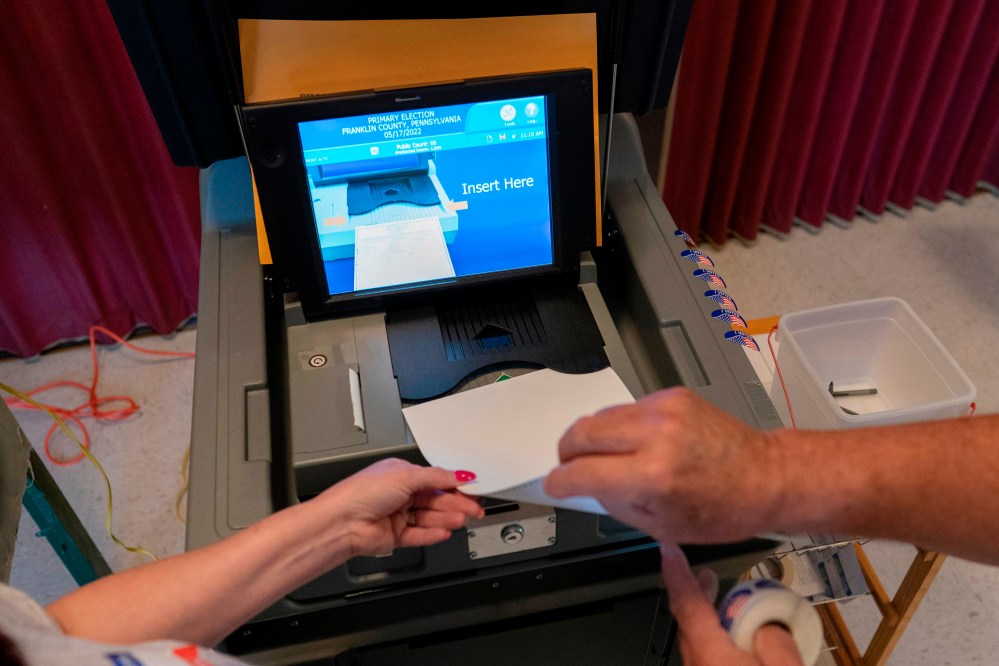
The Lycoming County elections director in Williamsport had denied Heather Honey’s request for digital copies from the 2020 presidential election, saying that would amount to letting her review the contents of a ballot box, one vote at a time. Cast vote records are created when a voter’s choices are made electronically or scanned.
Pennsylvania election law provides wide public access to county election records, except for the contents of ballot boxes and voting machines and records of assisted voters. Lycoming Voter Services had argued its scanners and tabulators constitute voting machines and the cast vote records are the contents of ballot boxes.
As Honey did not live and vote in Lycoming County, she was succeeded in the litigation by three Williamsport area residents — a local businessman, a retired state trooper and Republican state Rep. Joe Hamm.
Their lawyer, Thomas Breth, said the data will allow people to review what happened in the hotly contested 2020 election.
“In short, it’s not solely about the past,” Breth said. “It’s about the future. This significantly improves election integrity moving forward in the Commonwealth of Pennsylvania.”
Lycoming elections chief Forrest Lehman said Tuesday he does not believe the records, which contain randomized data, will reveal any secret ballot information and that he is ready to provide the records upon request.
“The court made its decision, and anybody who wants it can have at it,” Lehman said.
The Supreme Court ruled that the cast vote records “are spreadsheets of raw data pulled from the cast ballots. They are not the physical ballots contained in the ballot box.” Therefore, they are public records, the justices concluded: “This interpretation does not destroy the secrecy of the vote any more than a tally of all votes from a specific election.”
The high court said it was only ruling in the Lycoming County matter and said it was possible that other counties do not sufficiently randomize the data. “Whether the Election Code requires disclosure of CVRs that clearly link the contents of a ballot with personally identifying data is not before us,” wrote Justice Daniel McCaffery.
Breth dismissed that possibility, saying the state’s current election equipment standards require safeguards to protect voter identity.