

Iraqi court sentences 4 to prison for promoting banned Baath Party
Advertisement
Read this article for free:
or
Already have an account? Log in here »
To continue reading, please subscribe:

Digital Subscription
One year of digital access for only $205*
- Enjoy unlimited reading on winnipegfreepress.com
- Read the E-Edition, our digital replica newspaper
- Access News Break, our award-winning app
- Play interactive puzzles
*First annual payment billed as $205.00 + GST for one year. This annual subscription will automatically renew at $233.00 + GST every 52 weeks (10% off the regular annual price of $259.35). Offer available to new and qualified returning subscribers only. Cancel any time.
To continue reading, please subscribe:
Add Free Press access to your Brandon Sun subscription for only an additional
$1 for the first 4 weeks*
- Enjoy unlimited reading on winnipegfreepress.com
- Read the E-Edition, our digital replica newspaper
- Access News Break, our award-winning app
- Play interactive puzzles
*Your next Brandon Sun subscription payment will increase by $1.00 and you will be charged $17.95 plus GST for four weeks. After four weeks, your payment will increase to $24.95 plus GST every four weeks.
Read unlimited articles for free today:
or
Already have an account? Log in here »
BAGHDAD (AP) — An Iraqi court on Monday sentenced four people to six years in prison on charges of promoting the ideas of the banned Baath Party led by former leader Saddam Hussein.
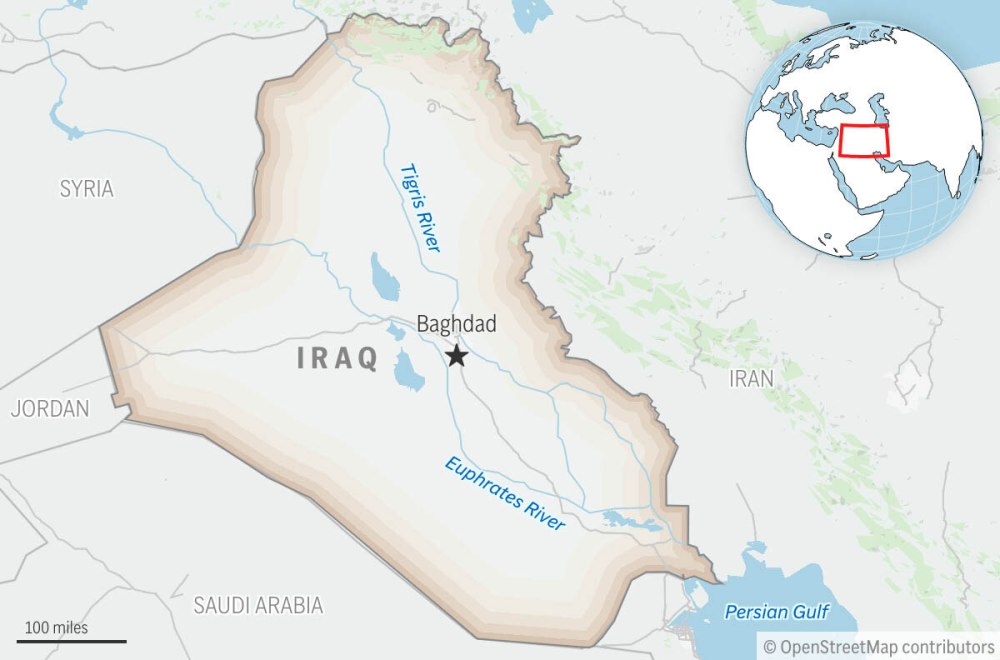
The Karkh Criminal Court said in a statement that those convicted were found in possession of the banned materials on their cellphones in Kirkuk province during 2025 and 2026.
After the 2003 U.S.-led invasion of Iraq toppled Saddam’s autocratic rule, the country implemented a broad de-Baathification policy aimed at removing the influence of the Baath Party from state institutions.
The policy targeted former party members, particularly those in senior positions under the previous government, and led to large-scale dismissals across the public sector, including the military, education and civil service.
In recent years, however, such convictions have been rare. Some former officials were allowed to return to service if they were not involved in serious crimes.
Still, investigations have led to the disqualification of some candidates in recent elections. People with de-Baathification rulings against them are not eligible for nomination to ministerial posts, senior government positions and high-level security roles.
The legacy of de-Baathification remains politically and socially sensitive in Iraq, particularly among the country’s Sunni minority population.
Saddam was a Sunni and members of the sect disproportionately held top leadership positions during his time. Following his ouster, Sunnis were the most impacted by purges of public institutions, generating resentment and a feeling of disenfranchisement that in some cases manifested in the rise of Sunni extremist groups.
The Accountability and Justice Commission remains the official body responsible for overseeing de-Baathification efforts. Sunni political leaders in successive parliaments have called for the dissolution of commission, arguing that its mandate should be reconsidered or brought to an end as part of broader national reconciliation efforts.
Supporters of the commission maintain that it remains a necessary legal framework to prevent the return of Baathist influence within state institutions.