

Salvadoran news outlet El Faro says its assets frozen in retaliation for reporting on Bukele
Advertisement
Read this article for free:
or
Already have an account? Log in here »
To continue reading, please subscribe:

Digital Subscription
One year of digital access for only $205*
- Enjoy unlimited reading on winnipegfreepress.com
- Read the E-Edition, our digital replica newspaper
- Access News Break, our award-winning app
- Play interactive puzzles
*First annual payment billed as $205.00 + GST for one year. This annual subscription will automatically renew at $233.00 + GST every 52 weeks (10% off the regular annual price of $259.35). Offer available to new and qualified returning subscribers only. Cancel any time.
To continue reading, please subscribe:
Add Free Press access to your Brandon Sun subscription for only an additional
$1 for the first 4 weeks*
- Enjoy unlimited reading on winnipegfreepress.com
- Read the E-Edition, our digital replica newspaper
- Access News Break, our award-winning app
- Play interactive puzzles
*Your next Brandon Sun subscription payment will increase by $1.00 and you will be charged $17.95 plus GST for four weeks. After four weeks, your payment will increase to $24.95 plus GST every four weeks.
Read unlimited articles for free today:
or
Already have an account? Log in here »
MEXICO CITY (AP) — Salvadoran investigative outlet El Faro announced Thursday that two of its members’ assets, including a bank account and property, were frozen, in what it denounced as an escalation of political persecution for its work exposing corruption in the government of President Nayib Bukele.
“It’s another level of attack against us with a clear purpose,” El Faro Director Carlos Dada said in a news conference Thursday. “These are not fiscal measures. They are political measures trying to silence us.”
El Faro has publicly sparred with Bukele over its investigations into corruption during his administration, including revelations that his administration negotiated with gangs. The latest move comes shortly after the outlet released a documentary with PBS Frontline about the gang negotiations.
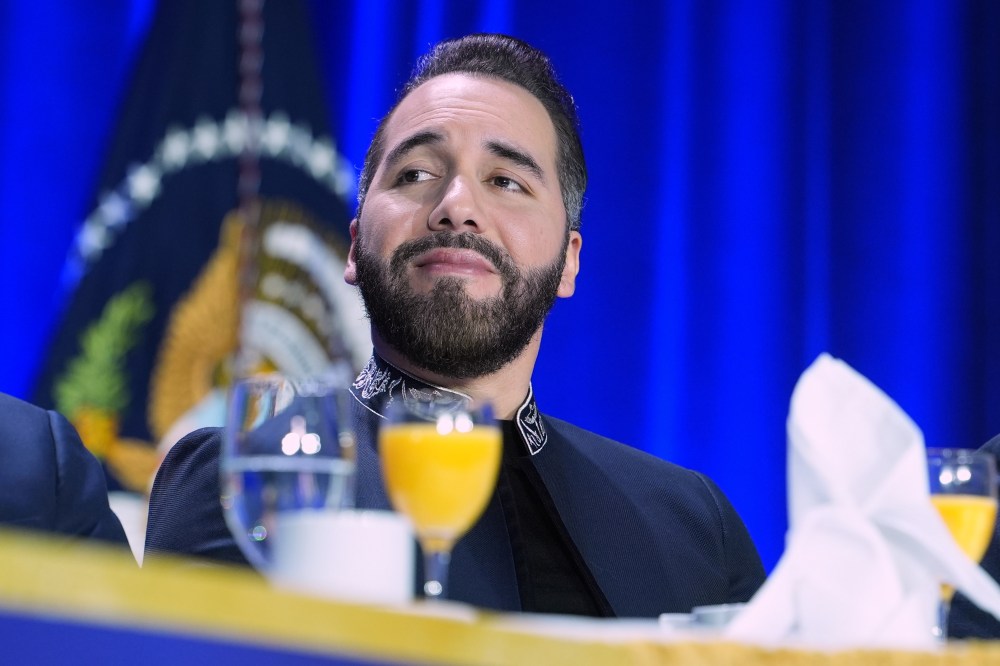
Bukele, who rose to power on an anti-corruption platform in 2019 as the region’s youngest leader, has faced increasing criticism from human rights groups for his crackdown on dissent and abuses under a four-year state of exception that has imprisoned more than 91,000 people.
Bukele’s office did not immediately respond to a request for comment, but he has called the outlet’s reporting “fake news” in the past.
The outlet learned of the freezing of assets through the bank and property registry, according to Dada, rather than through formal notification from the government.
The outlet has been subject to ongoing audits by Salvadoran authorities since 2020, in which the government alleges it has evaded $200,000 in taxes, which Dada denied.
El Faro journalists have been the target of spyware attacks, and Pegasus was detected on more than 20 of its journalists’ iPhones in 2022. Its journalists sued NSO Group in United States federal court later that year.
In 2023, the outlet moved its headquarters to Costa Rica because of the country’s repressive climate and all its members currently live in exile outside of El Salvador.
Bukele’s crackdown intensified in 2025 with the arrest of prominent human rights activist Ruth López, who is in prison a year later without a trial and limited access to family and legal counsel. Shortly after, in July 2025, the country’s leading human rights organization where she worked, Cristosal, announced it was leaving El Salvador because of mounting harassment and legal threats.
The practice of launching audits and confiscating assets has been weaponized in other parts of the region to intimidate critics, most notably in Nicaragua under President Daniel Ortega.
Claudia Paz y Paz, the director of Costa Rican-based Center for Justice and International Law, which is representing El Faro in its case before the Inter-American Commission of Human Rights, said in the Thursday news conference that the measure is “retaliation” for El Faro’s work and that it seeks to “silence the voices of journalists.”
___
Follow AP’s Latin America coverage at https://apnews.com/hub/latin-america