Ketanji Brown Jackson says Supreme Court risks being seen as political after voting rights decision
Advertisement
Read this article for free:
or
Already have an account? Log in here »
To continue reading, please subscribe:

Digital Subscription
One year of digital access for only $205*
- Enjoy unlimited reading on winnipegfreepress.com
- Read the E-Edition, our digital replica newspaper
- Access News Break, our award-winning app
- Play interactive puzzles
*First annual payment billed as $205.00 + GST for one year. This annual subscription will automatically renew at $233.00 + GST every 52 weeks (10% off the regular annual price of $259.35). Offer available to new and qualified returning subscribers only. Cancel any time.
To continue reading, please subscribe:
Add Free Press access to your Brandon Sun subscription for only an additional
$1 for the first 4 weeks*
- Enjoy unlimited reading on winnipegfreepress.com
- Read the E-Edition, our digital replica newspaper
- Access News Break, our award-winning app
- Play interactive puzzles
*Your next Brandon Sun subscription payment will increase by $1.00 and you will be charged $17.95 plus GST for four weeks. After four weeks, your payment will increase to $24.95 plus GST every four weeks.
Read unlimited articles for free today:
or
Already have an account? Log in here »
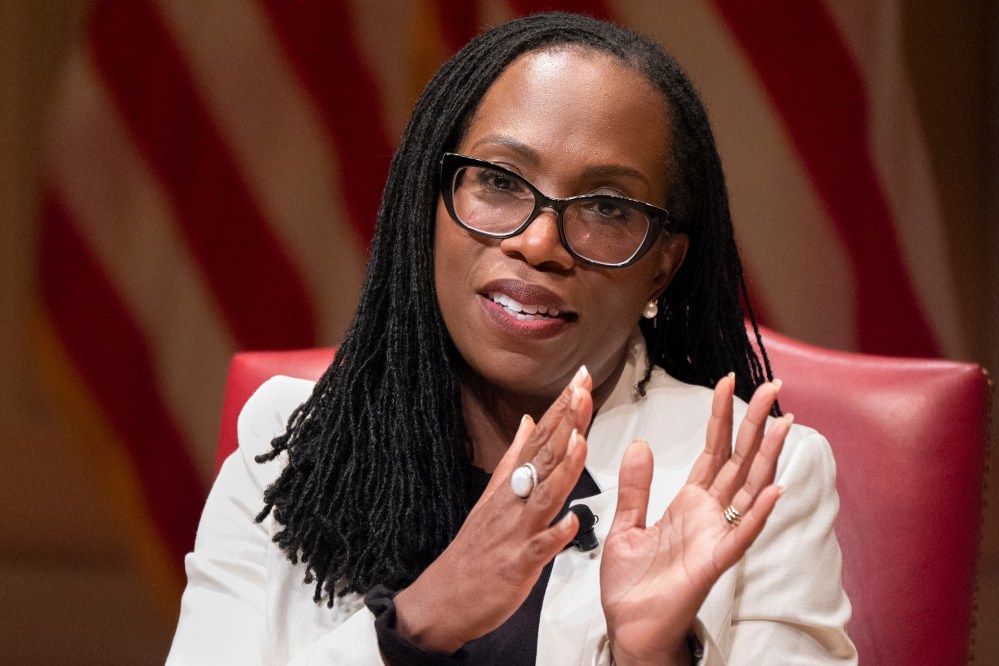
WASHINGTON (AP) — Justice Ketanji Brown Jackson said Monday that the Supreme Court risks being seen as political in the wake of a major voting rights decision.
She spoke after writing a solo dissent from the court’s decision allowing Louisiana to move quickly to use new maps after the court’s conservative majority struck down a majority-Black district and weakened the Voting Rights Act.
“Public confidence is really all the judiciary has,” she said at a talk before the American Law Institute in Washington, D.C.
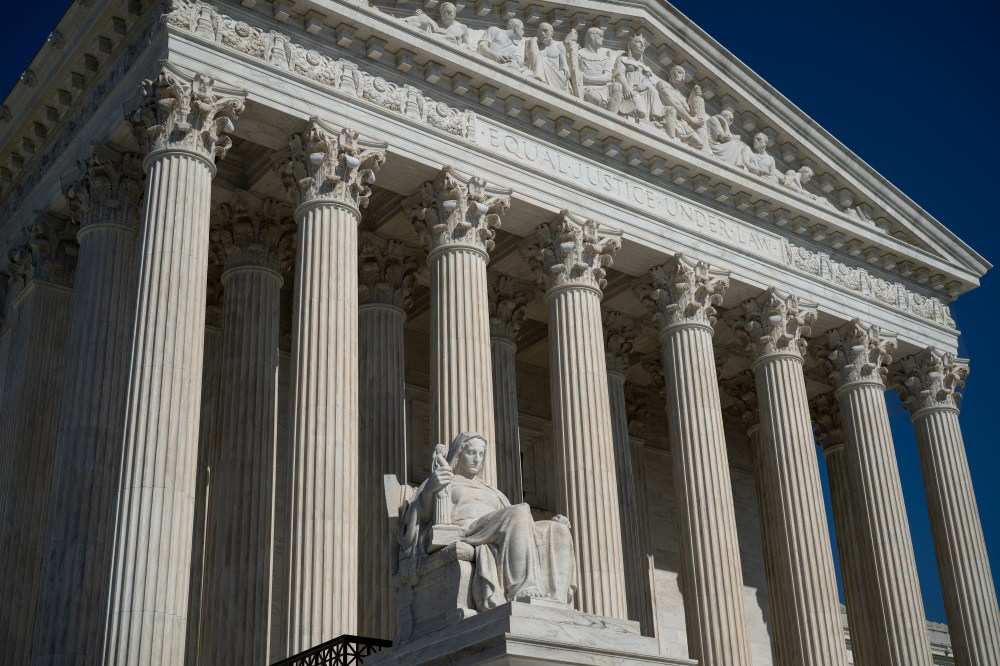
“Everyone believes the court system is outside the political sphere. I think that means it’s incumbent on us to do things, to act in ways, that shore up public confidence,” she said.
Polling has shown public trust in the Supreme Court at historic lows in recent years, and Chief Justice John Roberts has separately bemoaned a perception that the justices are “political actors,” calling it a misunderstanding.
Jackson has become a frequent dissenter on the Supreme Court, joining her liberal colleagues last month to oppose the 6-3 decision that hollowed out the Voting Rights Act and later writing for herself to protest an order allowing Louisiana to use new maps even though early primary voting had already begun. She said the court had “spawned chaos” amid a fierce nationwide redistricting battle.
Three of her conservative colleagues on the court forcefully disagreed, calling her criticism “baseless” and saying accusations of partisanship aren’t justified. The alternative, they wrote, would have been to allow an election under a map found to be unconstitutional.