

Energy shock from Iran war to weigh on Europe’s growth, boost inflation
Advertisement
Read this article for free:
or
Already have an account? Log in here »
To continue reading, please subscribe:

Digital Subscription
One year of digital access for only $205*
- Enjoy unlimited reading on winnipegfreepress.com
- Read the E-Edition, our digital replica newspaper
- Access News Break, our award-winning app
- Play interactive puzzles
*First annual payment billed as $205.00 + GST for one year. This annual subscription will automatically renew at $233.00 + GST every 52 weeks (10% off the regular annual price of $259.35). Offer available to new and qualified returning subscribers only. Cancel any time.
To continue reading, please subscribe:
Add Free Press access to your Brandon Sun subscription for only an additional
$1 for the first 4 weeks*
- Enjoy unlimited reading on winnipegfreepress.com
- Read the E-Edition, our digital replica newspaper
- Access News Break, our award-winning app
- Play interactive puzzles
*Your next Brandon Sun subscription payment will increase by $1.00 and you will be charged $17.95 plus GST for four weeks. After four weeks, your payment will increase to $24.95 plus GST every four weeks.
Read unlimited articles for free today:
or
Already have an account? Log in here »
FRANKFURT, Germany (AP) — The European Union’s executive commission cut its growth outlook and predicted higher inflation due to sharply higher energy prices from the war in Iran — but said the economy will avoid an outright recession.
“As a net energy importer, the EU’s economy is highly susceptible to the energy shock caused by the conflict in the Middle East,” the commission said in a statement Thursday. The rising cost of fuel “means higher household bills and surging business costs that reduce profits for many industries.”
The commission’s spring forecast lowered the outlook for growth in the 21 countries that use the euro to 0.9% for this year, from 1.2% in its autumn forecast, and to 1.2% from 1.4% for 2027. Inflation is now expected to reach 3.0% for 2026, up from the earlier forecast of 1.9%.
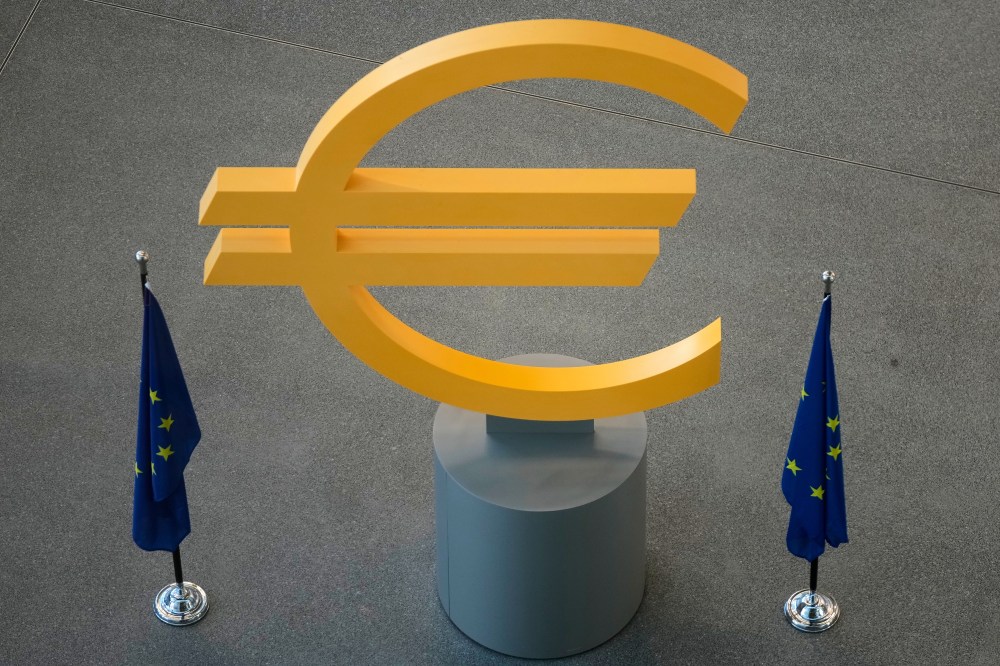
The new inflation figure exceeds the inflation goal of 2% set by the European Central Bank, and higher inflation expectations have led to predictions the ECB will raise its interest rate benchmarks this year to combat inflation.
Oil prices rose sharply after risk of Iranian drone and speedboat attacks closed off most ship traffic through the Strait of Hormuz, the sea passage for about a fifth of the world’s oil and natural gas. On top of that, news of the war has shaken consumer confidence, which fell to a 40-month low amid mounting fears of job losses and higher inflation.
Still, the commission said the economy will continue to show modest growth and avoid an outright recession.
It warned however that a downside scenario of a prolonged period of higher energy prices would push growth lower and inflation higher.
The new inflation figure exceeds the inflation goal of 2% set by the European Central Bank, and higher inflation expectations have led to predictions the ECB will raise its interest rate benchmarks this year to combat inflation.