

South Africa’s president acknowledges rising tensions over migration
Advertisement
Read this article for free:
or
Already have an account? Log in here »
To continue reading, please subscribe:

Digital Subscription
One year of digital access for only $205*
- Enjoy unlimited reading on winnipegfreepress.com
- Read the E-Edition, our digital replica newspaper
- Access News Break, our award-winning app
- Play interactive puzzles
*First annual payment billed as $205.00 + GST for one year. This annual subscription will automatically renew at $233.00 + GST every 52 weeks (10% off the regular annual price of $259.35). Offer available to new and qualified returning subscribers only. Cancel any time.
To continue reading, please subscribe:
Add Free Press access to your Brandon Sun subscription for only an additional
$1 for the first 4 weeks*
- Enjoy unlimited reading on winnipegfreepress.com
- Read the E-Edition, our digital replica newspaper
- Access News Break, our award-winning app
- Play interactive puzzles
*Your next Brandon Sun subscription payment will increase by $1.00 and you will be charged $17.95 plus GST for four weeks. After four weeks, your payment will increase to $24.95 plus GST every four weeks.
Read unlimited articles for free today:
or
Already have an account? Log in here »
CAPE TOWN, South Africa (AP) — South Africa’s president promised Sunday to act on what he called concerns over illegal migration following a rise in anti-immigrant protests and sentiment in Africa’s most advanced economy, with other nations claiming their citizens have been targeted in xenophobic attacks.
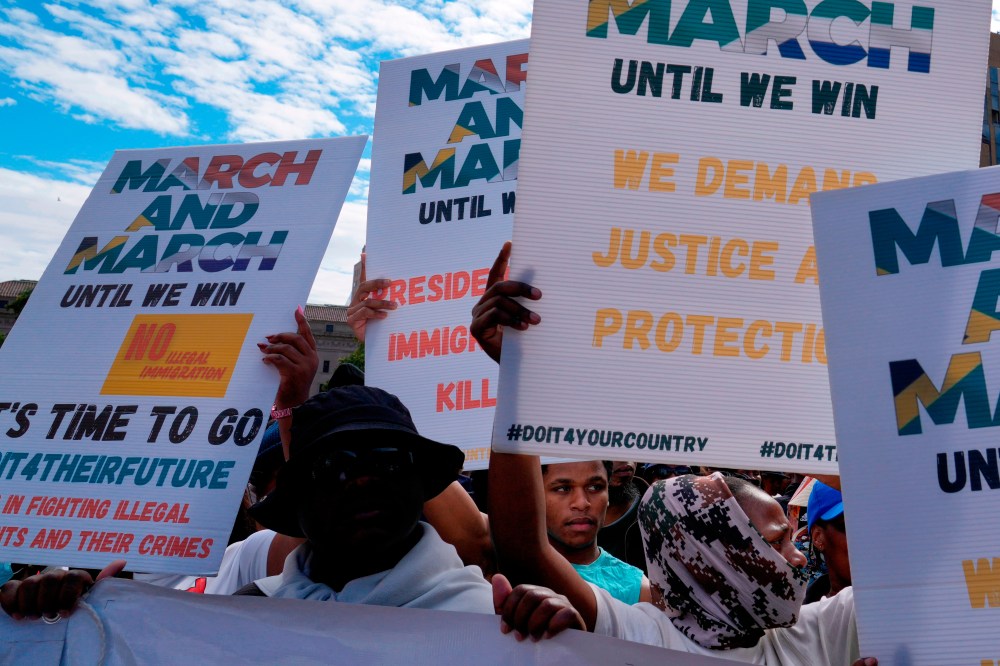
President Cyril Ramaphosa’s comments in a speech on national television dedicated to the issue were an acknowledgment of the tensions. Anti-migrant protest groups have said they’ve set a June 30 deadline for foreign nationals who are in South Africa illegally to leave and have requested talks with the government.
South Africa has a history of violence sparked by anger over the presence of migrants, including in 2008 when more than 60 people were killed in what international rights groups called xenophobic attacks on foreigners.
Groups calling for a new crackdown on immigration have gained attention in recent months with a series of protests. They say foreign nationals in South Africa illegally are exacerbating its extremely high unemployment and placing more pressure on already strained public health and education services.
“Many South Africans are raising difficult but legitimate questions,” Ramaphosa said. “These concerns are real. They deserve to be heard, and they deserve to be addressed.”
But Ramaphosa also said that authorities would not tolerate anyone taking the law into their own hands.
“Only authorized government officials can act against violations of our law,” Ramaphosa added, warning that some groups were “inciting” tensions.
There are no official figures for how many migrants are in South Africa illegally, though various estimates have put the number at between 2 million and 5 million out of a population of 62 million.
As the richest country in the region, South Africa has traditionally attracted migrants from neighboring countries Zimbabwe, Mozambique and Lesotho, as well as from others like Nigeria, Ghana, Malawi and Ethiopia. That has been a trend for decades.
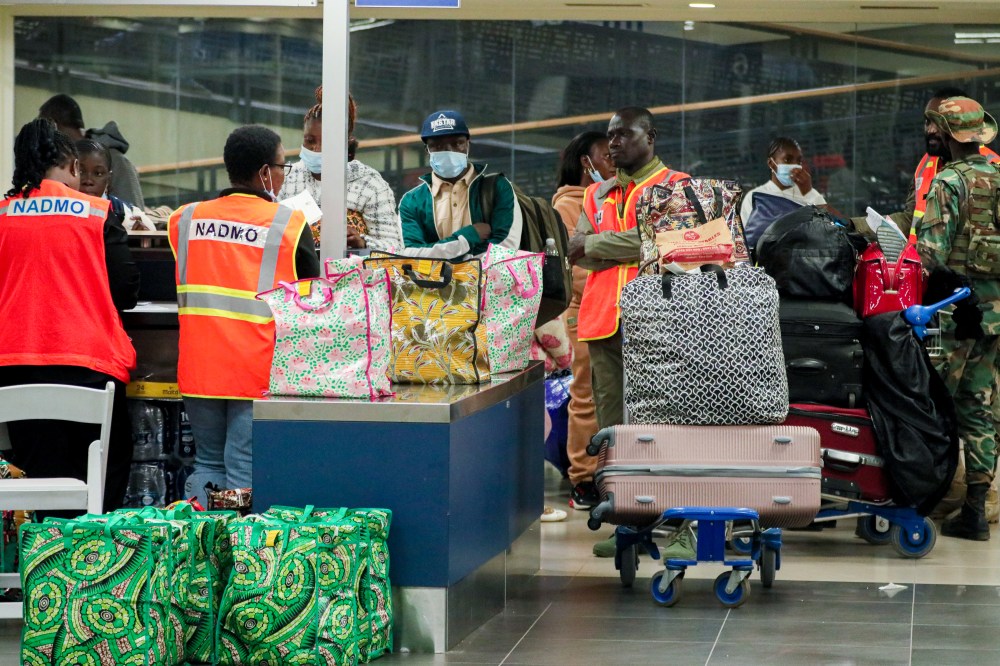
Ghana, Nigeria, Kenya and Mozambique said recently that their citizens have faced threats and violence in South Africa because they are foreigners. Ghana repatriated around 300 of its citizens from South Africa last month and said more will be offered the chance to return home because of what it called threats against them.
Mozambique’s government said this week that five of its citizens were killed in what it referred to as xenophobic attacks in the town of Mossel Bay on South Africa’s south coast.
South Africa’s coalition government placed a new focus on the issue of immigration after it was formed in 2024 and says it has deported over 100,000 people in the last two years who were in the country illegally. Ramaphosa said Sunday that around 450,000 people trying to enter South Africa without documents had been stopped at the border in the last year.
Ramaphosa said there had been “weaknesses” in the way South Africa previously managed migration and the government would take “decisive” action now, but he also appealed that people “not turn on each other” over the issue.
___
More AP news on migration: https://apnews.com/hub/migration