

US sanctions over 100 Nicaraguan officials and relatives with travel ban
Advertisement
Read this article for free:
or
Already have an account? Log in here »
To continue reading, please subscribe:

Digital Subscription
One year of digital access for only $205*
- Enjoy unlimited reading on winnipegfreepress.com
- Read the E-Edition, our digital replica newspaper
- Access News Break, our award-winning app
- Play interactive puzzles
*First annual payment billed as $205.00 + GST for one year. This annual subscription will automatically renew at $233.00 + GST every 52 weeks (10% off the regular annual price of $259.35). Offer available to new and qualified returning subscribers only. Cancel any time.
To continue reading, please subscribe:
Add Free Press access to your Brandon Sun subscription for only an additional
$1 for the first 4 weeks*
- Enjoy unlimited reading on winnipegfreepress.com
- Read the E-Edition, our digital replica newspaper
- Access News Break, our award-winning app
- Play interactive puzzles
*Your next Brandon Sun subscription payment will increase by $1.00 and you will be charged $17.95 plus GST for four weeks. After four weeks, your payment will increase to $24.95 plus GST every four weeks.
Read unlimited articles for free today:
or
Already have an account? Log in here »
WASHINGTON (AP) — The United States has placed travel bans on more than 100 Nicaraguan officials and their family members as part of a broader campaign to punish the current government for human rights abuses.
Secretary of State Marco Rubio said in a statement on Monday that the new sanctions were imposed in part because of the death last month of an imprisoned activist, Brooklyn Rivera, who criticized the policies of Nicaraguan President Daniel Ortega and his wife and co-president Rosario Murillo.
“The United States stands with the Nicaraguan people who, like Rivera, aspire to see a free Nicaragua,” Rubio said.
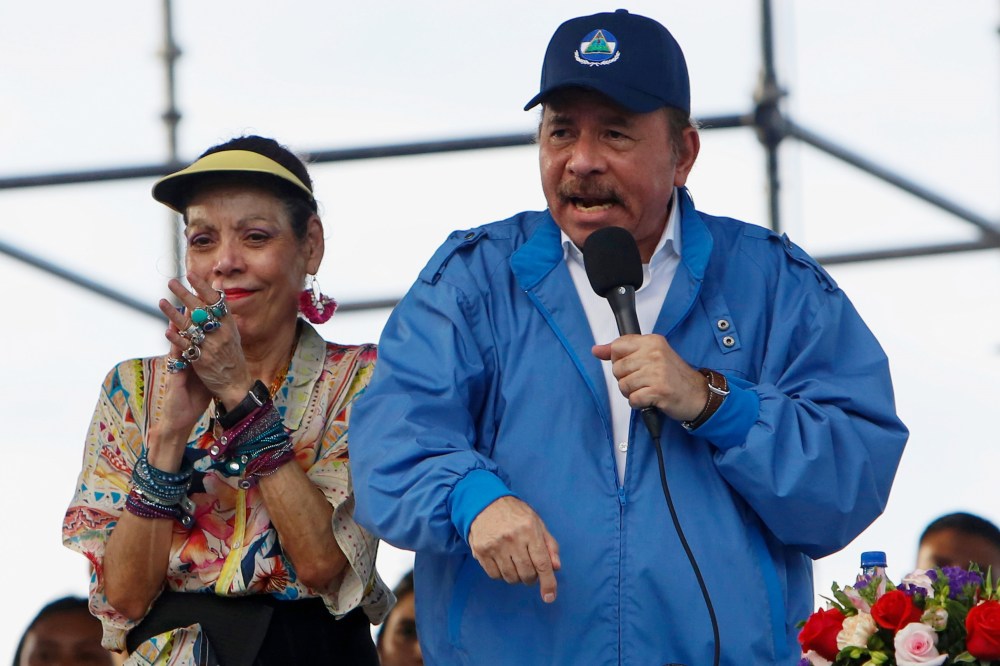
Nicaragua’s government did not immediately respond to a request for comment.
The U.S. has now barred more than 2,350 Nicaraguan officials and family members from entering. The identities of the most recent ones were not released.
In a post on X, the U.S. Bureau of Western Hemisphere Affairs noted that six of Rivera’s family members and friends had gone missing, and condemned their disappearance.
In April, the Trump administration slapped sanctions on two sons of Nicaragua’s husband-and-wife co-presidents.
Rivera was a renowned Indigenous leader who spent years fighting for the rights of his community and was imprisoned by the government in September 2023. His arrest came during a yearslong crackdown on civil society and dissent, which began following mass protests in 2018 that the government violently repressed.
Nicaragua’s government has said Rivera died from a bacterial infection after his health had declined following a case of COVID-19, which led to his physical and neurological deterioration.
Human rights activists and groups worldwide denounced his death, and the U.S. had called for his release when the government published photos of him in the hospital in critical condition.
Nicaragua’s government has also imprisoned adversaries, religious leaders, journalists and more, then exiled them, stripping hundreds of their citizenship and possessions. Since 2018, it has shuttered more than 5,000 organizations, largely religious, and forced thousands to flee the country.