

China touts Xinjiang at trade forum, spotlighting a region once marked by detention centers
Advertisement
Read this article for free:
or
Already have an account? Log in here »
To continue reading, please subscribe:

Digital Subscription
One year of digital access for only $205*
- Enjoy unlimited reading on winnipegfreepress.com
- Read the E-Edition, our digital replica newspaper
- Access News Break, our award-winning app
- Play interactive puzzles
*First annual payment billed as $205.00 + GST for one year. This annual subscription will automatically renew at $233.00 + GST every 52 weeks (10% off the regular annual price of $259.35). Offer available to new and qualified returning subscribers only. Cancel any time.
To continue reading, please subscribe:
Add Free Press access to your Brandon Sun subscription for only an additional
$1 for the first 4 weeks*
- Enjoy unlimited reading on winnipegfreepress.com
- Read the E-Edition, our digital replica newspaper
- Access News Break, our award-winning app
- Play interactive puzzles
*Your next Brandon Sun subscription payment will increase by $1.00 and you will be charged $17.95 plus GST for four weeks. After four weeks, your payment will increase to $24.95 plus GST every four weeks.
Read unlimited articles for free today:
or
Already have an account? Log in here »
ALTAY, China (AP) — China is hosting an international conference in Xinjiang to promote economic development efforts in the northwestern region, which has been known as the site of mass detentions of ethnic minorities.
The International Conference for Trans-Altai Subregional Cooperation being held Wednesday in the city of Altay includes officials from Kazakhstan, Mongolia, Russia and other nations who are there to discuss trade and economic cooperation in the landlocked region. China plans to develop coal, oil and gas, cotton and other industries in Xinjiang.
“Xinjiang has become a vivid epitome of China’s rapid economic development and fully reflected the significant advantages and vitality of China’s governance,” said Chen Xiaojiang, secretary of the Chinese Communist Party Xinjiang Committee.
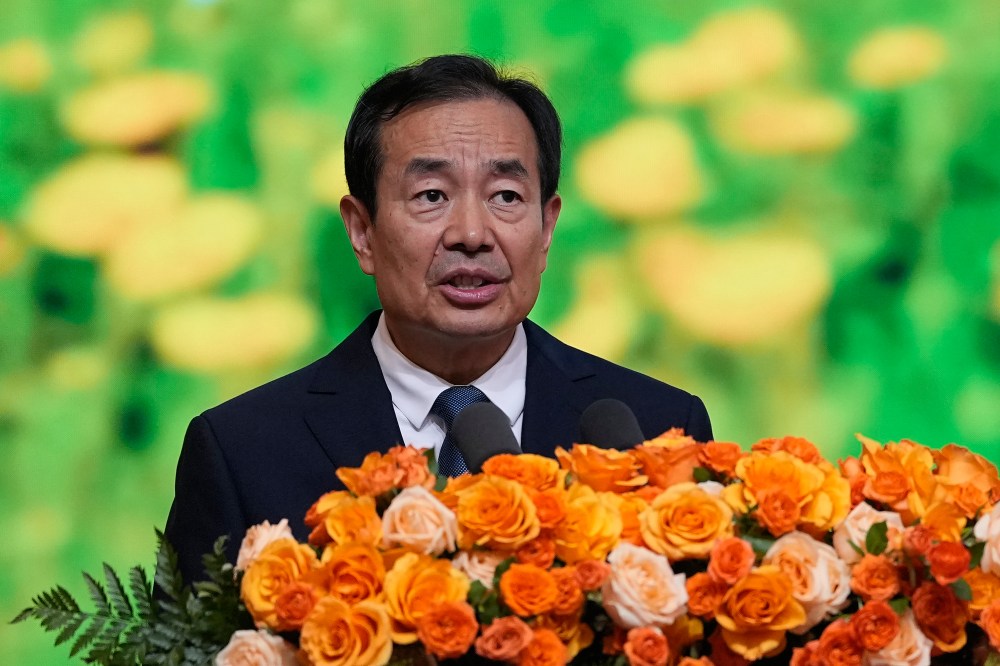
The region also has plans for a number of large infrastructure projects including more railways and flights, Chen said.
Like many other provinces in China’s west, Xinjiang is poorer than the industrial east coast. Rural residents of the province had per capita income of 13,052 yuan ($1,927) in 2020, while rural residents in China’s wealthy province Zhejiang had income of 31,930 yuan ($4,714) in 2020.
The region’s economic disparity is one of the forces that led to turmoil that culminated in attacks by a small number of extremists among the Uyghurs. China then imprisoned a million or more people from ethnic minority groups, mostly Uyghurs, beginning in 2017. The government said the detentions were a response to the attacks.
By 2021, China said it had shut most of the detention centers, but at least a few camps were converted into facilities serving as prisons. Information leaked to The Associated Press showed thousands of Uyghurs were imprisoned with long sentences on what experts say were fabricated or exaggerated charges.
For those outside prison, particularly in areas of southern Xinjiang with large Uyghur populations, activists say forced participation in government jobs programs has been widespread and is increasing in China’s latest five-year economic plan, according to human rights group Global Rights Compliance.
The Chinese government has previously said what it calls “anti-China forces” have exaggerated issues in Xinjiang by portraying authorities’ counterterrorism and anti-extremism efforts as targeting specific ethnic, regional or religious groups.