

Colombia’s ELN rebels declare ceasefire before Sunday’s presidential election
Advertisement
Read this article for free:
or
Already have an account? Log in here »
To continue reading, please subscribe:

Digital Subscription
One year of digital access for only $205*
- Enjoy unlimited reading on winnipegfreepress.com
- Read the E-Edition, our digital replica newspaper
- Access News Break, our award-winning app
- Play interactive puzzles
*First annual payment billed as $205.00 + GST for one year. This annual subscription will automatically renew at $233.00 + GST every 52 weeks (10% off the regular annual price of $259.35). Offer available to new and qualified returning subscribers only. Cancel any time.
To continue reading, please subscribe:
Add Free Press access to your Brandon Sun subscription for only an additional
$1 for the first 4 weeks*
- Enjoy unlimited reading on winnipegfreepress.com
- Read the E-Edition, our digital replica newspaper
- Access News Break, our award-winning app
- Play interactive puzzles
*Your next Brandon Sun subscription payment will increase by $1.00 and you will be charged $17.95 plus GST for four weeks. After four weeks, your payment will increase to $24.95 plus GST every four weeks.
Read unlimited articles for free today:
or
Already have an account? Log in here »
BOGOTÁ, Colombia (AP) — Colombia’s largest remaining rebel group announced a unilateral ceasefire Monday as the nation heads into a highly polarized presidential election next weekend.
In a statement published on its X account, the National Liberation Army, or ELN, said that it has told its fighters to cease attacks on the nation’s military from June 20 to June 23. Colombia’s presidential election will be held on Sunday, June 21.
The ELN said that it respects citizens’ “right to vote freely” and added that it does not want to “threaten any of the candidates, or stop people from voting.”
The rebels also warned against foreign interference in the elections.
“We cannot accept any involvement by leaders of other countries in political decisions that should only concern Colombians,” the statement said.
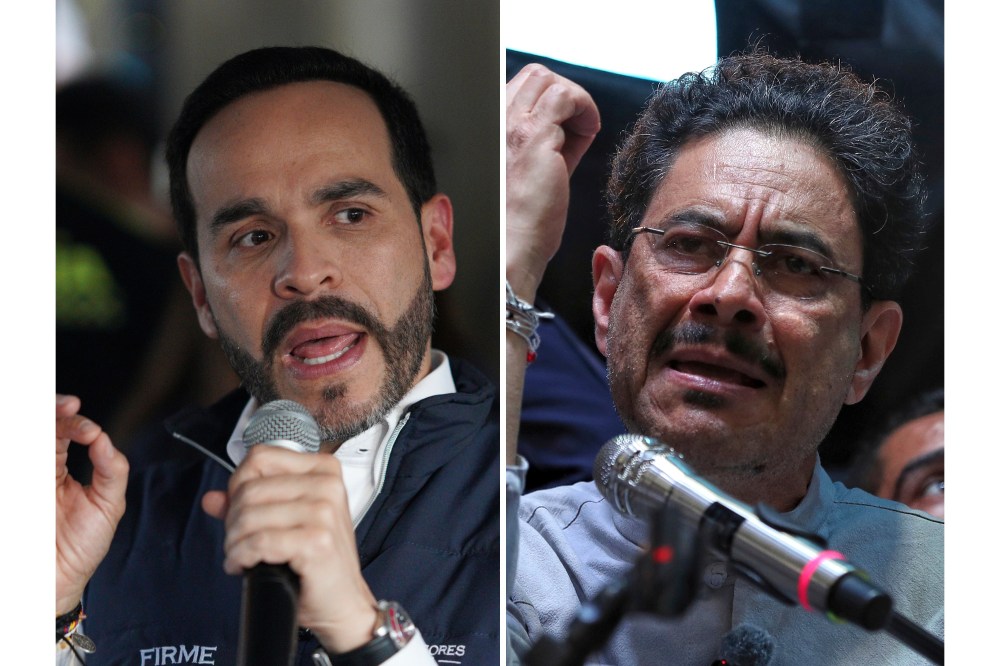
Colombia’s presidential election pits Sen. Iván Cepeda, an ally of President Gustavo Petro, against Abelardo de la Espriella, a conservative lawyer, who was endorsed by U.S. President Donald Trump earlier this month. De la Espriella has promised to take a more confrontational approach toward the nation’s remaining rebel groups by canceling peace talks that started under Petro
Critics say that over the past four years, rebel groups in Colombia have used ceasefires to regroup, rearm and strengthen their grip over rural communities, where they extort businesses and threaten anyone who stands in the way of illegal enterprises.
The Petro administration launched peace talks with the ELN in 2023, but the negotiations were canceled in 2025 after the rebels waged a series of attacks in northeast Colombia that forced more than 56,000 people to flee their homes.
However, the Petro administration continues to hold negotiations with other groups that are known for running drug trafficking routes and profiting from illegal mining, including the Gulf Clan.
Last week, De la Espriella’s campaign urged Colombian prosecutors to investigate whether rebel groups had coerced voters in 109 remote municipalities to vote for Cepeda. The ruling party candidate got more than 70% of the vote in those municipalities during the first round of voting on May 31. Cepeda has denied involvement of rebel groups in his campaign.
In the first round of voting, which included 14 candidates, Cepeda gained 40.9% of the overall vote, while De la Espriella garnered 43.7%.
According to Colombia’s Defense Ministry, the ELN has more than 6,000 fighters in Colombia and Venezuela, where the group takes a cut from illegal gold mining, and the drug trade.
The group was founded in the 1960s by union leaders and intellectuals concerned about social justice and inspired by the Cuban revolution. In recent decades the ELN has become known for carrying out criminal activities in the areas where it operates, including extortion and attacks on oil infrastructure, with Petro describing its leaders as “drug traffickers disguised as guerrilla fighters.”