

California labor union offers to scale back billionaire tax proposal after pushback
Advertisement
Read this article for free:
or
Already have an account? Log in here »
To continue reading, please subscribe:

Digital Subscription
One year of digital access for only $205*
- Enjoy unlimited reading on winnipegfreepress.com
- Read the E-Edition, our digital replica newspaper
- Access News Break, our award-winning app
- Play interactive puzzles
*First annual payment billed as $205.00 + GST for one year. This annual subscription will automatically renew at $233.00 + GST every 52 weeks (10% off the regular annual price of $259.35). Offer available to new and qualified returning subscribers only. Cancel any time.
To continue reading, please subscribe:
Add Free Press access to your Brandon Sun subscription for only an additional
$1 for the first 4 weeks*
- Enjoy unlimited reading on winnipegfreepress.com
- Read the E-Edition, our digital replica newspaper
- Access News Break, our award-winning app
- Play interactive puzzles
*Your next Brandon Sun subscription payment will increase by $1.00 and you will be charged $17.95 plus GST for four weeks. After four weeks, your payment will increase to $24.95 plus GST every four weeks.
Read unlimited articles for free today:
or
Already have an account? Log in here »
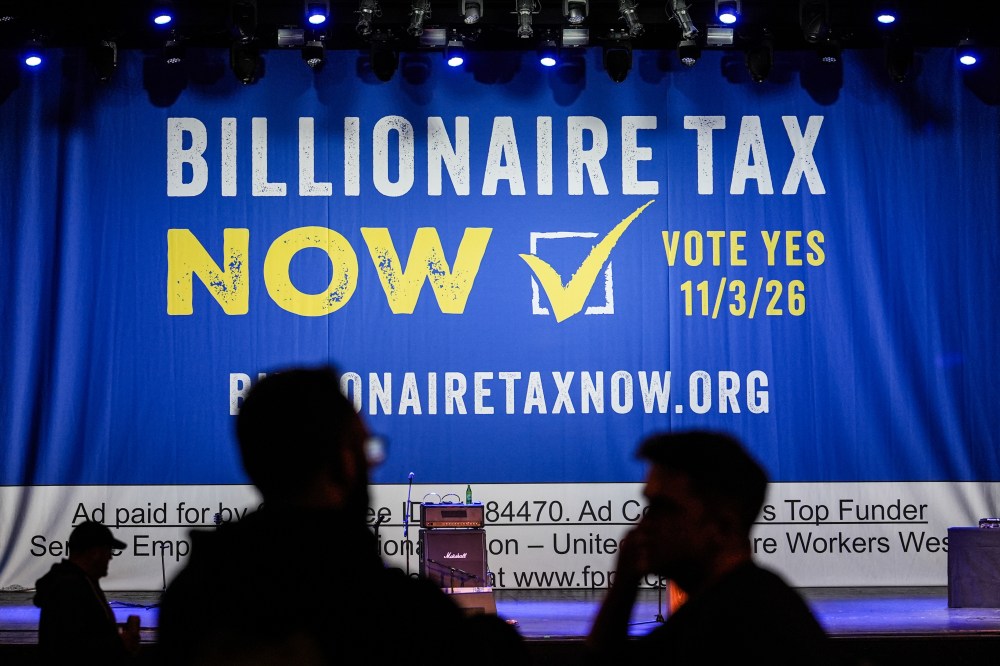
SACRAMENTO, Calif. (AP) — A labor union behind a controversial tax on California billionaires significantly scaled back its proposal a day after it qualified for the November ballot, but the offer Thursday wasn’t enough to get the governor on board.
The proposal from the Service Employees International Union Healthcare Workers West to impose a one-time, 5% tax on individuals whose net worth exceeds $1 billion faces staunch pushback from a wide swath of critics, including Democratic Gov. Gavin Newsom. The union said Thursday that it would abandon the 5% tax proposal if Newsom would join them in supporting a 2% levy. The updated proposal would instead have to be passed by the Legislature, given a June 25 deadline for the measure to qualify for the ballot.
Tara Gallegos, a spokesperson for Newsom, said scaling it back doesn’t change its “fundamental flaws that harm working Californians.”
“The Governor supports making the wealthiest Americans pay their fair share, but this poorly designed state-only measure will defund teachers, schools, clinics, and public safety,” she said in a statement.
The tax, to be paid by those living in the state as of Jan. 1, 2026, is meant to generate $100 billion in revenue, mainly to counter federal cuts to healthcare for low-income people with some money going to food assistance and education programs.
“A 2% one-time tax on that accumulated wealth is modest by any objective measure especially if it means keeping emergency rooms open and saving patient lives,” backers wrote in a letter to Newsom.
Secretary of State Shirley Weber, a Democrat, said Wednesday night that petitioners collected more than the roughly 875,000 signatures needed to place the original proposal before voters.
States have been debating how to respond to the major tax breaks and spending cuts legislation President Donald Trump signed last year. The proposal has already divided Democrats and major labor unions and triggered an expensive campaign to defeat it. The proposed tax is backed by prominent progressives including Vermont Sen. Bernie Sanders.
Silicon Valley tech moguls have spent millions to defeat it, and prominent players in Sacramento have opposed it. They include the California Medical Association and California School Boards Association, which helped launch a committee this week urging voters to reject it if it ends up on the ballot in November. Newsom also opposed a ballot measure in 2022 to increase taxes on the wealthy, which would have funded programs that help people buy electric cars or install more chargers. Voters rejected it.
Critics say the original measure would decrease state revenue over time by pushing the ultrawealthy to leave, taking the money they would contribute in income taxes with them. That would deal a huge blow to a state that relies on its top 1% of earners for nearly half its personal income tax revenue.
“This flawed measure is the wrong approach for California’s small businesses and working families,” said Roger Salazar, a spokesperson for Golden State Promise, a political committee fighting the tax.
The nonpartisan Legislative Analyst’s Office estimates that the 5% tax would generate tens of billions of dollars in the first few years, but that income tax revenues could subsequently decline by hundreds of millions of dollars annually.
Since the proposal was announced in October, Google co-founder Sergey Brin has donated $82 million to a political committee called Building a Better California that backs a variety of initiatives designed to blunt the billionaire tax proposal. It has raised more than $118 million, counting Brin’s contributions, from fewer than a dozen donors.
State lawmakers passed budget bills this week that aim to raise revenue in other ways, including by extending a tax on healthcare providers. Newsom and legislative leaders agree to this approach, Senate President pro Tempore Monique Limón said.
“The budget, as approved by the Legislature and now being negotiated with the Governor, does not include the billionaire’s tax,” the Democrat said in a statement. “Instead, it reflects additional revenues to address our long-term structural deficit.”