

Church of England apologizes for role in forced adoptions as recent as the mid-1970s
Advertisement
Read this article for free:
or
Already have an account? Log in here »
To continue reading, please subscribe:

Digital Subscription
One year of digital access for only $205*
- Enjoy unlimited reading on winnipegfreepress.com
- Read the E-Edition, our digital replica newspaper
- Access News Break, our award-winning app
- Play interactive puzzles
*First annual payment billed as $205.00 + GST for one year. This annual subscription will automatically renew at $233.00 + GST every 52 weeks (10% off the regular annual price of $259.35). Offer available to new and qualified returning subscribers only. Cancel any time.
To continue reading, please subscribe:
Add Free Press access to your Brandon Sun subscription for only an additional
$1 for the first 4 weeks*
- Enjoy unlimited reading on winnipegfreepress.com
- Read the E-Edition, our digital replica newspaper
- Access News Break, our award-winning app
- Play interactive puzzles
*Your next Brandon Sun subscription payment will increase by $1.00 and you will be charged $17.95 plus GST for four weeks. After four weeks, your payment will increase to $24.95 plus GST every four weeks.
Read unlimited articles for free today:
or
Already have an account? Log in here »
LONDON (AP) — The Church of England apologized Thursday for its role in forced adoptions as recent as the mid-1970s, acknowledging the painful experiences of many unmarried women at so-called mother and baby homes in the U.K. that were affiliated with the church.
Archbishop of Canterbury Sarah Mullally, the first woman to lead the church and the person seen as the spiritual leader of the worldwide Anglican Communion, issued the apology as the church released a report on conditions at the homes from 1949 to 1976.
Many women and girls were forced to do menial labor as a form of “correction’’ for having children out of wedlock, and their babies were sometimes described as commodities available to meet the demand for adoption, the report found.
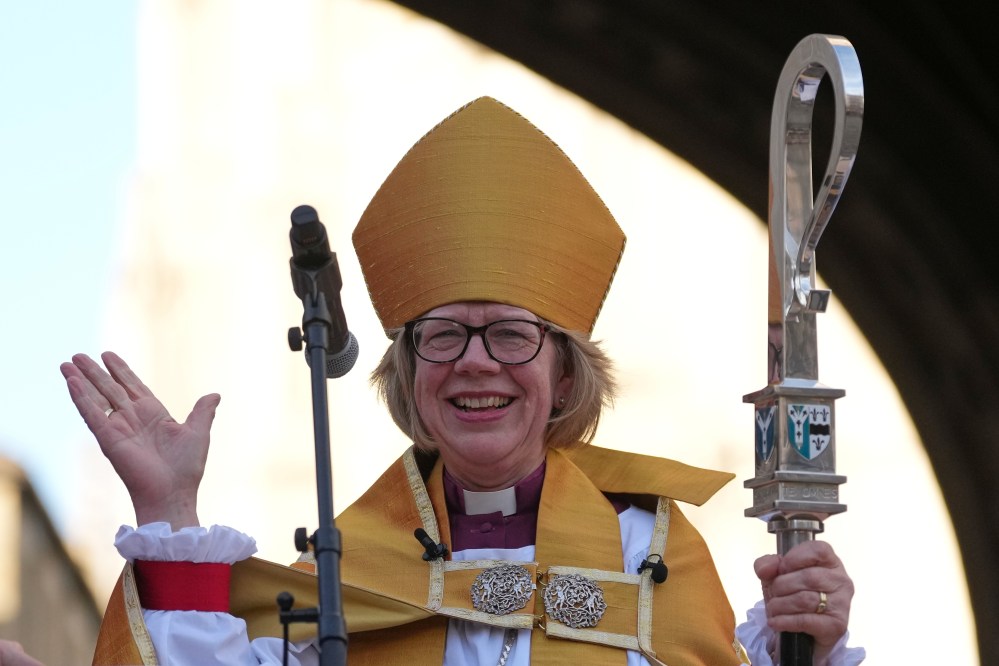
“We are profoundly sorry for the pain, trauma and stigma experienced — and still carried — by many people because of historical adoption practices in homes affiliated to the Church of England,’’ Mullally said. “We have heard firsthand the accounts of mothers who were separated from their babies in circumstances where they had very few meaningful choices.”
During the period covered by the report, about 185,000 children born to unmarried mothers were put up for adoption in England and Wales. It was a time when a “culture of shame, stigma and secrecy” surrounded unmarried mothers and their children, even as attitudes about sex and marriage were beginning to change, the report said.
While church policies emphasized that unmarried women had the right to keep their children and the children had a right to remain with their mothers, staff often ignored this guidance and worked closely with adoption agencies, researchers found.
The guidance “sat alongside language which expressed dehumanizing and dismissive attitudes, falling short of what would be expected towards anyone in the church’s care, not least people who were rendered especially vulnerable by their circumstances,” the report said.