

Judge bars immigration arrests at US courthouses in a setback for Trump
Advertisement
Read this article for free:
or
Already have an account? Log in here »
To continue reading, please subscribe:

Digital Subscription
One year of digital access for only $205*
- Enjoy unlimited reading on winnipegfreepress.com
- Read the E-Edition, our digital replica newspaper
- Access News Break, our award-winning app
- Play interactive puzzles
*First annual payment billed as $205.00 + GST for one year. This annual subscription will automatically renew at $233.00 + GST every 52 weeks (10% off the regular annual price of $259.35). Offer available to new and qualified returning subscribers only. Cancel any time.
To continue reading, please subscribe:
Add Free Press access to your Brandon Sun subscription for only an additional
$1 for the first 4 weeks*
- Enjoy unlimited reading on winnipegfreepress.com
- Read the E-Edition, our digital replica newspaper
- Access News Break, our award-winning app
- Play interactive puzzles
*Your next Brandon Sun subscription payment will increase by $1.00 and you will be charged $17.95 plus GST for four weeks. After four weeks, your payment will increase to $24.95 plus GST every four weeks.
Read unlimited articles for free today:
or
Already have an account? Log in here »
A judge on Tuesday barred the federal government from making arrests at immigration courts, ordering an end to a practice that took hold shortly after President Donald Trump took office last year.
The Trump administration’s reversal of long-standing policy against arrests at immigration court resulted “not from merely unreasoned decision-making but a complete lack of decision-making,” wrote U.S. District Judge Casey Pitts of San Francisco. Authorities failed to address the “chilling effect” of arrests on whether people attend court hearings.
“For 80 years, Congress has commanded federal agencies to think before they act,” wrote Pitts, referring to the Administrative Procedure Act, a 1946 law that requires federal agencies to justify its actions. That law, he wrote, “does not require an agency to make the choice that a reviewing court might deem preferable. But it demands that an agency at least provide sound reasons for following its chosen course.”
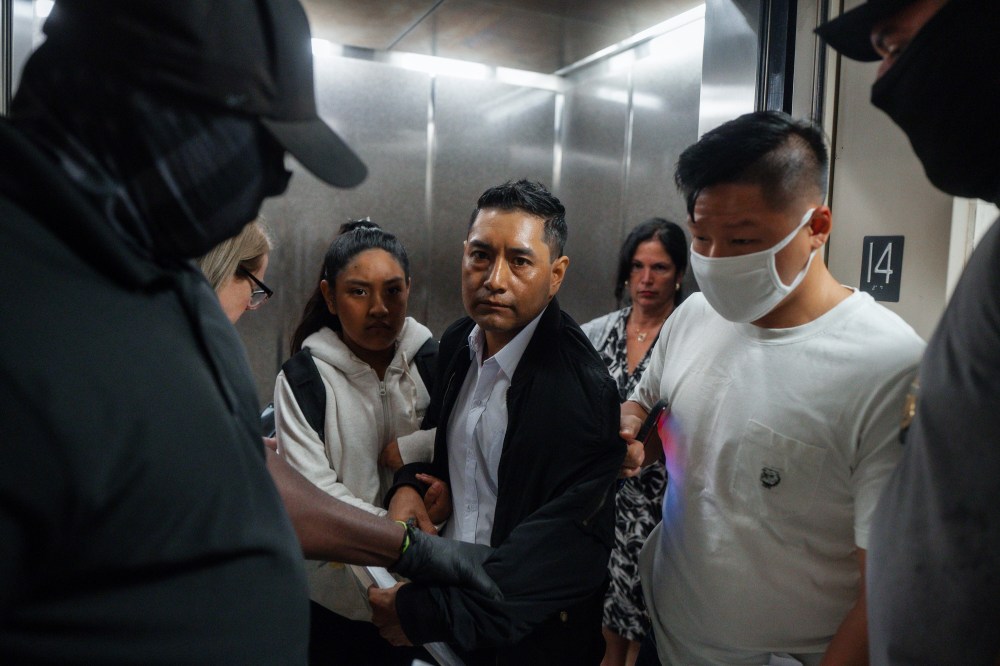
The ruling is the second setback for courthouse arrests since May when a federal judge in New York barred them at immigration courts. That order applied only in New York, while the latest decision invalidated the policy nationwide.
James Percival, the U.S. Homeland Security Department’s general counsel, criticized the ruling as an exercise in judicial overreach.
“When a judge sentences a defendant, the defendant is taken into custody. If an alien is ordered removed by an immigration judge, the same should happen. A district judge ordering otherwise is naked judicial activism in service of an anti-American, open borders agenda,” Percival wrote online.
After Trump took office, hearings across the country often ended with cases being dismissed by the government, setting the stage for plainclothes agents to make arrests in hallways in coordination with attorneys from the Department of Homeland Security.
Pitts, who was appointed by President Joe Biden, faulted the administration for carrying out the arrests and for holding people in nearby cells for longer than a prescribed 12-hour limit.