

Presidential candidate won’t accept Peru’s runoff vote unless overseas ballots are tossed
Advertisement
Read this article for free:
or
Already have an account? Log in here »
To continue reading, please subscribe:

Digital Subscription
One year of digital access for only $205*
- Enjoy unlimited reading on winnipegfreepress.com
- Read the E-Edition, our digital replica newspaper
- Access News Break, our award-winning app
- Play interactive puzzles
*First annual payment billed as $205.00 + GST for one year. This annual subscription will automatically renew at $233.00 + GST every 52 weeks (10% off the regular annual price of $259.35). Offer available to new and qualified returning subscribers only. Cancel any time.
To continue reading, please subscribe:
Add Free Press access to your Brandon Sun subscription for only an additional
$1 for the first 4 weeks*
- Enjoy unlimited reading on winnipegfreepress.com
- Read the E-Edition, our digital replica newspaper
- Access News Break, our award-winning app
- Play interactive puzzles
*Your next Brandon Sun subscription payment will increase by $1.00 and you will be charged $17.95 plus GST for four weeks. After four weeks, your payment will increase to $24.95 plus GST every four weeks.
Read unlimited articles for free today:
or
Already have an account? Log in here »
LIMA, Peru (AP) — Presidential candidate Roberto Sánchez said Tuesday that he’ll refuse to recognize results of Peru’s June 7 presidential runoff if officials count ballots cast by Peruvians overseas that he alleges were processed improperly.
With 99.72% of votes counted, Sánchez trails conservative candidate Keiko Fujimori by just 40,000 votes and is expected to lose the election, once authorities finish processing tally sheets. More than 18 million Peruvians participated in the runoff.
Sánchez, a former commerce minister who is popular in rural areas and among Peru’s Indigenous population, would win the election if votes cast by Peruvians living abroad are discarded, according to data published by election authorities.
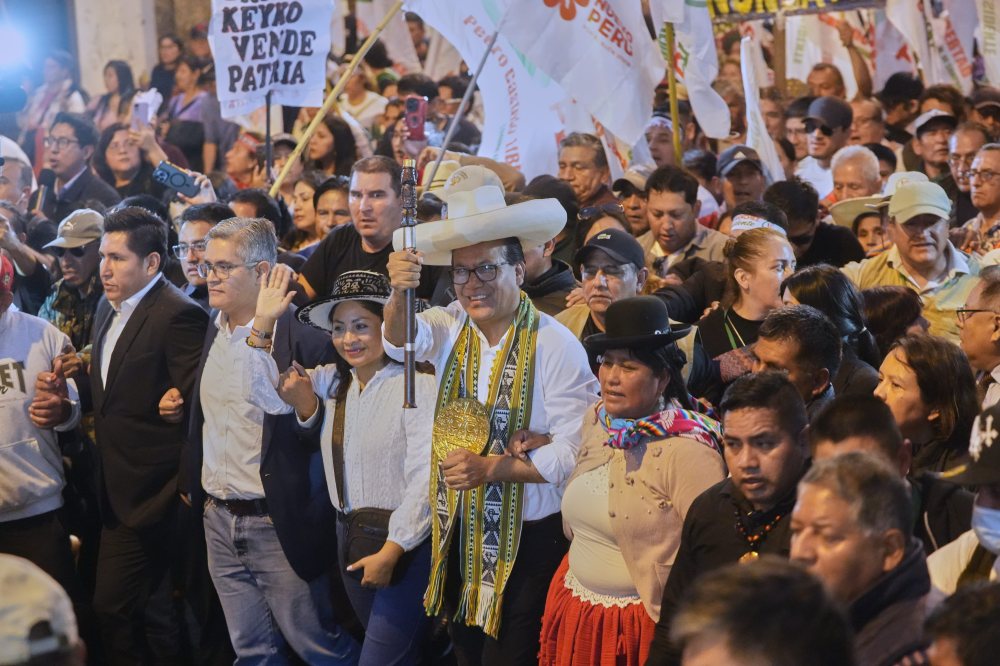
Sánchez’s campaign has filed a petition to reject overseas ballots, arguing that Peruvian consulates abroad did not use a government-provided app to scan tally sheets as required by law.
Peru’s Foreign Affairs Ministry said in a statement that, in late May, it had obtained authorization from electoral officials to conduct voting at consulates without scanning tally sheets, but by sending them directly to the capital, Lima, to be processed after voting ended.
The ministry said the change was made because of problems with the scanning app during the first round. Sánchez’s campaign argues that the procedural change created opportunities for fraud, an allegation denied by both Peru’s national elections agency, ONPE, and the Foreign Affairs Ministry.
“Under these conditions of transgression of the rules, we will not recognize the government of Miss (Keiko) Fujimori,” Sánchez said Tuesday.
More than 307,000 Peruvians living abroad voted in the June 7 runoff between Sánchez and Fujimori, with 65% of them supporting Fujimori, according to ONPE.
Fujimori has not commented on Sánchez’s request to annul the overseas votes.
The conservative candidate, who campaigned on a tough on crime platform, won an overwhelming majority of votes cast by Peruvians living in the United States, Argentina and Japan, where her paternal grandparents were born.
Sánchez, an ally of imprisoned former President Pedro Castillo, has promised to make reforms to the nation’s mining sector that would give community groups a stake in copper and gold mines. His campaign easily defeated Fujimori in mountainous areas of southern Peru that have long suffered from economic exclusion, but fell behind Fujimori in Lima, where about a third of Peru’s voters are based.
Peru has had eight presidents in the past decade, only two of whom were elected by popular vote. The others replaced presidents who resigned or were removed by Peru’s Congress amid corruption allegations.
Despite the political instability Peru has maintained stable economic policies that have enabled the country to be one of the fastest-growing economies in South America.
___
Follow AP’s coverage of Latin America and the Caribbean at https://apnews.com/hub/latin-america