

DEA asks watchdog to investigate claims that agents permitted fentanyl to hit the streets
Advertisement
Read this article for free:
or
Already have an account? Log in here »
To continue reading, please subscribe:

Digital Subscription
One year of digital access for only $205*
- Enjoy unlimited reading on winnipegfreepress.com
- Read the E-Edition, our digital replica newspaper
- Access News Break, our award-winning app
- Play interactive puzzles
*First annual payment billed as $205.00 + GST for one year. This annual subscription will automatically renew at $233.00 + GST every 52 weeks (10% off the regular annual price of $259.35). Offer available to new and qualified returning subscribers only. Cancel any time.
To continue reading, please subscribe:
Add Free Press access to your Brandon Sun subscription for only an additional
$1 for the first 4 weeks*
- Enjoy unlimited reading on winnipegfreepress.com
- Read the E-Edition, our digital replica newspaper
- Access News Break, our award-winning app
- Play interactive puzzles
*Your next Brandon Sun subscription payment will increase by $1.00 and you will be charged $17.95 plus GST for four weeks. After four weeks, your payment will increase to $24.95 plus GST every four weeks.
Read unlimited articles for free today:
or
Already have an account? Log in here »
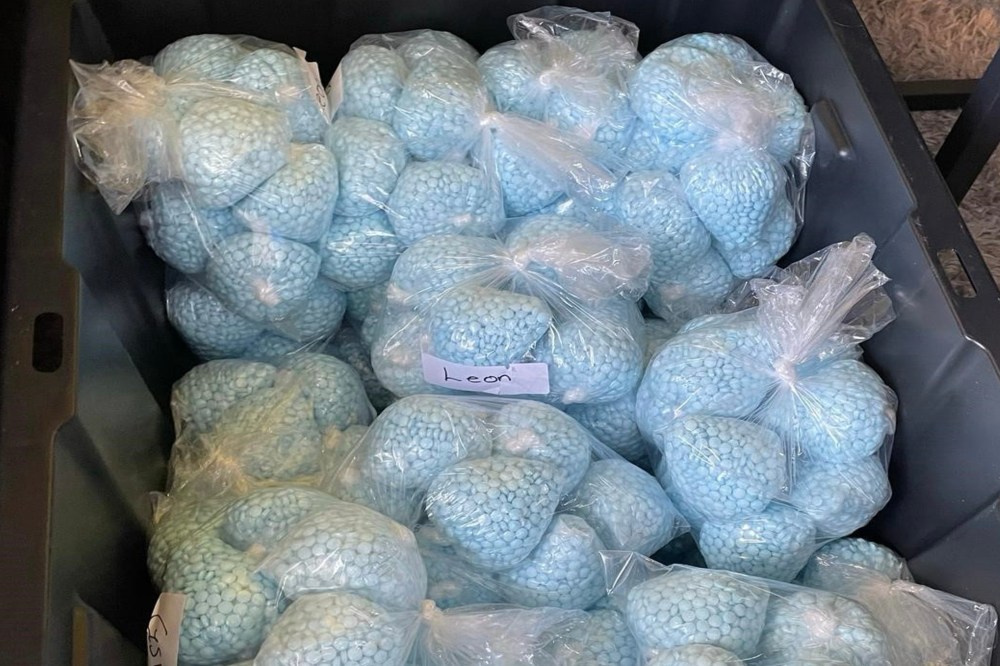
The federal Drug Enforcement Administration on Thursday asked the U.S. Justice Department’s internal watchdog to investigate a whistleblower’s claims that DEA agents permitted hundreds of thousands of fentanyl pills to hit the streets of New Mexico.
The request came days after an Associated Press investigation found agents repeatedly monitored — but did not seize — major shipments of the synthetic opioid in a bid to build bigger criminal cases between 2023 and 2025.
In a letter sent Thursday to the U.S. Justice Department’s Inspector General, DEA administrator Terry Cole wrote that an internal probe was necessary because “the allegations have generated significant public attention and have raised questions regarding DEA’s operational decisions, supervisory oversight, and response to concerns.”
Cole wrote in a public statement that his request “should not be interpreted as reflecting any lack of confidence in the professionalism or integrity of DEA personnel or in the investigative decisions made during this matter.”
“If improvements are identified, DEA will implement them,” he added. “Strong institutions are sustained — not diminished — by objective oversight and a willingness to continuously assess and improve.”
Current and former DEA agents told the AP the investigative strategy — known as letting the counterfeit painkillers “walk” — amounted to a gamble with public safety in a state ravaged by the fentanyl epidemic and may have violated Justice Department rules intended to safeguard communities from a drug the White House last year designated as a “ weapon of mass destruction.”
The AP investigation cited three current and former agents and government records, including an internal report of a 2023 delivery of 74,000 pills the DEA watched happen at a mobile home park in Albuquerque. One of those agents, David Howell, first raised serious concerns about this strategy in a 2023 whistleblower complaint. He continued to raise his objections internally and spoke at length with the AP about what he described as a strategy that “poisoned our community to make cases.”
In an earlier statement to AP, a DEA spokesperson said “public descriptions suggesting that DEA knowingly permitted fentanyl to reach communities are false and fundamentally mischaracterize the facts.”
The DEA’s request for the watchdog investigation came just a day after New Mexico Gov. Michelle Lujan Grisham asked the state’s attorney general to examine whether the agency’s actions violated New Mexico law, an extraordinary challenge to a federal law enforcement agency at a time when fentanyl remains one of the country’s deadliest public health threats.
“There are no words to describe how reckless and dangerous these decisions were,” Lujan Grisham said in a statement. “Make no mistake: the DEA knew people would die if these pills made it into New Mexico communities, and the agency let it happen anyway.”
The Justice Department said in a statement that it welcomes a partnership with New Mexico leaders to keep the state safe.
“Protecting the public requires more than addressing individual transactions as they occur,” the statement said. “It requires identifying the sources of supply, the individuals directing criminal activity and the organizations responsible for moving dangerous drugs into our communities.”
Democratic lawmakers in New Mexico, meanwhile, sent Cole a letter asking for a briefing on the DEA’s tactics in the state.
“New Mexicans are paying the price for a fentanyl epidemic that is tearing families apart and deserve answers,” U.S. Rep. Melanie Stansbury said in a statement. “At a time when overdose deaths continue to devastate our state and communities, the DEA should be focused on stopping these drugs before they reach our streets — period.”
___
Associated Press reporter Alanna Durkin Richer in Washington contributed to this report.