

Echoes of deadly Arizona wildfire with 3 firefighters killed in Colorado-Utah blaze
Advertisement
Read this article for free:
or
Already have an account? Log in here »
To continue reading, please subscribe:

Digital Subscription
One year of digital access for only $205*
- Enjoy unlimited reading on winnipegfreepress.com
- Read the E-Edition, our digital replica newspaper
- Access News Break, our award-winning app
- Play interactive puzzles
*First annual payment billed as $205.00 + GST for one year. This annual subscription will automatically renew at $233.00 + GST every 52 weeks (10% off the regular annual price of $259.35). Offer available to new and qualified returning subscribers only. Cancel any time.
To continue reading, please subscribe:
Add Free Press access to your Brandon Sun subscription for only an additional
$1 for the first 4 weeks*
- Enjoy unlimited reading on winnipegfreepress.com
- Read the E-Edition, our digital replica newspaper
- Access News Break, our award-winning app
- Play interactive puzzles
*Your next Brandon Sun subscription payment will increase by $1.00 and you will be charged $17.95 plus GST for four weeks. After four weeks, your payment will increase to $24.95 plus GST every four weeks.
Read unlimited articles for free today:
or
Already have an account? Log in here »
FORT COLLINS, Colo. (AP) — A wildfire that killed three firefighters along the Colorado-Utah border is one of the deadliest for firefighters since an Arizona wildfire 13 years ago.
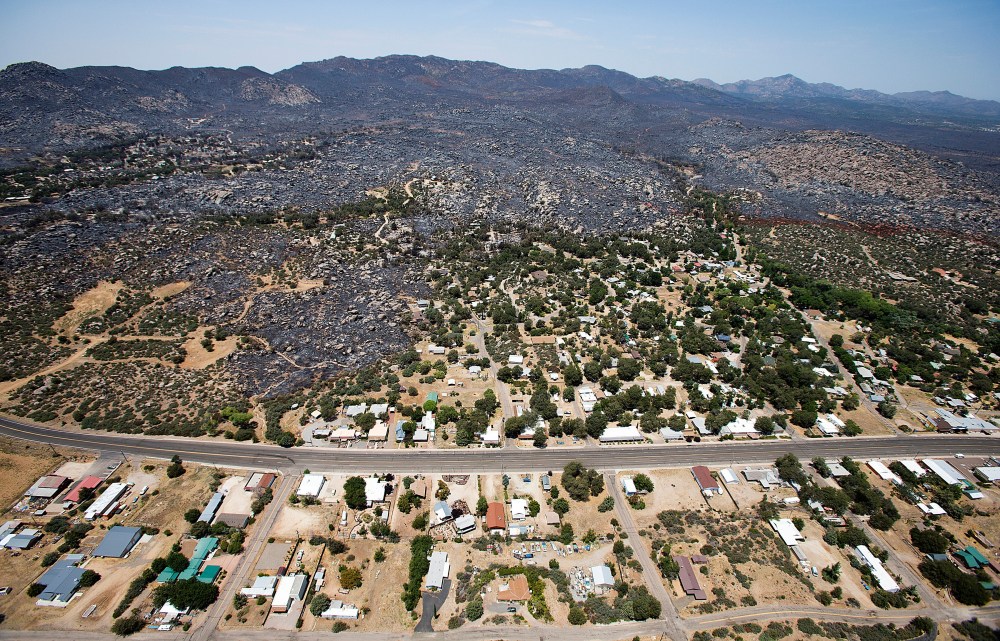
The Yarnell Hill Fire that killed 19 firefighters on June 30, 2013, remains the deadliest event on record for U.S. firefighters since the Sept. 11, 2001, attacks and the deadliest for U.S. wildland firefighters in over a century.
The firefighters died 30 miles (48 kilometers) southwest of Prescott, Arizona, after trying to escape flames fanned by shifting winds. They were deploying fire shelters — small, heat-resistant tents that can offer a chance at survival — when flames reached them in a brushy box canyon.
Temperatures reached 2,000 degrees (1,100 Celsius).
On Saturday, a wildfire west of Grand Junction, Colorado, killed three firefighters and injured two others. That fire has burned 44 square miles (114 square kilometers). The five firefighters were members of a Helitack crew who are dropped by helicopter into remote areas to saw and dig away vegetation and create fire-resistant barriers ahead of advancing flames.
As at the Yarnell Hill Fire, the firefighters decided to stop fleeing and use fire shelters to try to survive.
A complete investigation could take several months. Full knowledge of what happened could be elusive.
Investigators of the Yarnell Hill Fire could not verify radio communications from the firefighters for a half-hour period that may have shed light on their decision-making process.
The final investigation report ultimately did not fault the firefighters, saying they were fully qualified, staffed and trained and “followed all standards and guidelines.” Their commanders likewise made reasonable judgments and decisions in rapidly worsening conditions, according to the report.
“Complexity can outpace organizational attempts to respond,” the report concluded.
Fire shelters are a last resort, offering roll-of-the-dice odds under otherwise impossible circumstances. In a 2015 wildfire in Washington state, two firefighters who used such tents survived, while three who were in a truck died.
How much the protection the tents provide depends on the conditions in which they are deployed. They are not designed to withstand direct flame, Riva Duncan, president of Grassroots Wildland Firefighters, a firefighter advocacy group, said Monday.
“It’s your last-ditch effort to try to survive,” Duncan said.