

Supreme Court will weigh Trump-backed Republican appeal to enforce Arizona voting laws
Advertisement
Read this article for free:
or
Already have an account? Log in here »
To continue reading, please subscribe:

Digital Subscription
One year of digital access for only $205*
- Enjoy unlimited reading on winnipegfreepress.com
- Read the E-Edition, our digital replica newspaper
- Access News Break, our award-winning app
- Play interactive puzzles
*First annual payment billed as $205.00 + GST for one year. This annual subscription will automatically renew at $233.00 + GST every 52 weeks (10% off the regular annual price of $259.35). Offer available to new and qualified returning subscribers only. Cancel any time.
To continue reading, please subscribe:
Add Free Press access to your Brandon Sun subscription for only an additional
$1 for the first 4 weeks*
- Enjoy unlimited reading on winnipegfreepress.com
- Read the E-Edition, our digital replica newspaper
- Access News Break, our award-winning app
- Play interactive puzzles
*Your next Brandon Sun subscription payment will increase by $1.00 and you will be charged $17.95 plus GST for four weeks. After four weeks, your payment will increase to $24.95 plus GST every four weeks.
Read unlimited articles for free today:
or
Already have an account? Log in here »
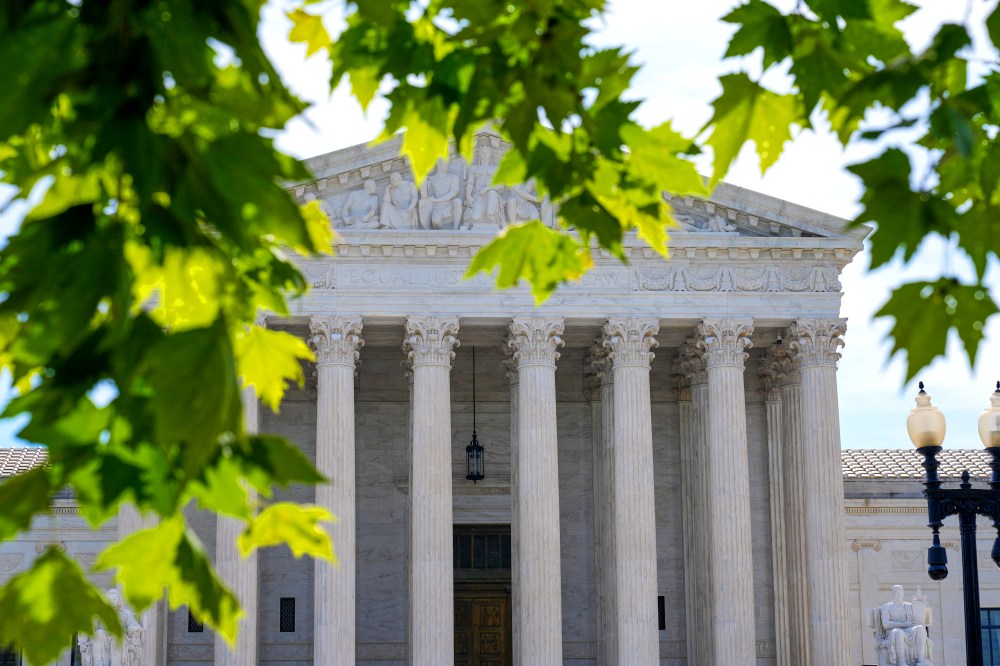
WASHINGTON (AP) — The Supreme Court said Monday it will consider a Republican push to enforce strict Arizona voting laws passed in the swing state after the 2020 election.
The high court has allowed some similar rules to take effect as lawsuits play out, including Arizona’s proof-of-citizenship requirement for state and local elections and a Virginia purge of voter rolls that the state said was aimed at keeping noncitizens from voting.
The appeal was filed by the Republican National Committee after lower courts found the measures violated federal voting laws, and it was joined by GOP President Donald Trump’s administration.
“The RNC is proud to lead this effort, and we will keep fighting nationwide to defend election integrity and ensure only eligible citizens cast a ballot,” said Chairman Joe Gruters.
The high court is expected to hear arguments in the fall and likely hand down an opinion after the midterm elections.
The Republican-controlled legislature passed the laws in 2022, part of a wave of similar proposals around the country after Trump falsely claimed widespread voter fraud was responsible for his narrow defeat there to Democrat Joe Biden. Trump reclaimed the state in 2024, helping secure his return to the White House.
One measure requires people to show proof of citizenship when registering to vote using a state form. Another calls for regular purges of the voter rolls to remove people if their citizenship could not be confirmed, including within 90 days of an election.
The case reached the Supreme Court’s emergency docket in 2024. The justices gave the GOP a partial victory, allowing Arizona to require proof of citizenship for registration in state and local elections but not federal races.
Also that year, the high court allowed Virginia to continue a purge of voter rolls shortly before the election.
Citizenship is required to vote across the country, and people must attest they are citizens under penalty of perjury to register. Arizona is among only a handful of states that require additional proof, like a driver’s license or passport. Data indicates that voting by noncitizens is rare.
Arizona tried to impose proof requirements for national elections in 2013, but the law was struck down by the Supreme Court. Now, people can register as “federal only” voters without providing proof of citizenship, but Arizona requires additional proof for state and local election participation.
Just over 19,000 people were registered as active federal-only voters in 2023.
___
Follow the AP’s coverage of the U.S. Supreme Court at https://apnews.com/hub/us-supreme-court.