

US envoys arrive in Qatar for meetings on Iran, with tensions high over Hormuz
Advertisement
Read this article for free:
or
Already have an account? Log in here »
To continue reading, please subscribe:

Digital Subscription
One year of digital access for only $205*
- Enjoy unlimited reading on winnipegfreepress.com
- Read the E-Edition, our digital replica newspaper
- Access News Break, our award-winning app
- Play interactive puzzles
*First annual payment billed as $205.00 + GST for one year. This annual subscription will automatically renew at $233.00 + GST every 52 weeks (10% off the regular annual price of $259.35). Offer available to new and qualified returning subscribers only. Cancel any time.
To continue reading, please subscribe:
Add Free Press access to your Brandon Sun subscription for only an additional
$1 for the first 4 weeks*
- Enjoy unlimited reading on winnipegfreepress.com
- Read the E-Edition, our digital replica newspaper
- Access News Break, our award-winning app
- Play interactive puzzles
*Your next Brandon Sun subscription payment will increase by $1.00 and you will be charged $17.95 plus GST for four weeks. After four weeks, your payment will increase to $24.95 plus GST every four weeks.
Read unlimited articles for free today:
or
Already have an account? Log in here »
DUBAI, United Arab Emirates (AP) — Two U.S. envoys arrived in Qatar on Tuesday for talks with mediators about the implementation of an initial deal to end the war in Iran, an official said.
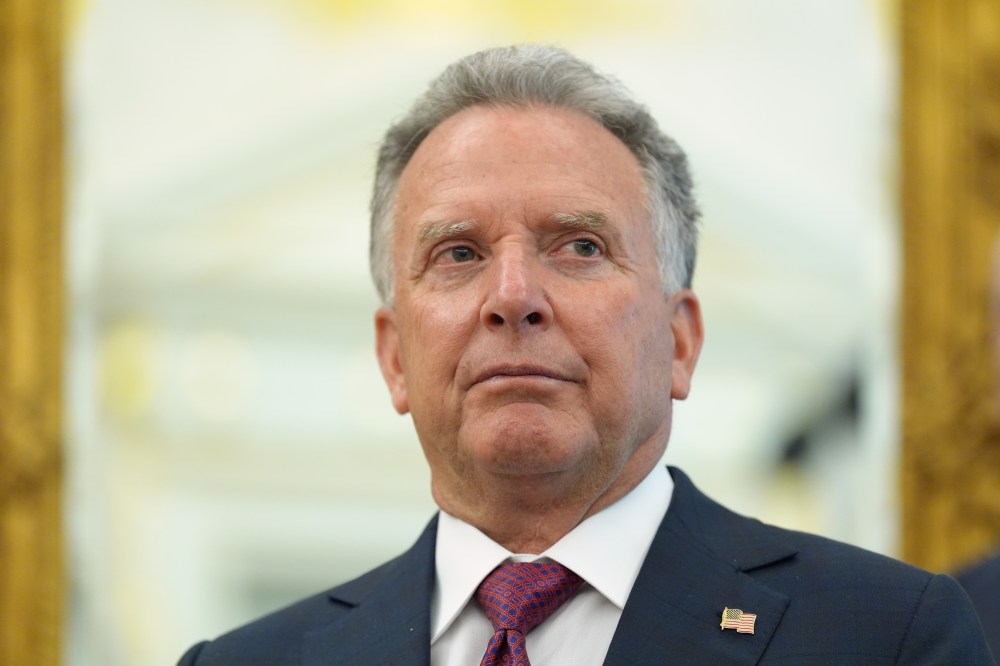
The visit by Steve Witkoff, U.S. President Donald Trump’s special Mideast envoy, and Jared Kushner, his son-in-law, comes after a weekend of crossfire in the Persian Gulf over efforts to reopen the Strait of Hormuz to shipping traffic.
The envoys won’t be having direct negotiations with Iranian diplomats while in Qatar’s capital, Doha, said Majed al-Ansari, a spokesman for Qatar’s Foreign Ministry. Instead, mediators are working for the time being as go-betweens for the talks, which won’t include any high-level officials, he added.
The U.S. and Iran have held indirect negotiations before. However, the two previous rounds collapsed and preceded the 12-day war Israel launched against Iran in 2025 and this year’s war, launched jointly by the U.S. and Iran on Feb. 28.
Iran is also sending a delegation to Qatar this week. Iran’s Foreign Ministry spokesman Esmail Baghaei said Tuesday that Iran has had no plans for a meeting with the American side at any level in the coming days.
“What will take place in Doha tomorrow is a discussion with the Qatari side about implementing parts of the memorandum of understanding, including the release of Iran’s blocked assets,” Baghaei told journalists at his own briefing.
It is possible the two sides could exchange messages through the Qatari mediators.
The U.S. and Iran agreed to an interim deal earlier this month that calls for Tehran to dilute its stockpile of enriched uranium. It also waives U.S.-backed oil sanctions on the country, calls for free traffic through the Strait of Hormuz and gives each side 60 days to hammer out broader agreements.
Iranian President Masoud Pezeshkian said Monday that Qatar plans to release $6 billion in frozen Iranian assets. A U.S. official, speaking on condition of anonymity because of the sensitive negotiations, confirmed the release amount, saying it would be used to buy U.S. food products for the Iranian people.
A fifth of the world’s oil was shipped through the Strait of Hormuz before the war began. Iran’s attacks and threats stopped cargo ships and tankers from moving through the strait, creating a global energy crisis.
The strait has long been considered an international waterway despite being in Iran and Oman’s territorial waters.
Both sides traded strikes amid efforts last week to open Oman’s territorial waters in the strait to both inbound and outbound ship traffic from the Persian Gulf. That raised concerns that negotiations to formally end the war could be disrupted.
Iran twice attacked vessels in the strait — including a tanker filled with Qatari crude — and drew retaliatory American airstrikes. Iran also launched drone and missile attacks targeting Bahrain and Kuwait on Sunday.
___
AP reporter Josh Boak in Washington contributed.