

Belarus’ authoritarian leader pardons 28 political prisoners to ease ties with the West
Advertisement
Read this article for free:
or
Already have an account? Log in here »
To continue reading, please subscribe:

Digital Subscription
One year of digital access for only $205*
- Enjoy unlimited reading on winnipegfreepress.com
- Read the E-Edition, our digital replica newspaper
- Access News Break, our award-winning app
- Play interactive puzzles
*First annual payment billed as $205.00 + GST for one year. This annual subscription will automatically renew at $233.00 + GST every 52 weeks (10% off the regular annual price of $259.35). Offer available to new and qualified returning subscribers only. Cancel any time.
To continue reading, please subscribe:
Add Free Press access to your Brandon Sun subscription for only an additional
$1 for the first 4 weeks*
- Enjoy unlimited reading on winnipegfreepress.com
- Read the E-Edition, our digital replica newspaper
- Access News Break, our award-winning app
- Play interactive puzzles
*Your next Brandon Sun subscription payment will increase by $1.00 and you will be charged $17.95 plus GST for four weeks. After four weeks, your payment will increase to $24.95 plus GST every four weeks.
Read unlimited articles for free today:
or
Already have an account? Log in here »
TALLINN, Estonia (AP) — Belarus’ authoritarian President Alexander Lukashenko on Wednesday pardoned 28 political prisoners, part of his efforts to improve relations with the West.
Lukashenko’s decree marking the country’s Independence Day celebrated Friday announced that 28 convicts serving prison terms for “extremist crimes,” a term used by the authorities’ in their sweeping crackdown on dissent, were pardoned on “humanitarian” grounds.
Lukashenko has ruled the nation of 9.5 million with an iron fist for more than three decades, and the country has been sanctioned repeatedly by Western countries — both for its crackdown on human rights and for allowing Moscow to use its territory in the full-scale invasion of Ukraine in 2022.
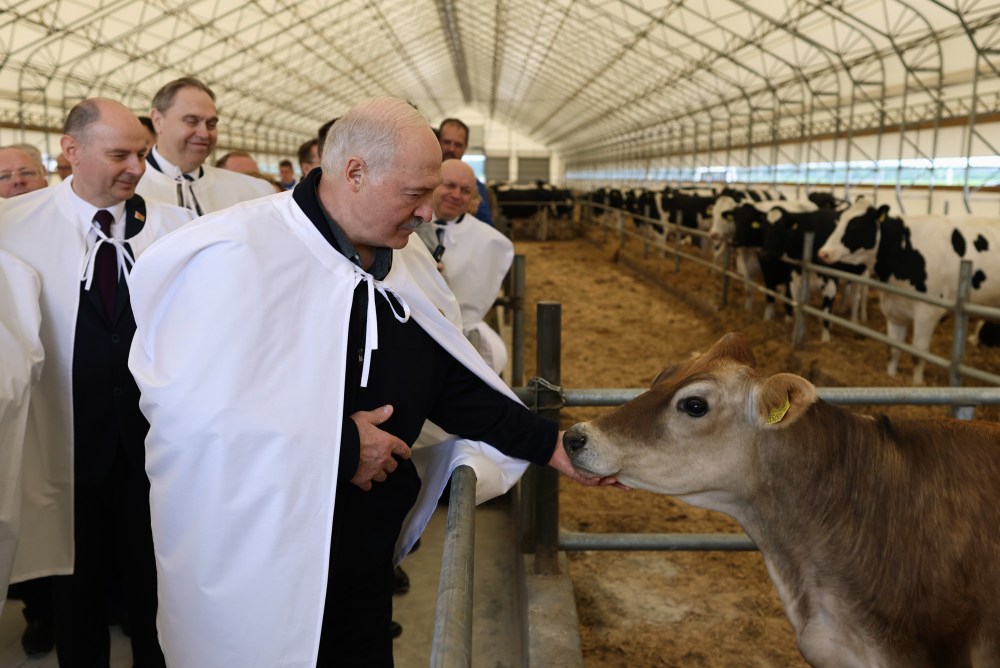
Lukashenko’s rule was challenged after a 2020 presidential election, when hundreds of thousands of people took to the streets to protest a vote they viewed as rigged. In an ensuing crackdown, tens of thousands were detained, with many beaten by police. Prominent opposition figures fled the country or were imprisoned.
Five years after the mass demonstrations, Lukashenko won a seventh term last year in an election that the opposition called a farce.
Since U.S. President Donald Trump returned to the White House, Lukashenko has released hundreds of political prisoners in a series of U.S.-mediated deals that also lifted some U.S. sanctions.
As part of a deal in March that Washington helped broker, Lukashenko ordered the release of 250 political prisoners, while the U.S. agreed to lift sanctions from two Belarusian state banks and the country’s Finance Ministry, and to remove the top Belarusian potash producers from a sanctions list.
Another deal in April released prominent journalist Andrzej Poczobut in a swap with Poland that saw a total of 10 people freed.
However, Belarus still has 864 political prisoners, including 21 journalists, according to the Viasna human rights center.
In a report released earlier this week, the U.N. special rapporteur on the situation of human rights in Belarus, Nils Muižnieks, warned that despite the release of several hundred political prisoners over the past year, there has been no overall improvement in the human rights situation in the country.
“Sustainable progress requires an end to politically motivated repression and accountability for past violations,” he said.
Belarus opposition leader-in-exile Sviatlana Tsikhanouskaya told The Associated Press that while the release of 28 political prisoners will bring relief to their relatives, “we mustn’t forget that hundreds of political prisoners remain in Belarusian jails, and all of them must be released.”