

NATO commander says Europe has backfilled most gaps from US cutbacks on military equipment
Advertisement
Read this article for free:
or
Already have an account? Log in here »
To continue reading, please subscribe:

Digital Subscription
One year of digital access for only $205*
- Enjoy unlimited reading on winnipegfreepress.com
- Read the E-Edition, our digital replica newspaper
- Access News Break, our award-winning app
- Play interactive puzzles
*First annual payment billed as $205.00 + GST for one year. This annual subscription will automatically renew at $233.00 + GST every 52 weeks (10% off the regular annual price of $259.35). Offer available to new and qualified returning subscribers only. Cancel any time.
To continue reading, please subscribe:
Add Free Press access to your Brandon Sun subscription for only an additional
$1 for the first 4 weeks*
- Enjoy unlimited reading on winnipegfreepress.com
- Read the E-Edition, our digital replica newspaper
- Access News Break, our award-winning app
- Play interactive puzzles
*Your next Brandon Sun subscription payment will increase by $1.00 and you will be charged $17.95 plus GST for four weeks. After four weeks, your payment will increase to $24.95 plus GST every four weeks.
Read unlimited articles for free today:
or
Already have an account? Log in here »
BRUSSELS (AP) — NATO’s top commander told The Associated Press on Friday that European allies have filled most of the holes created by a U.S. decision to cut back military contributions in times of crisis.
U.S. Gen. Alex Grynkewich urged Europeans to make more equipment available after the U.S. signaled on June 3 that it would no longer supply an aircraft carrier and support ships, aerial refueling planes and dozens of fighter jets, among other assets, to the continent.
He also began weighing back up plans in case of an attack against Europe.
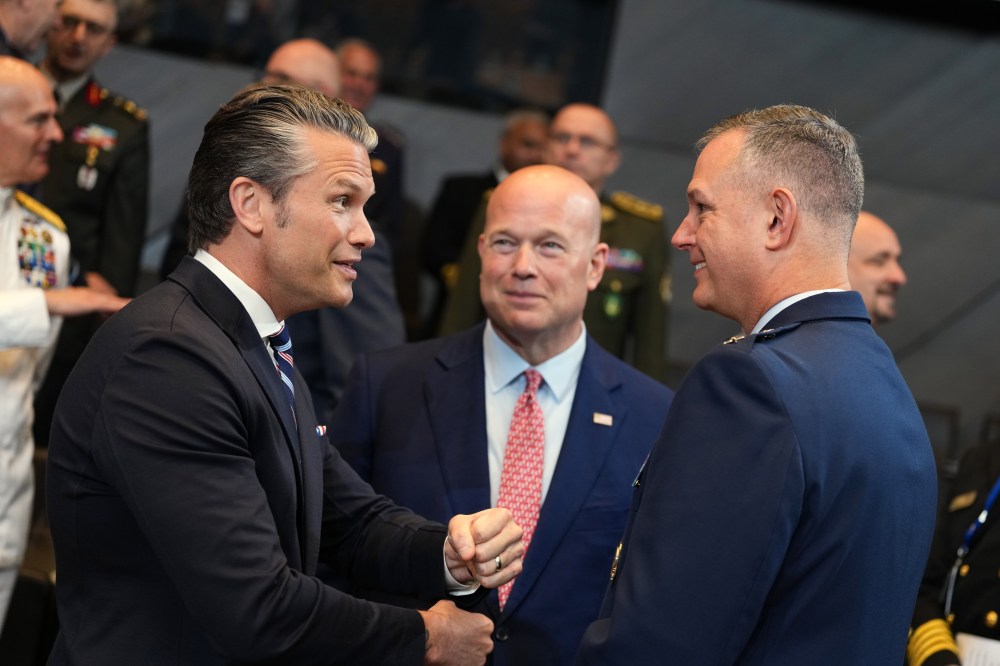
The so-called NATO Force Model is the alliance’s Plan A for making forces from the 32 member nations available in times of peace, crisis or war. It sets out the military assets that commanders can call on in phases over the first six months of any conflict.
“In a matter of weeks, European Allies have largely filled the gaps left by U.S. reductions to the NATO Force Model,” Grynkewich said, days before President Donald Trump and his counterparts gather for a July 7-8 summit in Turkey, where force planning will be high on the agenda.
“And in those few areas where they haven’t, where they do not currently have a like capability to replace, we are looking at alternate capabilities with matching effect,” Grynkewich said. He provided no details.
In a decision that took many allies by surprise, the Pentagon informed its NATO allies that it would no longer provide as much as it focuses on potential threats elsewhere, notably from China in the Indo-Pacific region.
European allies and Canada scoured their inventories to see what could be offered should one of them come under attack. Britain, for example, has put a second aircraft carrier and F35 fighter jets on a higher level of readiness for use in emergencies.
NATO Secretary-General Mark Rutte has played down the impact of the Trump administration’s decision. He believes the United States would shift more resources to Europe should conflict arise, just as it did for the war on Iran.
“This is not about where forces and assets are currently located,” Rutte said last month. “It’s about who would do what if our defense plans were activated. So, let’s say in case of an Article 5 situation.”
Under NATO’s collective security guarantee — Article 5 of its founding treaty — the 32 allies pledge that an attack on one of them will be considered an attack on all. It does not oblige them to provide military support, although many likely would.