

UN human rights chief sounds ‘red alert’ over violence around Sudan’s el-Obeid city
Advertisement
Read this article for free:
or
Already have an account? Log in here »
To continue reading, please subscribe:

Digital Subscription
One year of digital access for only $205*
- Enjoy unlimited reading on winnipegfreepress.com
- Read the E-Edition, our digital replica newspaper
- Access News Break, our award-winning app
- Play interactive puzzles
*First annual payment billed as $205.00 + GST for one year. This annual subscription will automatically renew at $233.00 + GST every 52 weeks (10% off the regular annual price of $259.35). Offer available to new and qualified returning subscribers only. Cancel any time.
To continue reading, please subscribe:
Add Free Press access to your Brandon Sun subscription for only an additional
$1 for the first 4 weeks*
- Enjoy unlimited reading on winnipegfreepress.com
- Read the E-Edition, our digital replica newspaper
- Access News Break, our award-winning app
- Play interactive puzzles
*Your next Brandon Sun subscription payment will increase by $1.00 and you will be charged $17.95 plus GST for four weeks. After four weeks, your payment will increase to $24.95 plus GST every four weeks.
Read unlimited articles for free today:
or
Already have an account? Log in here »
GENEVA (AP) — The United Nations human rights chief on Friday sounded a “red alert” about possible atrocity crimes in and near a strategic city in central Sudan, calling on world leaders to do more to help stop the bloodshed in the country’s ongoing war between the army and paramilitary forces.
U.N. High Commissioner for Human Rights Volker Türk told the Human Rights Council at the U.N. office in Geneva that signs from the city of el-Obeid were “clear and unmistakable: Another human rights catastrophe is unfolding in Sudan.”
The comments came as the council, the U.N.’s top human rights body, held an urgent debate on the situation in el-Obeid about concerns expressed by diplomats, advocacy groups and others that another wave of atrocities may loom against civilians in Sudan’s war, which is now in its fourth year.
“This is not a drill. It is a red alert that needs to land on the desks of heads of state and government around the world,” Türk said. “Their phones should be running hot in the coming days and weeks, with ideas on how to prevent atrocity crimes in el-Obeid and in other places in Kordofan.”
Civilians have faced siegelike conditions for 18 months, battered by “relentless drone strikes” as Sudan’s armed forces and the paramilitary Rapid Support Forces battle for control of areas near the city, he said.
The council’s 47 member countries were considering a draft resolution — brought by Britain, Germany, Ireland, the Netherlands and Norway — that condemns the escalating violence by the RSF and its allies in and around el-Obeid, encourages greater financial and logistical support for countries hosting refugees from Sudan, and condemns “all forms of external interference” in the war, among other things.
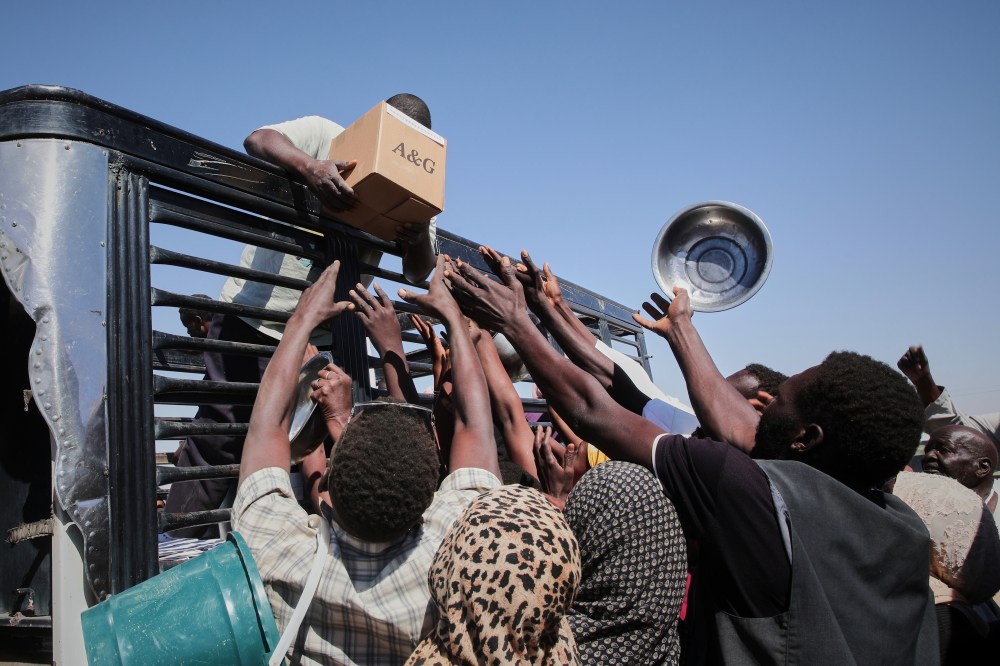
The war erupted in April 2023 out of long-simmering tensions between the army and RSF forces. The conflict has killed at least 59,000 people, displaced some 13 million and pushed many parts of Sudan into famine. More than 30 million people are in need of humanitarian assistance.
In February 2025, the military broke a siege on el-Obeid that had lasted more than a year. Since then, the RSF has launched multiple offensives in attempts to reestablish the siege from several directions.
The U.N. and some countries expressed concerns over reports of reinforcements by the RSF around el-Obeid city, which is home to half-million people in North Kordofan.
Recent attacks on infrastructure have left civilians with scarce food, fuel, water, health services and transportation, Türk’s office has said.