

Tropical Storm Maysak killed 2 in China’s south and heavy rains leave 5 dead in north
Advertisement
Read this article for free:
or
Already have an account? Log in here »
To continue reading, please subscribe:

Digital Subscription
One year of digital access for only $205*
- Enjoy unlimited reading on winnipegfreepress.com
- Read the E-Edition, our digital replica newspaper
- Access News Break, our award-winning app
- Play interactive puzzles
*First annual payment billed as $205.00 + GST for one year. This annual subscription will automatically renew at $233.00 + GST every 52 weeks (10% off the regular annual price of $259.35). Offer available to new and qualified returning subscribers only. Cancel any time.
To continue reading, please subscribe:
Add Free Press access to your Brandon Sun subscription for only an additional
$1 for the first 4 weeks*
- Enjoy unlimited reading on winnipegfreepress.com
- Read the E-Edition, our digital replica newspaper
- Access News Break, our award-winning app
- Play interactive puzzles
*Your next Brandon Sun subscription payment will increase by $1.00 and you will be charged $17.95 plus GST for four weeks. After four weeks, your payment will increase to $24.95 plus GST every four weeks.
Read unlimited articles for free today:
or
Already have an account? Log in here »
BEIJING (AP) — A tropical storm killed two people, caused dam breaches and forced tens of thousands to evacuate in southern China, state media reported Monday.
Tropical Storm Maysak killed two people in Nanning, in China’s southern Guangxi province. The storm affected about 55,000 people, including 48,000 who were evacuated, according to the official Xinhua News Agency.
Multiple dams were at risk, local media reported.
China’s Ministry of Emergency Management deployed more than 1,000 rescuers, along with vehicles and boats to the region. It also sent two drones to ensure communications.
Rivers overflowed in Guangxi’s Fangchenggang city, submerging cars up to their roofs, footage on state broadcaster CCTV showed. Rescuers used inflatable boats to reach trapped people. Residents described it as the most severe flooding in two decades, according to a China News Service report.
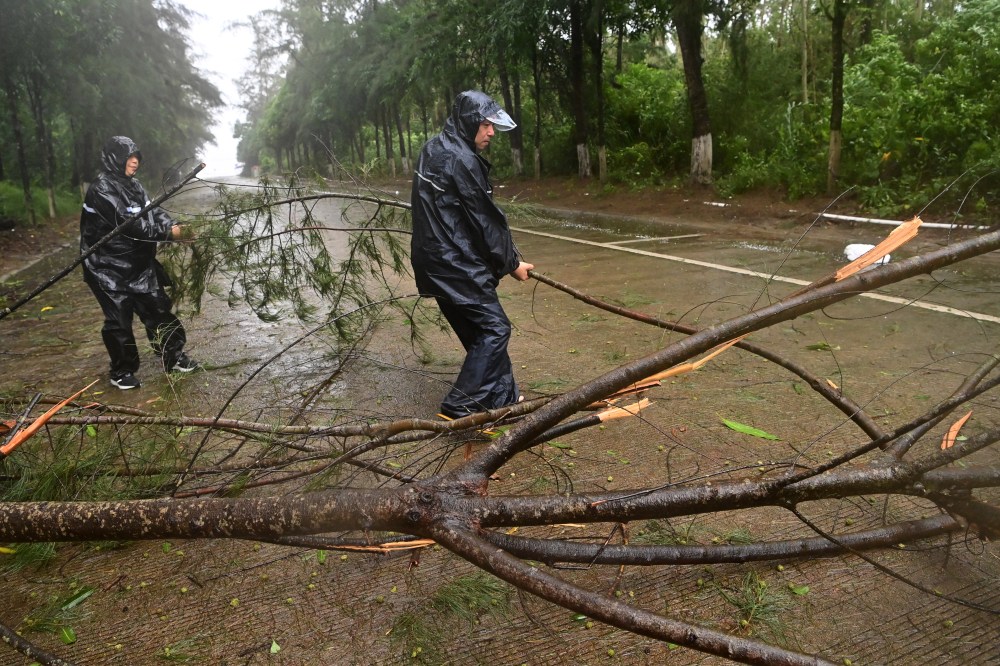
In Vietnam, the storm knocked down trees and ripped metal roofs off buildings in the town of Mong Cai on Saturday evening, Vietnamese state media said. Crews used chain saws and heavy machinery to clear debris and reopen roads after the winds subsided.
Maysak also uprooted trees in Dongxing, a city that borders Vietnam. The tropical storm dumped rain on China’s Hainan island last week before crossing water and making landfall again in Vietnam.
Two villagers died in a mountain flash flood Saturday evening in the eastern part of China’s Inner Mongolia region, the official Xinhua News Agency said. One drowned while herding cattle and the other fell into water while driving a cattle herd away, the report said.
Three other people died the same day in neighboring Liaoning province’s Fushun city, about 390 kilometers (240 miles) to the southeast, Xinhua said. It did not provide details on how they died.
A heavy rainstorm battered Fushun for several hours early Saturday with rainfall of up to 32.9 centimeters (13 inches) in one area, according to state media reports. Video posted online showed streets turned into lakes. About 3,600 residents were relocated to safer areas.