

More than 300 children killed or injured in Sudan war in 6 months, UNICEF says
Advertisement
Read this article for free:
or
Already have an account? Log in here »
To continue reading, please subscribe:

Digital Subscription
One year of digital access for only $205*
- Enjoy unlimited reading on winnipegfreepress.com
- Read the E-Edition, our digital replica newspaper
- Access News Break, our award-winning app
- Play interactive puzzles
*First annual payment billed as $205.00 + GST for one year. This annual subscription will automatically renew at $233.00 + GST every 52 weeks (10% off the regular annual price of $259.35). Offer available to new and qualified returning subscribers only. Cancel any time.
To continue reading, please subscribe:
Add Free Press access to your Brandon Sun subscription for only an additional
$1 for the first 4 weeks*
- Enjoy unlimited reading on winnipegfreepress.com
- Read the E-Edition, our digital replica newspaper
- Access News Break, our award-winning app
- Play interactive puzzles
*Your next Brandon Sun subscription payment will increase by $1.00 and you will be charged $17.95 plus GST for four weeks. After four weeks, your payment will increase to $24.95 plus GST every four weeks.
Read unlimited articles for free today:
or
Already have an account? Log in here »
CAIRO (AP) — The war in Sudan has killed or wounded more than 300 children in the last six months, mostly from drone strikes, the U.N. children’s agency said Monday.
The Sudanese military and the paramilitary Rapid Support Forces have been fighting since April 2023. The war is now concentrated in the Kordofan, Darfur and Blue Nile states, with drone warfare causing 60% of casualties, according to UNICEF.
The U.N., U.S, U.K. and others have expressed alarm about potential atrocities as the RSF and the military fight for control of the strategic city of el-Obeid in North Kordofan.
In Geneva on Monday, the U.N.-backed Human Rights Council approved a measure, brought by five European countries, condemning the escalating violence by the RSF and its allies in and around el-Obeid.
The measure, approved without a vote, also encourages greater support for countries hosting refugees from Sudan and condemns “all forms of external interference” in the war.
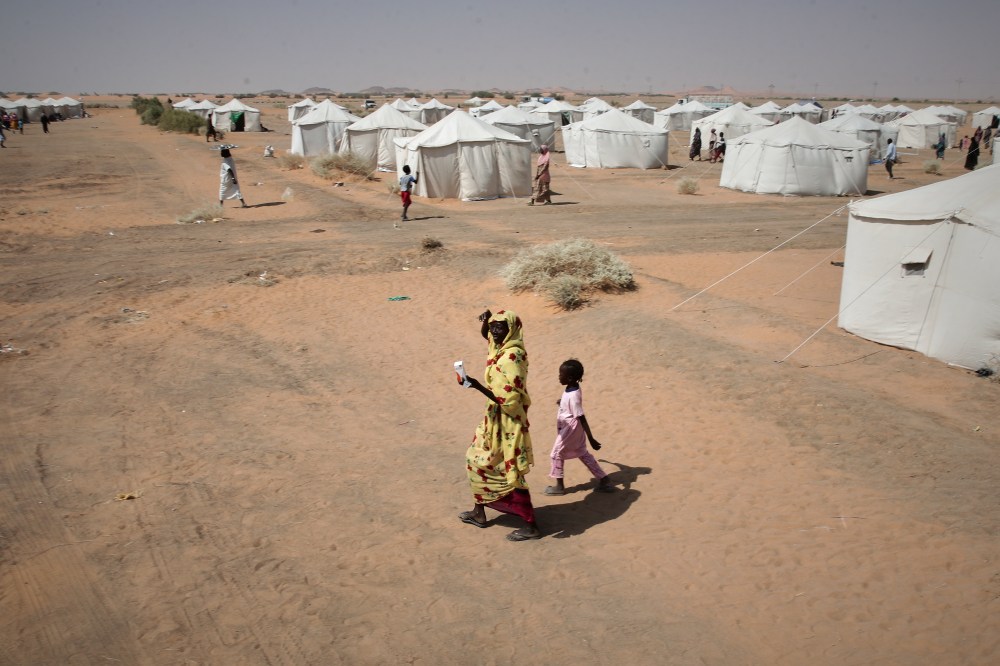
The conflict has killed at least 59,000 people, displaced some 13 million and pushed many parts of Sudan into famine. More than 30 million people are in need of humanitarian assistance.
Drone strikes and shelling have targeted civilian infrastructure including schools, markets, fuel and water stations, putting over 500,000 people at risk. Civilians in some areas have faced almost siegelike conditions for over a year.
“Children are being caught in a relentless cycle of violence, displacement and deprivation,” said Sheldon Yett, UNICEF representative for Sudan.
The U.N. called on parties “to protect civilians and civilian infrastructure, allow and facilitate safe, rapid and unimpeded humanitarian access, and take all possible measures to protect children from harm.”
Separately, at least 15 informal miners were killed when a defunct gold mine partly collapsed Monday in the district of Wadi Halfa, close to Sudan’s border with Egypt, authorities said.
Another miner was injured in the collapse of the Mohamed Taqfiq mine, the state-run Sudanese Mineral Resources Co. The company said the miners resumed excavations at the site, although authorities had previously closed it over safety concerns.
Sudan is one of Africa’s top gold producers. It produced 70 tons of gold last year, up from 64 tons in 2024, according to official figures.
Artisanal and small-scale gold mining accounts for the majority of gold extracted in the sprawling country, where safety standards are largely ignored.
Collapses are not uncommon in the country. In May, at least seven miners were killed in a mine collapse in the Red Sea province. Thirteen others were killed in another collapse in South Kordofan province in January.
___
This version corrects the name of the state to Blue Nile.