

UK sanctions Russian labs and people over chemical weapons used on Navalny and Skripal
Advertisement
Read this article for free:
or
Already have an account? Log in here »
To continue reading, please subscribe:

Digital Subscription
One year of digital access for only $205*
- Enjoy unlimited reading on winnipegfreepress.com
- Read the E-Edition, our digital replica newspaper
- Access News Break, our award-winning app
- Play interactive puzzles
*First annual payment billed as $205.00 + GST for one year. This annual subscription will automatically renew at $233.00 + GST every 52 weeks (10% off the regular annual price of $259.35). Offer available to new and qualified returning subscribers only. Cancel any time.
To continue reading, please subscribe:
Add Free Press access to your Brandon Sun subscription for only an additional
$1 for the first 4 weeks*
- Enjoy unlimited reading on winnipegfreepress.com
- Read the E-Edition, our digital replica newspaper
- Access News Break, our award-winning app
- Play interactive puzzles
*Your next Brandon Sun subscription payment will increase by $1.00 and you will be charged $17.95 plus GST for four weeks. After four weeks, your payment will increase to $24.95 plus GST every four weeks.
Read unlimited articles for free today:
or
Already have an account? Log in here »
LONDON (AP) — Britain imposed sanctions Monday on nine Russian people and entities it said developed chemical weapons used to kill opposition leader Alexei Navalny and attack a former spy in England.
The sanctions came the same day the U.K. criticized Russia’s “unsafe” approach to Royal Navy vessels in the Arctic.
The Foreign Office announced sanctions against seven people and two scientific institutes. It says they were involved in creating the epibatidine toxin used to poison Navalny in an Arctic penal colony in 2024 and the Novichok nerve agent used in a 2018 attack in the English city of Salisbury targeting former Russian intelligence officer Sergei Skripal. The attack left Skripal and his daughter seriously ill and a local woman, Dawn Sturgess, dead.
Britain sanctioned the Russian state scientific research institute SC Signal and GNIII VM, the State Scientific Research and Testing Institute for Military Medicine, along with several senior officials and scientists.
Foreign Secretary Yvette Cooper said that “Russia’s repeated use of chemical weapons is a sickening violation of international law and a direct threat to global security.”
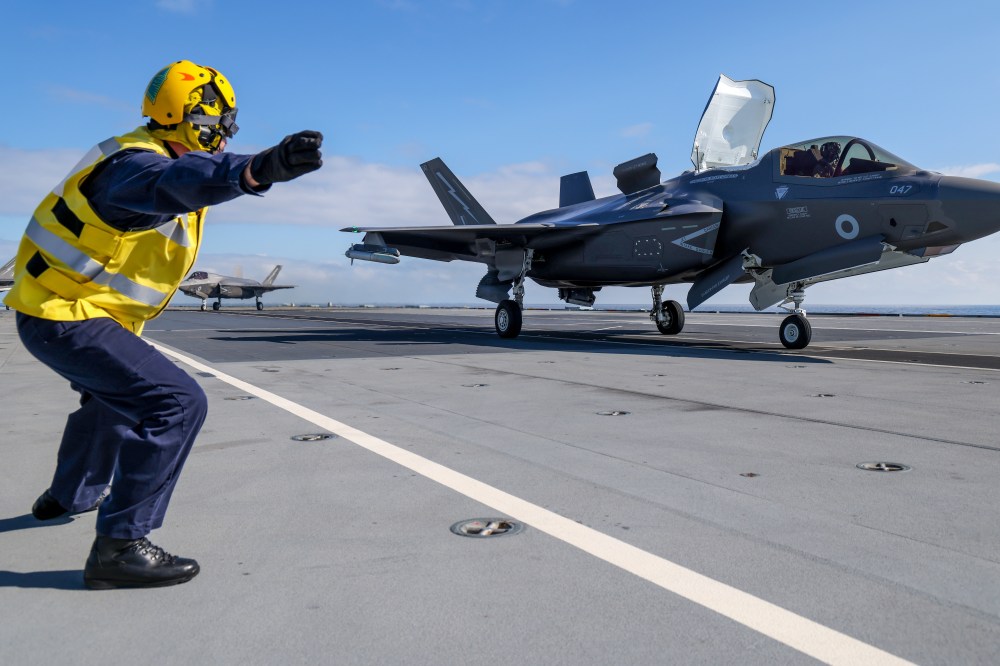
Also on Monday, Britain’s defense ministry released images of U.K. F-35 fighter jets intercepting a Russian Bear-F maritime patrol aircraft that it said approached a British carrier strike group in the Norwegian Sea. HMS Prince of Wales and other British vessels are in the Arctic as part of NATO operations.
The ministry said that on Thursday, “the Bear-F passed at low altitude and unnecessarily close to HMS Prince of Wales and dropped a large number of sonobuoys in close proximity to the carrier.” The monitoring devices float and use sonar to detect submarines and other vessels.
“This activity was unsafe and unprofessional. The Russian aircraft was intercepted and escorted by two UK F-35 jets from HMS Prince of Wales until it left the area,” the defense ministry said in a statement.