

Kazakhstan’s top court rules that President Tokayev can seek another term
Advertisement
Read this article for free:
or
Already have an account? Log in here »
To continue reading, please subscribe:

Digital Subscription
One year of digital access for only $205*
- Enjoy unlimited reading on winnipegfreepress.com
- Read the E-Edition, our digital replica newspaper
- Access News Break, our award-winning app
- Play interactive puzzles
*First annual payment billed as $205.00 + GST for one year. This annual subscription will automatically renew at $233.00 + GST every 52 weeks (10% off the regular annual price of $259.35). Offer available to new and qualified returning subscribers only. Cancel any time.
To continue reading, please subscribe:
Add Free Press access to your Brandon Sun subscription for only an additional
$1 for the first 4 weeks*
- Enjoy unlimited reading on winnipegfreepress.com
- Read the E-Edition, our digital replica newspaper
- Access News Break, our award-winning app
- Play interactive puzzles
*Your next Brandon Sun subscription payment will increase by $1.00 and you will be charged $17.95 plus GST for four weeks. After four weeks, your payment will increase to $24.95 plus GST every four weeks.
Read unlimited articles for free today:
or
Already have an account? Log in here »
Kazakhstan’s top court ruled Tuesday that President Kassym-Jomart Tokayev can seek another seven years in power after a referendum on the constitution reset term limits for the office.
The Constitutional Court ruled that Tokayev can run again when his term expires in 2029 because his current tenure does not count under amendments to the constitution that were approved in a nationwide vote in March and came into force this month.
Leaders of several former Soviet republics, including Russia, Belarus, Uzbekistan and Tajikistan, have replaced or amended their countries’ constitutions to strengthen their executive powers and extend their time in office.
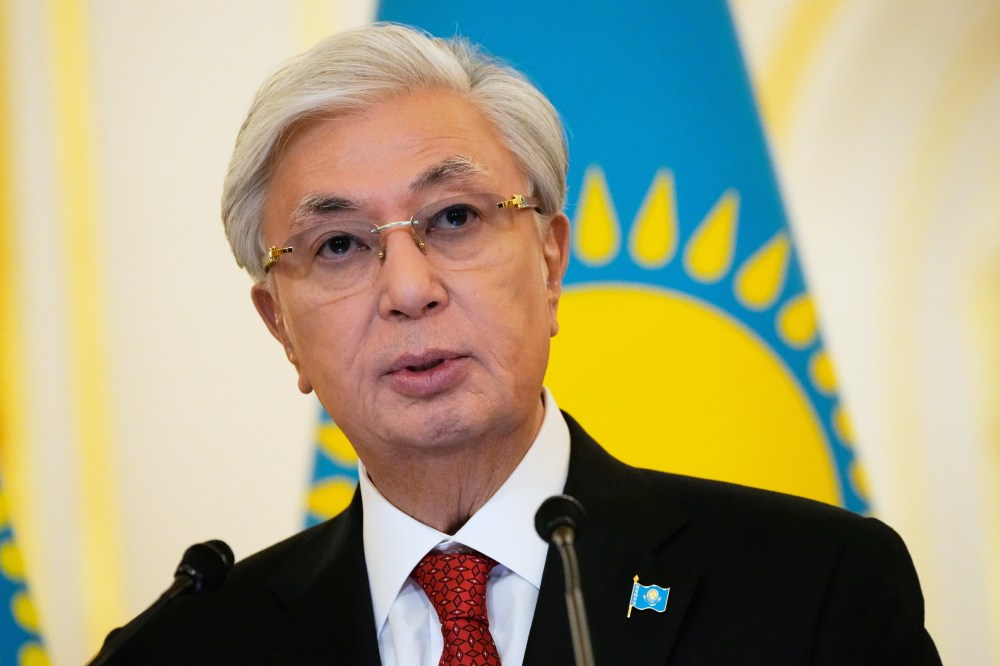
The 73-year-old Tokayev, a former Soviet official and diplomat who previously served at the United Nations, has led the oil-rich Central Asian country of 20 million people since 2019.
The constitutional amendments, which won overwhelming approval in the referendum, strengthened Tokayev’s grip on power in Kazakhstan.
Tokayev, who has maintained a delicate balance between Russia and the West since the imposition of sanctions on Moscow over its 4-year-old war in Ukraine, has explained that the constitution needed to be amended in order to make quick decisions in a rapidly changing world.
The changes merged Kazakhstan’s parliament’s two chambers into one and gave the president the right to appoint key government officials with the approval of lawmakers, including restoring the post of vice president.
They also envisioned the creation of a new body, the People’s Council, alongside parliament to initiate legislation and referendums. The council’s members are appointed by the president.
The opposition in Kazakhstan is not represented in government structures and has been unable to significantly influence public sentiment.
Tokayev became acting president in 2019 after the resignation of Nursultan Nazarbayev, an autocrat who held power for nearly three decades and led Kazakhstan’s transition as an independent country following the 1991 collapse of the Soviet Union.
Seen as Nazarbayev’s handpicked successor, Tokayev harshly suppressed protests in 2022 that left 238 people dead and thousands injured and were dubbed by some in Kazakhstan as “Bloody January.” Tokayev sought to reinvent himself as a reformer and called an early presidential vote, which he won overwhelmingly later that year.