

Landslides in Bangladesh kill at least 8 Rohingya refugees while monsoon rains batter India
Advertisement
Read this article for free:
or
Already have an account? Log in here »
To continue reading, please subscribe:

Digital Subscription
One year of digital access for only $205*
- Enjoy unlimited reading on winnipegfreepress.com
- Read the E-Edition, our digital replica newspaper
- Access News Break, our award-winning app
- Play interactive puzzles
*First annual payment billed as $205.00 + GST for one year. This annual subscription will automatically renew at $233.00 + GST every 52 weeks (10% off the regular annual price of $259.35). Offer available to new and qualified returning subscribers only. Cancel any time.
To continue reading, please subscribe:
Add Free Press access to your Brandon Sun subscription for only an additional
$1 for the first 4 weeks*
- Enjoy unlimited reading on winnipegfreepress.com
- Read the E-Edition, our digital replica newspaper
- Access News Break, our award-winning app
- Play interactive puzzles
*Your next Brandon Sun subscription payment will increase by $1.00 and you will be charged $17.95 plus GST for four weeks. After four weeks, your payment will increase to $24.95 plus GST every four weeks.
Read unlimited articles for free today:
or
Already have an account? Log in here »
DHAKA, Bangladesh (AP) — Landslides triggered by heavy monsoon rains in southeastern Bangladesh killed at least eight Rohingya refugees, including five children, while heavy monsoon rains battered parts of neighboring India, leaving 13 dead over the past few days.
Dollar Tripura, a Fire Service and Civil Defense official in Cox’s Bazar district, told The Associated Press that rescuers recovered seven bodies while an eighth body was found by refugees after several hills collapsed from late Sunday to Monday morning. All have been handed over to families, he said.
He said another two children were found with injuries.
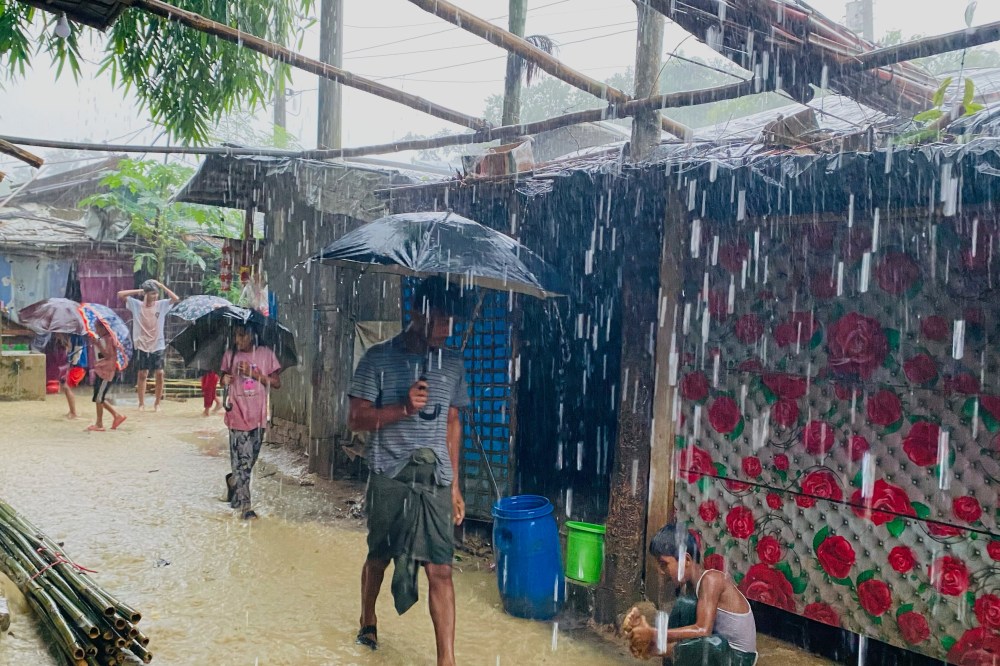
In India, torrential monsoon rains battered large areas on Tuesday, triggering flash floods and landslides in the northern Himalayan states, and flooding roads and forcing schools to close in Mumbai.
Rains trigger deadly landslides in Bangladesh refugee camps
Officials said continuous rain and hillside torrents loosened soil on slopes, causing makeshift houses to collapse.
Tripura said the landslides hit at least four locations across the camps, burying shelters under mud and debris while residents were asleep.
Authorities said they were relocating the refugees from at-risk hill areas, and some 1,000 people have already been relocated.
The weather office in the capital, Dhaka, has forecast more rain in the coming days.
According to the UNHCR, 36 refugees died and at least 86 were injured in similar landslides at refugee camps between 2021 and 2026.
More than 1 million refugees who fled neighboring Myanmar live in camps in Bangladesh.
Renewed fighting in Myanmar’s Rakhine state between the military government and the Arakan Army has raised concern of a fresh influx of Rohingya refugees across the border.
At least 13 dead from rain-related causes in western India
In India’s western Maharashtra state, home to Mumbai, said at least 13 people have died in rain-related incidents over the past several days as monsoon weather intensified. In Pune district, landslides triggered by heavy rain forced officials to temporarily close sections of the Mumbai-Pune Expressway, disrupting traffic between the two cities.
The India Meteorological Department forecast more heavy rainfall across Maharashtra in the coming days and warned of continued flooding in low-lying areas.
In the northern Himalayan regions of Jammu and Kashmir and Himachal Pradesh, torrential rain triggered flash floods and landslides that damaged roads, disrupted public transport and cut off several villages. Emergency crews were deployed to evacuate stranded residents.
India’s annual southwest monsoon, which runs from June through September, is critical for agriculture and replenishing water supplies but also causes widespread flooding and landslides each year, particularly in the Himalayan region and densely populated cities with inadequate drainage.