

Senegal judges reject constitutional change that would reduce presidential powers
Advertisement
Read this article for free:
or
Already have an account? Log in here »
To continue reading, please subscribe:

Digital Subscription
One year of digital access for only $205*
- Enjoy unlimited reading on winnipegfreepress.com
- Read the E-Edition, our digital replica newspaper
- Access News Break, our award-winning app
- Play interactive puzzles
*First annual payment billed as $205.00 + GST for one year. This annual subscription will automatically renew at $233.00 + GST every 52 weeks (10% off the regular annual price of $259.35). Offer available to new and qualified returning subscribers only. Cancel any time.
To continue reading, please subscribe:
Add Free Press access to your Brandon Sun subscription for only an additional
$1 for the first 4 weeks*
- Enjoy unlimited reading on winnipegfreepress.com
- Read the E-Edition, our digital replica newspaper
- Access News Break, our award-winning app
- Play interactive puzzles
*Your next Brandon Sun subscription payment will increase by $1.00 and you will be charged $17.95 plus GST for four weeks. After four weeks, your payment will increase to $24.95 plus GST every four weeks.
Read unlimited articles for free today:
or
Already have an account? Log in here »
DAKAR, Senegal (AP) — Senegal’s top judicial body rejected a constitutional amendment aimed at expanding the role of parliament and reducing presidential powers.
The new law was passed last month, but the government said it would be put to a referendum. President Bassirou Diomaye Faye had challenged the legality of the procedure and requested an emergency review at the Constitutional Council.
The council on Thursday evening ruled the law was unconstitutional, effectively halting one of the parliamentary majority’s cornerstone projects.
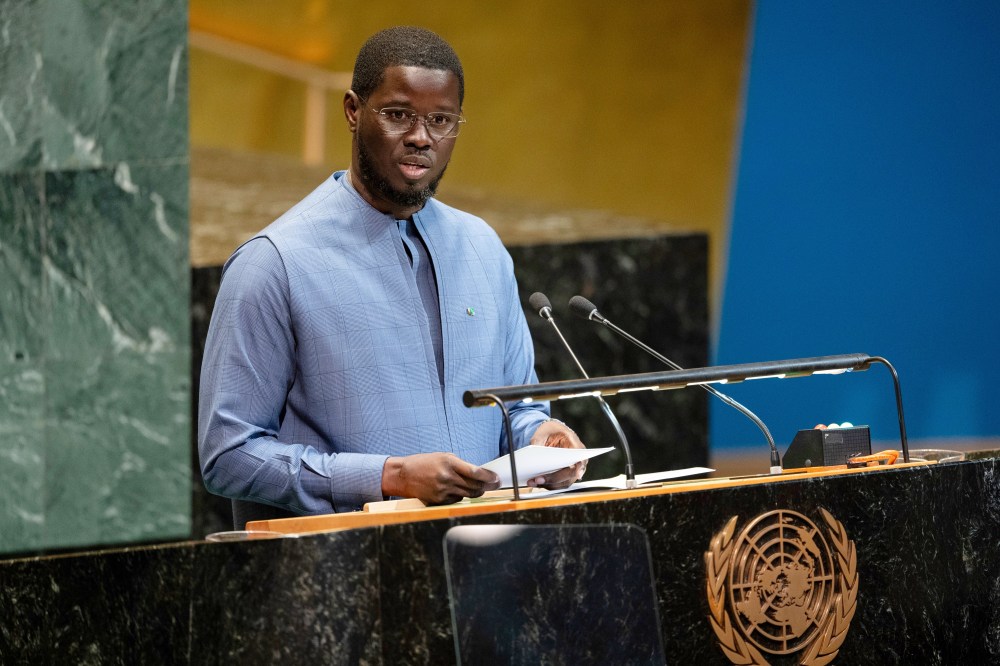
The debate over constitutional reform comes as political tensions have risen between Faye and his former prime minister, Ousmane Sonko.
Sonko was dismissed and elected as the president of the National Assembly earlier this year. Their alliance, which had brought them to power in March 2024, gradually disintegrated. A new prime minister has since been appointed, and the formation of a new government is expected.
The opposition views the initiative, proposed by Pastef, Sonko’s party, as political revenge by the former prime minister, who retains significant influence over the parliamentary majority.
The reform would strengthen parliament’s powers, replace the Constitutional Council with a new Constitutional Court and impose stricter controls on the president’s power to dissolve the National Assembly.
Sonko welcomed the decision by the council, saying it is binding. “This cycle reminds us that in a democracy, when institutions play their role, each within its sphere of influence, no crisis can arise,” he said.