

Cuba plunged into 3rd nationwide blackout in 2 weeks as fuel runs low
Advertisement
Read this article for free:
or
Already have an account? Log in here »
To continue reading, please subscribe:

Digital Subscription
One year of digital access for only $205*
- Enjoy unlimited reading on winnipegfreepress.com
- Read the E-Edition, our digital replica newspaper
- Access News Break, our award-winning app
- Play interactive puzzles
*First annual payment billed as $205.00 + GST for one year. This annual subscription will automatically renew at $233.00 + GST every 52 weeks (10% off the regular annual price of $259.35). Offer available to new and qualified returning subscribers only. Cancel any time.
To continue reading, please subscribe:
Add Free Press access to your Brandon Sun subscription for only an additional
$1 for the first 4 weeks*
- Enjoy unlimited reading on winnipegfreepress.com
- Read the E-Edition, our digital replica newspaper
- Access News Break, our award-winning app
- Play interactive puzzles
*Your next Brandon Sun subscription payment will increase by $1.00 and you will be charged $17.95 plus GST for four weeks. After four weeks, your payment will increase to $24.95 plus GST every four weeks.
Read unlimited articles for free today:
or
Already have an account? Log in here »
HAVANA (AP) — Cuba suffered another blackout of the National Electric System, or SEN, on Tuesday, leaving the entire country without power, officials said. It was the third such incident in two weeks as a U.S. oil embargo stresses the island’s grid.
Fuel has been running out across Cuba since January, when U.S. President Donald Trump threatened tariffs on any country that sells or provides oil to the island, deepening the island’s ongoing economic and financial crisis. Public transportation has largely been halted, and officials have canceled tens of thousands of surgeries.
Cuba produces only 40% of the fuel it needs. A solution for fuel imports is not yet in sight.
The state-owned Electric Union reported that a problem with a generating unit in the eastern province of Holguín caused “a sudden frequency change,” resulting in the SEN blackout around midday.
Both the Ministry of Energy and Mines and the Electric Union indicated that “protocols for its restoration have been activated,” meaning that “micro-islands” are being established and then interconnected to provide power to priority locations, such as hospitals and food processing plants.
By the afternoon, some parts of the capital Havana had power restored, The Associated Press confirmed, while authorities indicated that 4% of the city had received electricity. The provinces of Guantánamo and Cienfuegos reported that they had begun distributing power to their hospitals, and Matanzas confirmed that power had been restored to the city’s historic center.
Last week, two nationwide blackouts — on Monday and Friday — left more than 9 million Cubans in the dark, adding to two others in March, as well as several regional outages.
The blackouts have a significant impact on the population and, combined with the energy embargo, have led to transportation limitations, reduced work hours and flight cancellations, in addition to serious public health consequences.
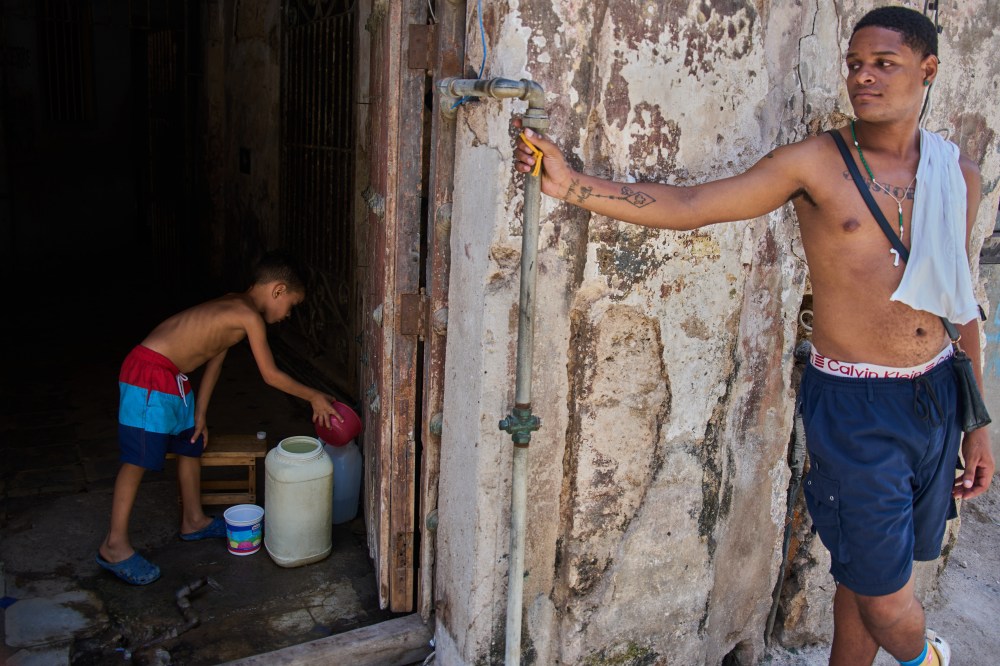
The power outages also affect basic activities such as cooking, water supply, and internet and telephone service.
On the streets of Havana, the blackout didn’t surprise residents.
“These blackouts are normal in Cuba now. If something else happened, it would be strange,” said Roberto Liana, 69, a retail store clerk.
Meanwhile, many were trying to adapt to the circumstances, like Sayli Aguilera, 25, a mother of two. “We’re improvising and doing what we can,” she said.
Many families have installed solar backup systems such as panels and portable batteries, and the main mode of transportation for the population consists of electric motorcycles and tricycles equipped with photovoltaic power.
___
Follow AP’s Latin America coverage at https://apnews.com/hub/latin-america