

House passes bill to ‘ditch the switch’ and make daylight saving time permanent
Advertisement
Read this article for free:
or
Already have an account? Log in here »
To continue reading, please subscribe:

Digital Subscription
One year of digital access for only $205*
- Enjoy unlimited reading on winnipegfreepress.com
- Read the E-Edition, our digital replica newspaper
- Access News Break, our award-winning app
- Play interactive puzzles
*First annual payment billed as $205.00 + GST for one year. This annual subscription will automatically renew at $233.00 + GST every 52 weeks (10% off the regular annual price of $259.35). Offer available to new and qualified returning subscribers only. Cancel any time.
To continue reading, please subscribe:
Add Free Press access to your Brandon Sun subscription for only an additional
$1 for the first 4 weeks*
- Enjoy unlimited reading on winnipegfreepress.com
- Read the E-Edition, our digital replica newspaper
- Access News Break, our award-winning app
- Play interactive puzzles
*Your next Brandon Sun subscription payment will increase by $1.00 and you will be charged $17.95 plus GST for four weeks. After four weeks, your payment will increase to $24.95 plus GST every four weeks.
Read unlimited articles for free today:
or
Already have an account? Log in here »
WASHINGTON (AP) — There will be no turning back the clock if the House has its way.
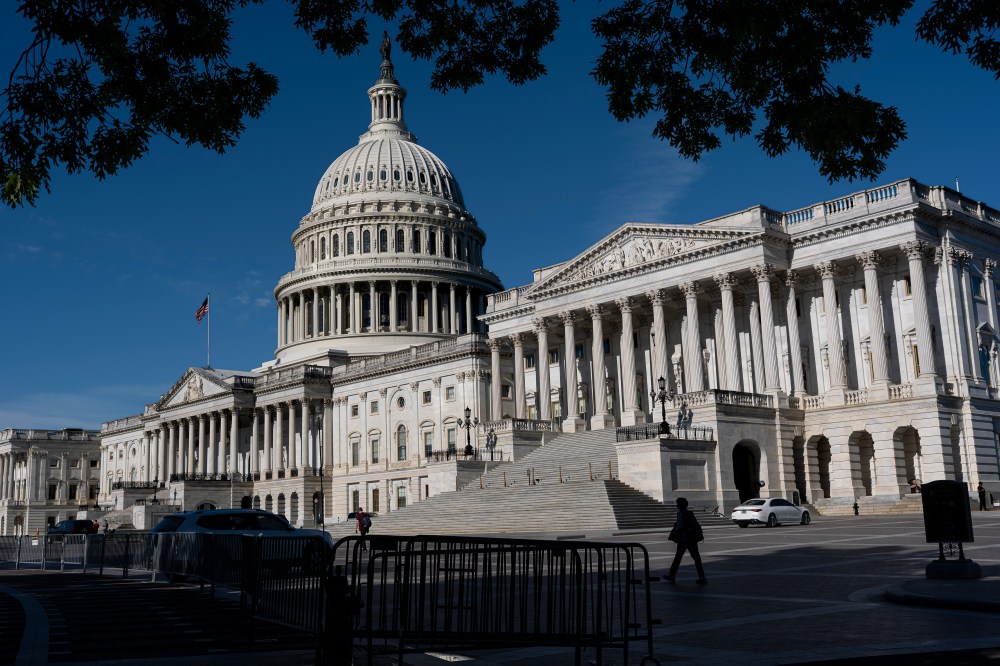
The House passed a bill Tuesday that would make daylight saving time permanent. Proponents, including the White House, argued the change would provide more daylight during the times that Americans are most active. The vote was 308-117.
Daylight saving time is that period between spring and fall when clocks in most parts of the United States are set one hour ahead of standard time. States could opt out if their respective legislatures act to do so before the bill’s enactment. The Senate would also have to pass the bill before it could be signed into law, but it’s unclear if it will do so.
Rep. Gus Bilirakis, R-Fla., said Americans are ready to “ditch the switch,” saying that changing the clock twice a year creates unnecessary disruption. More important, he said, it would give families more daylight time in the evening to spend outdoors and support local businesses.
“In my home state of Florida where tourism is a cornerstone of our economy, having more predictable daylight hours is a practical improvement that benefits workers, businesses and visitors alike,” Bilirakis said.
Detractors said permanent daylight saving time would lead to darker and potentially more hazardous winter mornings where children will be waiting for school buses and parents will be driving to work in darkness.
“Millions of Americans will wake up during the winter months in complete darkness with the sun not rising until long after people get up and travel to school or work or have to go about their days,” said Rep. Mary Gay Scanlon, D-Pa.
Rep. Jim McGovern, D-Mass, said he supported the bill, but he questioned whether it was the best way for Congress to be spending its time.
“For folks getting crushed by rent, groceries, utility bills and healthcare costs, is this really the best the majority can do?” McGovern said. “Is this really the most pressing issue before the American people at this moment?”
A 2025 poll from The Associated Press-NORC Center for Public Affairs Research shows that if forced to choose, most Americans would prefer to keep that extra hour of daylight in the evening.
If they had to choose one option for the entire country to use, more than half of adults — 56% — prefer making daylight saving time permanent, with less light in the morning and more light in the evening. About 4 in 10 prefer standard time, with more light in the morning and less in the evening.
The White House weighed in before the House vote, calling the “Sunshine Protection Act” a popular, common-sense reform and saying advisers would recommend the president sign the bill if it reaches his desk.
Members of Congress have long been interested in the potential benefits and costs of daylight saving time since it was first adopted as a wartime measure in 1942. The Senate passed a bill four years ago to make daylight saving time permanent, but it stalled in the House.