

Tate brothers will fight extradition to the UK. But the law makes it difficult to win
Advertisement
Read this article for free:
or
Already have an account? Log in here »
To continue reading, please subscribe:
Digital Subscription
One year of digital access for only $1.44 a week*
- Enjoy unlimited reading on winnipegfreepress.com
- Read the E-Edition, our digital replica newspaper
- Access News Break, our award-winning app
- Play interactive puzzles
*Billed as $5.77 plus GST every four weeks. After 52 weeks, price increases to the regular rate of $19.95 plus GST every four weeks. Offer available to new and qualified returning subscribers only. Cancel any time.
To continue reading, please subscribe:
Add Free Press access to your Brandon Sun subscription for only an additional
$1 for the first 4 weeks*
- Enjoy unlimited reading on winnipegfreepress.com
- Read the E-Edition, our digital replica newspaper
- Access News Break, our award-winning app
- Play interactive puzzles
*Your next Brandon Sun subscription payment will increase by $1.00 and you will be charged $17.95 plus GST for four weeks. After four weeks, your payment will increase to $24.95 plus GST every four weeks.
Read unlimited articles for free today:
or
Already have an account? Log in here »
Any extradition of Andrew and Tristan Tate from the U.S. to the United Kingdom would ultimately rest with the State Department, but only after a judge determines whether the request complies with the law and a treaty between the countries.
The U.S. has agreed since 2020 to send more than 20 people wanted in the U.K. on various criminal charges, according to the U.K. Parliament. With possible appeals, the process could last a few years — if the accused wants to fight it.
“The government holds all the cards in an extradition proceeding because the rules of evidence allow the government to submit any evidence they wish,” said Jacques Semmelman, a New York-based lawyer and expert in the procedure.
“It is very hard for the defense to defeat an extradition,” he said.
Process starts with a treaty
The U.S. has a treaty that allows it to honor a U.K. extradition request if the alleged crimes would also be considered illegal in the U.S. The Tate brothers are accused of rape, assault, trafficking and other offenses in southeastern England, from 2010 to 2017.
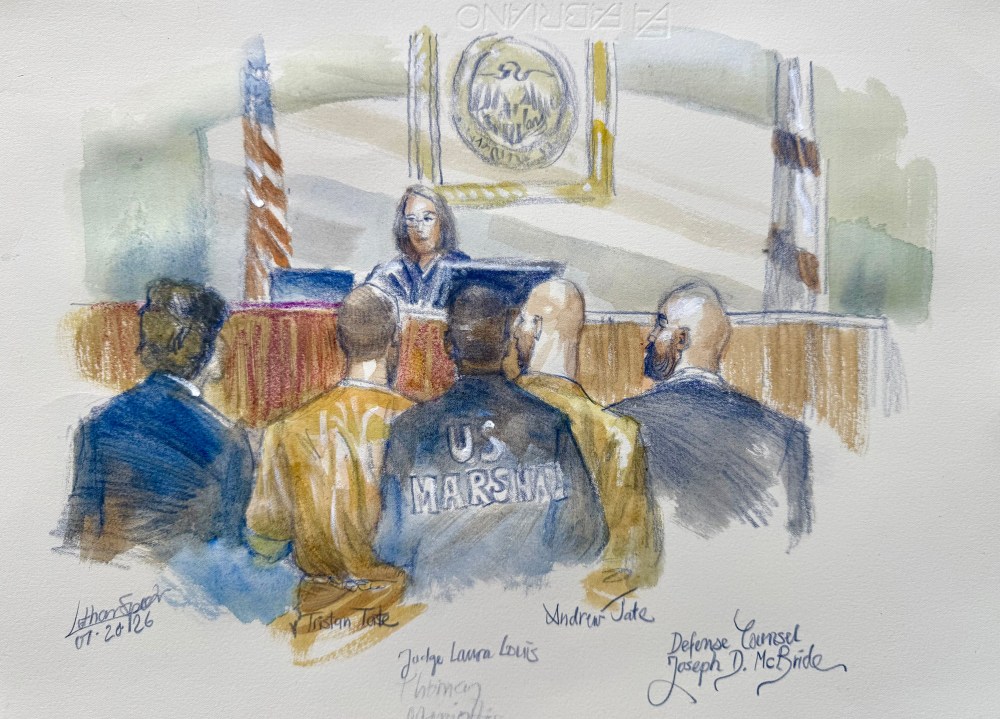
“They’ve never done nothing wrong. They shouldn’t be extradited for crimes they did not commit,” defense attorney Joseph McBride said.
A federal judge will review arrest warrants, investigative documents and other information submitted by the U.S. government to show there was a “reasonable basis” to file charges against them in the U.K., according to the treaty.
The hearing would not be similar to a trial, said Semmelman of the Katten Muchin Rosenman law firm.
“A partial victory might mean a reduction in the charges to be extradited upon,” he said. “An across-the-board victory — no extradition — is very difficult to achieve.”
It’s rare to reject extradition
If a judge finds that the U.K. government has met the threshold, and any appeals fail, the final decision to extradite would rest with U.S. Secretary of State Marco Rubio, who has wide discretion, or his successor.
“In most cases the secretary of state will sign the warrant of extradition,” Semmelman said.
Some extradition requests have failed in the U.S. In 2015, a judge said there was insufficient evidence to show that an art dealer knew that an 18th-century painting taken from a Polish museum by the Nazis during World War II was stolen property when he inherited it.
In 2020, during President Donald Trump’s first administration, the government declined to turn over an American woman who fatally struck a young man while driving in eastern England. Anne Sacoolas, who was the wife of a U.S. intelligence officer, subsequently returned to the U.S. She later admitted responsibility in a U.K. court by video.