

Kozo Okamoto, Japanese militant who took part in a 1972 Tel Aviv airport attack, dies in Beirut
Advertisement
Read this article for free:
or
Already have an account? Log in here »
To continue reading, please subscribe:

Digital Subscription
One year of digital access for only $205*
- Enjoy unlimited reading on winnipegfreepress.com
- Read the E-Edition, our digital replica newspaper
- Access News Break, our award-winning app
- Play interactive puzzles
*First annual payment billed as $205.00 + GST for one year. This annual subscription will automatically renew at $233.00 + GST every 52 weeks (10% off the regular annual price of $259.35). Offer available to new and qualified returning subscribers only. Cancel any time.
To continue reading, please subscribe:
Add Free Press access to your Brandon Sun subscription for only an additional
$1 for the first 4 weeks*
- Enjoy unlimited reading on winnipegfreepress.com
- Read the E-Edition, our digital replica newspaper
- Access News Break, our award-winning app
- Play interactive puzzles
*Your next Brandon Sun subscription payment will increase by $1.00 and you will be charged $17.95 plus GST for four weeks. After four weeks, your payment will increase to $24.95 plus GST every four weeks.
Read unlimited articles for free today:
or
Already have an account? Log in here »
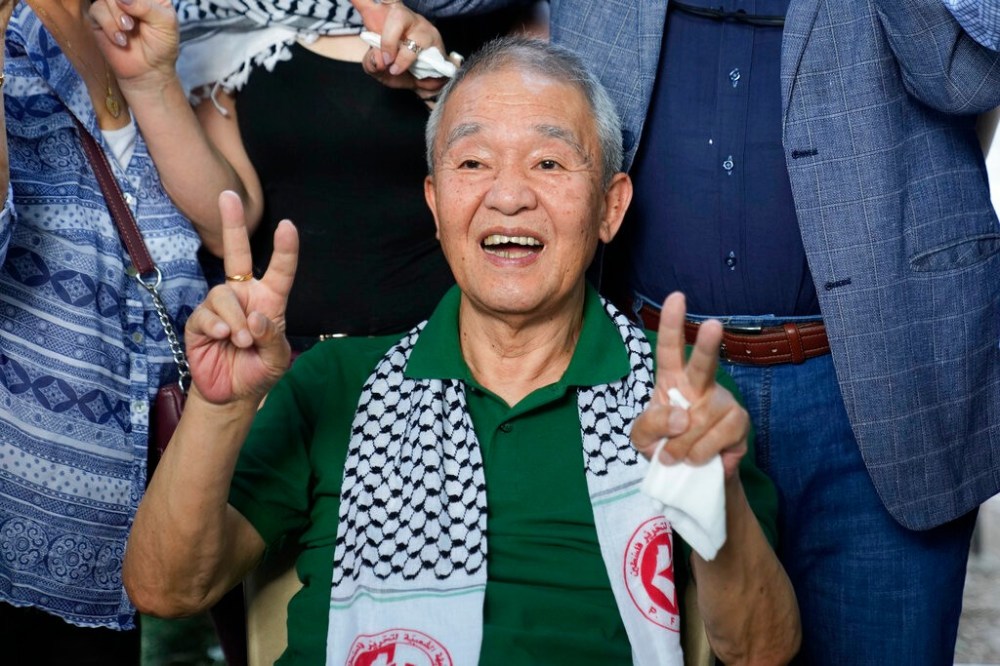
BEIRUT (AP) — Kozo Okamoto, the Japanese militant who took part in a deadly attack on Tel Aviv’s airport more than five decades ago, died Thursday in Beirut, the Palestinian group that had been protecting him said. He was 78.
The Popular Front for the Liberation of Palestine, a faction that is the second-largest group in the Palestine Liberation Organization, said that Okamoto had been ill for a long time.
Okamoto, who made rare public appearances since he settled in Lebanon after being released from Israel, was known within the PFLP as Ahmad al-Yabani, or Ahmad the Japanese.
The PFLP said in its statement that Okamoto’s journey was “marked by immense sacrifices spanning for decades on the battlefields of struggle in support of the Palestinian cause.” The Palestinian group added that Okamoto “never compromised nor faltered but remained steadfast to his principles.”
Okamoto had served 12 years in an Israeli lockup for a May 30, 1972 attack on the international airport outside Tel Aviv that was thought to be carried out by members of the Japanese Red Army guerrilla group in a joint operation with the PFLP.
In the 1972 attack, Okamoto and two of his colleagues arrived in Tel Aviv on a flight from Europe, then collected their bags, in which they had packed rifles and grenades, and opened fire, killing 26 people and wounding dozens, according to AP reports.
The two Japanese with Okamoto were killed in the attack while he was wounded.
Okamoto was sentenced to life in prison but freed in 1985 in a prisoner exchange between Israel and Palestinian guerrillas. He later gained political asylum in Lebanon, where he lived until his death.
One of the rare public appearances that Okamoto made was in May 2022 at a Beirut cemetery, where Palestinian militants and other personalities are buried, to mark the 50th anniversary of the attack.
The Japanese Red Army, a violent ultra-leftist group that had links to Palestinian militants, was formed in 1971 and took responsibility for several international attacks, including the takeover of the U.S. Consulate in Kuala Lumpur, Malaysia, in 1975.
The PFLP is a radical faction of the Palestine Liberation Organization and gained notoriety after the simultaneous hijackings of four Western airliners in 1970 and the seizure of an Air France flight en route from Tel Aviv to Paris that was diverted to Entebbe, Uganda.
The PFLP said in a statement Thursday that Okamoto’s attack at the Israeli airport was in retaliation for a 1968 Israeli commando attack on Beirut’s international airport.
The leader of the PFLP, Ahmed Saadat, is one of the most prominent Palestinians held in Israeli jails. Saadat was accused of organizing the 2001 assassination of Israeli Tourism Minister Rehavam Zeevi, an ultranationalist who called for the mass expulsion of Palestinians.
Okamoto and four other Japanese were arrested by Lebanese authorities in 1997 in eastern Lebanon after spending years illegally in the country, protected by Palestinian and Lebanese leftist groups during the chaotic days of the 1975-90 civil war. They were put on trial and the four were handed over to Japan in 2000 while Okamoto became the first person to get political asylum in Lebanon.
Japan has been demanding for years that Okamoto be handed over by Lebanon, but Beirut has repeatedly rejected the demand. He is considered a hero by many in Lebanon and the Arab world for championing the Palestinian cause and opposing Israel.
Okamoto once described himself during his trial in Lebanon as “an Arab resistance fighter.”