

Criminal gangs increasingly lure people to work in online scam centers, UN migration agency warns
Advertisement
Read this article for free:
or
Already have an account? Log in here »
To continue reading, please subscribe:

Digital Subscription
One year of digital access for only $205*
- Enjoy unlimited reading on winnipegfreepress.com
- Read the E-Edition, our digital replica newspaper
- Access News Break, our award-winning app
- Play interactive puzzles
*First annual payment billed as $205.00 + GST for one year. This annual subscription will automatically renew at $233.00 + GST every 52 weeks (10% off the regular annual price of $259.35). Offer available to new and qualified returning subscribers only. Cancel any time.
To continue reading, please subscribe:
Add Free Press access to your Brandon Sun subscription for only an additional
$1 for the first 4 weeks*
- Enjoy unlimited reading on winnipegfreepress.com
- Read the E-Edition, our digital replica newspaper
- Access News Break, our award-winning app
- Play interactive puzzles
*Your next Brandon Sun subscription payment will increase by $1.00 and you will be charged $17.95 plus GST for four weeks. After four weeks, your payment will increase to $24.95 plus GST every four weeks.
Read unlimited articles for free today:
or
Already have an account? Log in here »
GENEVA (AP) — The U.N.’s migration agency is warning that criminal networks have been trafficking hundreds of thousands of people — many of them educated English speakers — to work in online scam centers, and the caseload is growing.
The International Organization for Migration says victims are often lured by fake job advertisements — mostly through social media — promising work abroad, only to get locked up, have their identity documents seized, and forced through violence, threats and “debt bondage” to participate in the online scams.
“We’re seeing so many more of these cases emerge right now,” IOM Director-General Amy Pope told reporters in Geneva on Tuesday. “We’re seeing victims from over 80 different countries being trafficked into the scams.”
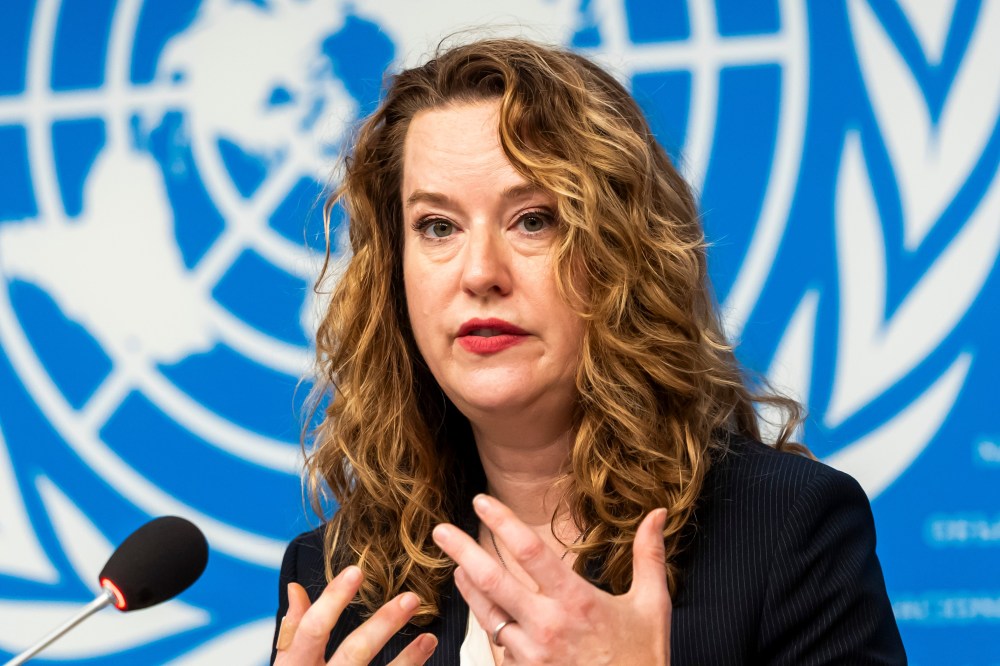
‘They’re recruiting people who often speak English very well, who often have graduate degrees, some level of education,” Pope said, adding that the cases are “specifically playing out across Asia.”
The migration agency cited estimates from the United Nations Office on Drugs and Crime that losses across east Asia, Australia, and New Zealand reached as much as $114 billion last year, and “scam compounds” across the region could hold hundreds of thousands of trafficked workers.
IOM said it had assisted over 3,500 such victims of forced criminality between 2022 and 2025, people who originated from nearly 40 countries: people from Indonesia, India, Sri Lanka, Ethiopia, Kenya, and Bangladesh were most affected.