

The deaths of 15 elephants in Kenya’s Amboseli National Park spark investigation
Advertisement
Read this article for free:
or
Already have an account? Log in here »
To continue reading, please subscribe:

Digital Subscription
One year of digital access for only $205*
- Enjoy unlimited reading on winnipegfreepress.com
- Read the E-Edition, our digital replica newspaper
- Access News Break, our award-winning app
- Play interactive puzzles
*First annual payment billed as $205.00 + GST for one year. This annual subscription will automatically renew at $233.00 + GST every 52 weeks (10% off the regular annual price of $259.35). Offer available to new and qualified returning subscribers only. Cancel any time.
To continue reading, please subscribe:
Add Free Press access to your Brandon Sun subscription for only an additional
$1 for the first 4 weeks*
- Enjoy unlimited reading on winnipegfreepress.com
- Read the E-Edition, our digital replica newspaper
- Access News Break, our award-winning app
- Play interactive puzzles
*Your next Brandon Sun subscription payment will increase by $1.00 and you will be charged $17.95 plus GST for four weeks. After four weeks, your payment will increase to $24.95 plus GST every four weeks.
Read unlimited articles for free today:
or
Already have an account? Log in here »
NAIROBI, Kenya (AP) — The deaths of 15 elephants over the past month in Kenya ‘s Amboseli National Park have sparked an investigation, wildlife authorities said Tuesday.
The Kenya Wildlife Service said 10 of the pachyderms showed signs of partial paralysis before dying within two days, while the remaining five were found dead, with their carcasses partially consumed by scavengers.
Most of those affected were female elephants and their calves, with only one male among the dead. The deaths happened in the Kimana Sanctuary and Kuku Ranch areas surrounding the park, the authority said.
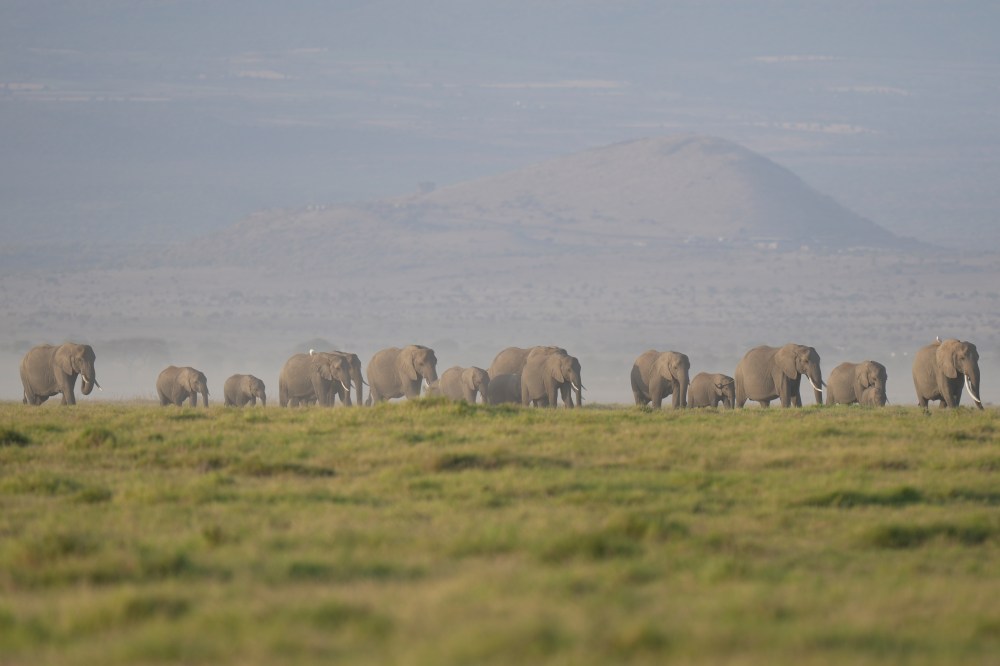
Kenya has previously recorded incidents of elephants being poisoned as a result of poaching and human-wildlife conflict.
Preliminary tests on samples collected from the elephants by a laboratory at the University of Nairobi detected a “potential toxic substance,” while separate analyses by the Government Chemist were negative for the toxins tested. The authority said further tests are underway.
“Environmental investigations are also being undertaken, including the analysis of water sources and other potential environmental contaminants within the affected areas, to establish whether the elephants were exposed to a common source,” the authority said in a statement.
The authorities sought to reassure the public, saying there was no evidence the condition could be transmitted to humans.