

Wisconsin judge says voters who have returned absentee ballot for state primary cannot get a new one
Advertisement
Read this article for free:
or
Already have an account? Log in here »
To continue reading, please subscribe:

Digital Subscription
One year of digital access for only $205*
- Enjoy unlimited reading on winnipegfreepress.com
- Read the E-Edition, our digital replica newspaper
- Access News Break, our award-winning app
- Play interactive puzzles
*First annual payment billed as $205.00 + GST for one year. This annual subscription will automatically renew at $233.00 + GST every 52 weeks (10% off the regular annual price of $259.35). Offer available to new and qualified returning subscribers only. Cancel any time.
To continue reading, please subscribe:
Add Free Press access to your Brandon Sun subscription for only an additional
$1 for the first 4 weeks*
- Enjoy unlimited reading on winnipegfreepress.com
- Read the E-Edition, our digital replica newspaper
- Access News Break, our award-winning app
- Play interactive puzzles
*Your next Brandon Sun subscription payment will increase by $1.00 and you will be charged $17.95 plus GST for four weeks. After four weeks, your payment will increase to $24.95 plus GST every four weeks.
Read unlimited articles for free today:
or
Already have an account? Log in here »
MADISON, Wis. (AP) — Wisconsin voters who have already returned their absentee ballots for the state’s primary are not allowed to void those and request a new one, a judge ruled Wednesday.
The ruling deals a blow to Democrats, who filed a lawsuit seeking to give voters a do-over because of a chaotic party primary in the governor’s race.
More than 117,000 absentee ballots had been returned by Wednesday. Democrats were concerned that many of those might have been cast for Lt. Gov. Sara Rodriguez, who had been seen as a Democratic frontrunner before she dropped out on July 17 amid a campaign finance scandal. A day later, Milwaukee County Executive David Crowley, who had bowed out on July 8, reentered the race.
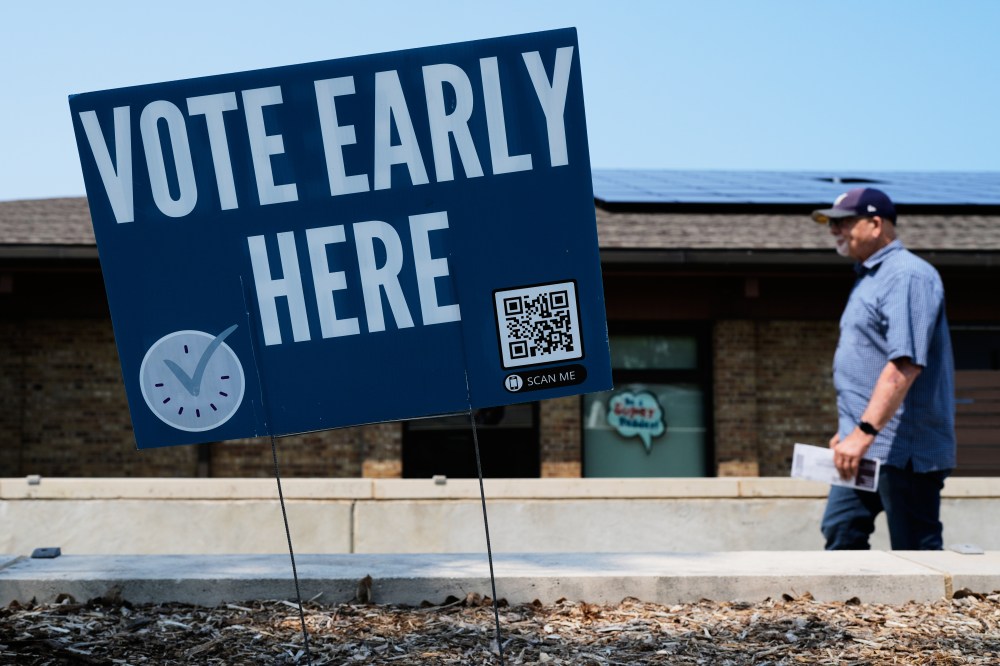
Rodriguez’s name remains on the ballot, along with former state economic development director Missy Hughes, who dropped out in June.
The bipartisan Wisconsin Elections Commission voted 4-2 on July 9 to distribute guidance to clerks saying absentee voters cannot change their ballot after it has been returned. The rarely used process is known as ballot spoiling.
Democrats objected and supported the lawsuit filed by three voters, arguing that state law allows voters who have submitted absentee ballots to change their mind before those ballots are counted on Election Day.
“Voters across Wisconsin will be disenfranchised” if not allowed to do that, attorney Eduardo Castro argued in court on Tuesday.
But Dane County Circuit Judge David Conway disagreed, ruling on Wednesday that “the unambiguous language of the statute does not allow a voter to spoil an absentee ballot after it is returned.” He said the guidance issued by the elections commission to the roughly 2,000 clerks who run elections at the local level was consistent with the law.
The judge declined to issue a temporary restraining order sought by Democrats. They had wanted the judge to order the state elections commission to rescind its guidance.
“The judge got it right,” said Don Millis, the Republican chair of the elections commission. “The law is clear. Once a voter returns an absentee ballot to the clerk, the voter cannot decide to change his or her vote. The law does not permit do-overs.”
Wisconsin Democratic Party Chair Devin Remiker said the ruling was wrong, but didn’t say if the party would appeal.
The Republican National Committee opposed the effort to allow for revoting.
Ballot spoiling was the subject of a 2022 lawsuit brought by a Republican group. In that case, a Waukesha County judge agreed that the elections commission must rescind its guidance that allowed voters to cast a second ballot. But the state appeals court earlier this year vacated that ruling on technical grounds and did not rule on the merits.
The winner of the Democratic primary will advance to November’s general election, most likely against Republican U.S. Rep. Tom Tiffany, who has only token opposition in his party’s primary. Democratic Gov. Tony Evers is not seeking a third term.
Democrats hope to keep the governor’s office and flip both chambers of the Legislature to gain full control of state government for the first time since 2010.
___
This story corrects the spelling in a second reference to ‘Rodriguez.’