

Drone strikes hit Libya’s key western oil town and a car bomb kills an officer in the east
Advertisement
Read this article for free:
or
Already have an account? Log in here »
To continue reading, please subscribe:

Digital Subscription
One year of digital access for only $205*
- Enjoy unlimited reading on winnipegfreepress.com
- Read the E-Edition, our digital replica newspaper
- Access News Break, our award-winning app
- Play interactive puzzles
*First annual payment billed as $205.00 + GST for one year. This annual subscription will automatically renew at $233.00 + GST every 52 weeks (10% off the regular annual price of $259.35). Offer available to new and qualified returning subscribers only. Cancel any time.
To continue reading, please subscribe:
Add Free Press access to your Brandon Sun subscription for only an additional
$1 for the first 4 weeks*
- Enjoy unlimited reading on winnipegfreepress.com
- Read the E-Edition, our digital replica newspaper
- Access News Break, our award-winning app
- Play interactive puzzles
*Your next Brandon Sun subscription payment will increase by $1.00 and you will be charged $17.95 plus GST for four weeks. After four weeks, your payment will increase to $24.95 plus GST every four weeks.
Read unlimited articles for free today:
or
Already have an account? Log in here »
CAIRO (AP) — Firefighters in western Libya battled on Tuesday to extinguish a massive fire caused by a drone strike on an oil facility the day before, when their town on the Mediterranean coast came under a wave of drone attacks targeting key oil installations.
Drone strikes continued on Tuesday, hitting the town’s power plant and oil refinery, the state-run National Oil Corporation said.
The attacks underscored the fragile state of security at Libya’s critical infrastructure. In the country’s east, in the city of Benghazi, a car bomb killed a senior military officer with a self-styled military force on Monday, the latest such bombing in the violence-stricken North African nation.
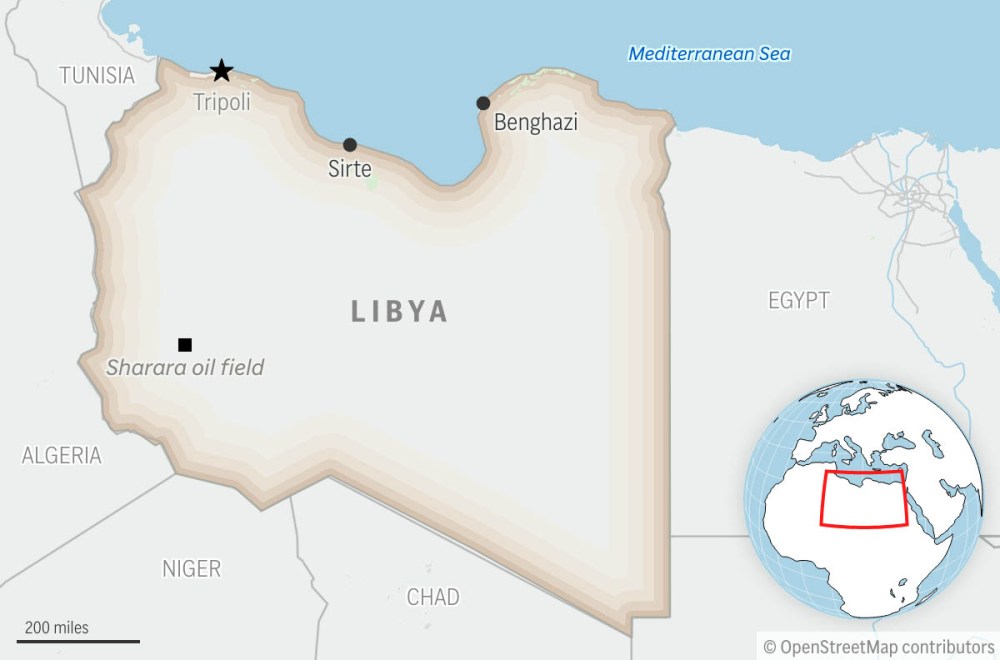
No group has so far claimed responsibility for either the drone strikes in the town of Zawiya, about 47 kilometers (about 30 miles) west of the capital of Tripoli, or the Benghazi bombing.
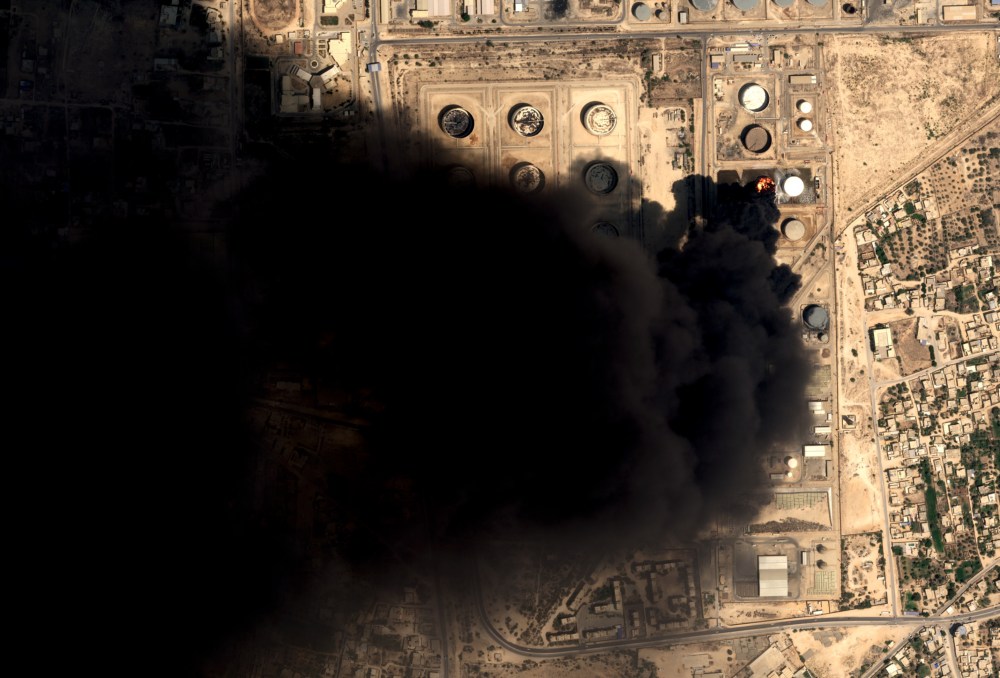
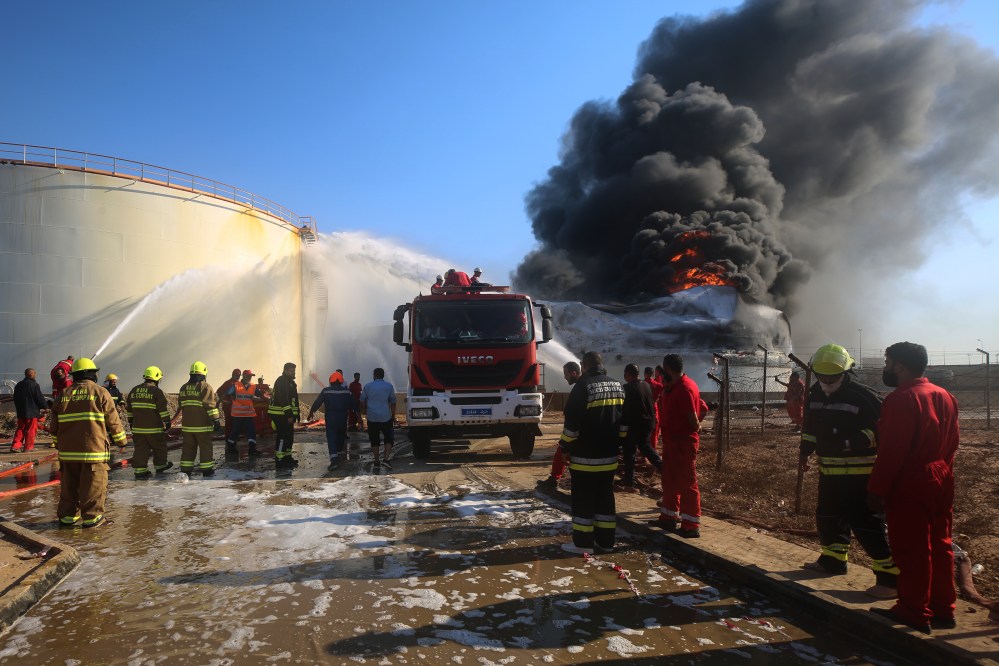
Monday’s first drone strike ignited a massive blaze at the refinery’s gasoline-storage tank that burned through the night and into Tuesday afternoon, according to the Civil Defense, a first responders agency. There were no reports of casualties, health authorities said.
Footage aired by local media showed massive flames and fireballs erupting from the tank, with black and orange smoke rising in the sky as firefighters sprayed what appeared to be foam or water in efforts to extinguish the blaze.
As the firefighters fought the flames, another drone hit close to a key oil tank nearby but did not cause any casualties, the company said. It said the tank, which held 4.5 million liters of fuel when it was hit, collapsed and the company declared a state of maximum emergency at the facility.
On Tuesday, two drones hit the town’s power plant, with one damaging its firefighting system while the second landed close to the facility’s main fuel storage, setting it on fire. The national oil company said firefighters quickly got that fire under control and there were no casualties.
Oil infrastructure in Zawiya — which houses critical energy infrastructure, including Libya’s largest oil refinery, an export terminal and a power plant — has come under frequent attacks, including over the weekend when the national oil company said drones hit a fuel tank and a desalination plant linked to the oil facilities. It said the tank was damaged.
By late Tuesday evening, the national oil company said all the fires had been extinguished.
The attacks come as tensions are rising between the government of western Libya and warlord Mohamed Bahroun who controls the city of Zawiya. Much of western Libya is ruled by local militias loosely allied to Prime Minister Abdul-Hamid Dbeibah’s government in Tripoli.
Jalel Harchaoui, an analyst affiliated with the Royal United Services Institute in London, said the warlord has been cornered by the government and his forces “are likely to resort to desperate measures.”
The Benghazi bombing on Monday evening killed a senior officer with the forces of powerful commander Khalifa Hifter. Maj. Gen. Fawzy al-Mansouri, director of the military intelligence of Hifter’s self-styled Libyan National Army, was killed when an explosive-laden vehicle detonated near his car in the Sayyida Aisha neighborhood in Benghazi, the LNA said.
The LNA is allied with one of Libya’s two rival governments, which controls the country’s eastern and southern parts.
Libya, a largely lawless Mediterranean country, has been plunged into chaos and division following the 2011 uprising-turned-civil war, which toppled and later killed longtime dictator Moammar Gadhafi.
Amid the chaos, militias grew in wealth and power, particularly in Tripoli and the western part of the country.
The country has been divided for years between rival administrations in the east and west, each backed by armed groups and foreign governments. Currently, it is governed by Prime Minister Abdul-Hamid Dbeibah’s government in the west and by the administration of Prime Minister Ossama Hammad in the east.
Turkish Foreign Minister Hakan Fidan, who is to arrive in Libya for a visit this week, is due to visit both Tripoli and Benghazi.