

Judge refuses to block Trump administration from building border wall along tribe’s reservation
Advertisement
Read this article for free:
or
Already have an account? Log in here »
To continue reading, please subscribe:

Digital Subscription
One year of digital access for only $205*
- Enjoy unlimited reading on winnipegfreepress.com
- Read the E-Edition, our digital replica newspaper
- Access News Break, our award-winning app
- Play interactive puzzles
*First annual payment billed as $205.00 + GST for one year. This annual subscription will automatically renew at $233.00 + GST every 52 weeks (10% off the regular annual price of $259.35). Offer available to new and qualified returning subscribers only. Cancel any time.
To continue reading, please subscribe:
Add Free Press access to your Brandon Sun subscription for only an additional
$1 for the first 4 weeks*
- Enjoy unlimited reading on winnipegfreepress.com
- Read the E-Edition, our digital replica newspaper
- Access News Break, our award-winning app
- Play interactive puzzles
*Your next Brandon Sun subscription payment will increase by $1.00 and you will be charged $17.95 plus GST for four weeks. After four weeks, your payment will increase to $24.95 plus GST every four weeks.
Read unlimited articles for free today:
or
Already have an account? Log in here »
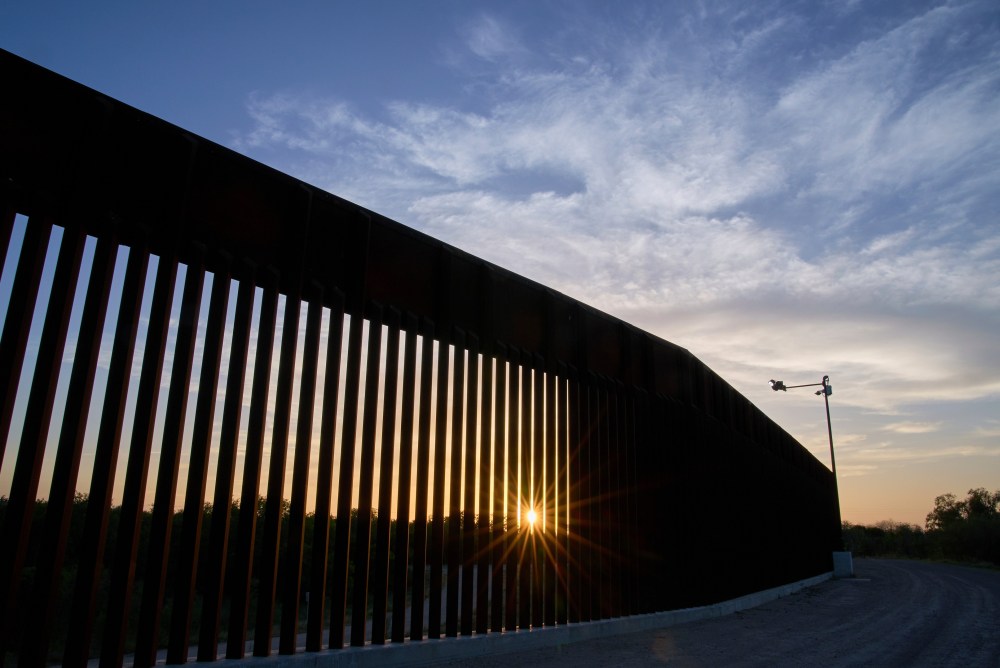
WASHINGTON (AP) — A federal judge refused on Friday to block the Trump administration from taking steps to build 62 miles of international border wall along part of a Native American tribe’s reservation without its consent.
U.S. District Judge Richard Leon in Washington, D.C., denied the Tohono O’odham Nation’s request for a court-ordered halt to border wall construction on its 2.8-million-acre reservation. Leon ruled the tribe hasn’t established that a border wall will change its reservation boundaries without congressional authority.
The judge also rejected the tribe’s claim that the planned border wall would illegally trespass on its reservation.
“And in any event, I find that the Government’s interests in securing the border, enforcing immigration laws, and ensuring public safety outweigh any surviving irreparable harms at this juncture,” Leon wrote.
The tribe released a statement late Friday strongly disagreeing with the decision.
“Too many critical issues were not adequately addressed, such as inevitable impacts construction will have on the Nation’s land and the permanent destruction of sacred sites,” Tohono O’odham Nation Chairman Verlon M. Jose said. “The Nation will consider all possible options for moving forward, as this issue is simply too important to the O’odham.”
The O’odham reservation in the Sonoran Desert in Arizona abuts 62 miles of the Mexico border. The tribe has over 37,000 members, including thousands who live in Mexico.
Building the border wall would led to “significant devastation” on the reservation, including the destruction of mountain peaks that are sacred to the O’odham, tribe attorneys said.
“It would fray the ties between O’odham communities and families on opposite sides of the border, interfere significantly with O’odham religious rituals and practices, and destroy plant and animal resources sacred to the O’odham,” the lawyers wrote.
In 1907, President Theodore Roosevelt issued a proclamation reserving a 60-foot strip of public land along the U.S.-Mexico border for a buffer zone called the “Roosevelt Reservation,” which was formed a decade before the reservation’s establishment.
Tribe attorneys say it is “fanciful at best” to suggest that border wall construction can be confined to a 60-foot-wide corridor.
During a July 22 hearing, Leon appeared to be skeptical that U.S. laws tip in favor of the tribe’s bid for a preliminary injunction, calling it an “extraordinary” request. Leon, who was nominated to the bench by Republican President George W. Bush, said he couldn’t find a previous court ruling under comparable circumstances.
“This is a novel case with novel issues,” the judge said.