

A landslide at a landfill in the capital of Guinea kills 30 people, officials say
Advertisement
Read this article for free:
or
Already have an account? Log in here »
To continue reading, please subscribe:

Digital Subscription
One year of digital access for only $205*
- Enjoy unlimited reading on winnipegfreepress.com
- Read the E-Edition, our digital replica newspaper
- Access News Break, our award-winning app
- Play interactive puzzles
*First annual payment billed as $205.00 + GST for one year. This annual subscription will automatically renew at $233.00 + GST every 52 weeks (10% off the regular annual price of $259.35). Offer available to new and qualified returning subscribers only. Cancel any time.
To continue reading, please subscribe:
Add Free Press access to your Brandon Sun subscription for only an additional
$1 for the first 4 weeks*
- Enjoy unlimited reading on winnipegfreepress.com
- Read the E-Edition, our digital replica newspaper
- Access News Break, our award-winning app
- Play interactive puzzles
*Your next Brandon Sun subscription payment will increase by $1.00 and you will be charged $17.95 plus GST for four weeks. After four weeks, your payment will increase to $24.95 plus GST every four weeks.
Read unlimited articles for free today:
or
Already have an account? Log in here »
CONAKRY, Guinea (AP) — A mountainous heap of refuse collapsed at the largest landfill in Guinea ‘s capital of Conakry early on Sunday, killing 30 people, according to the central government.
Authorities said that heavy rains, which started at around 2 a.m., washed over the refuse at Dar Es Salam — the largest landfill in Conakry — and triggered a landslide that buried nearby shacks. A search and rescue operation was underway to find survivors. Six people were seriously injured and several homes were destroyed.
The site, an open-air waste dump which is the largest in the city, had been designated for closure on Sunday, according to Lt. Col. Baldé Mamadou Bailo, the sanitation officer for the military engineering battalion.
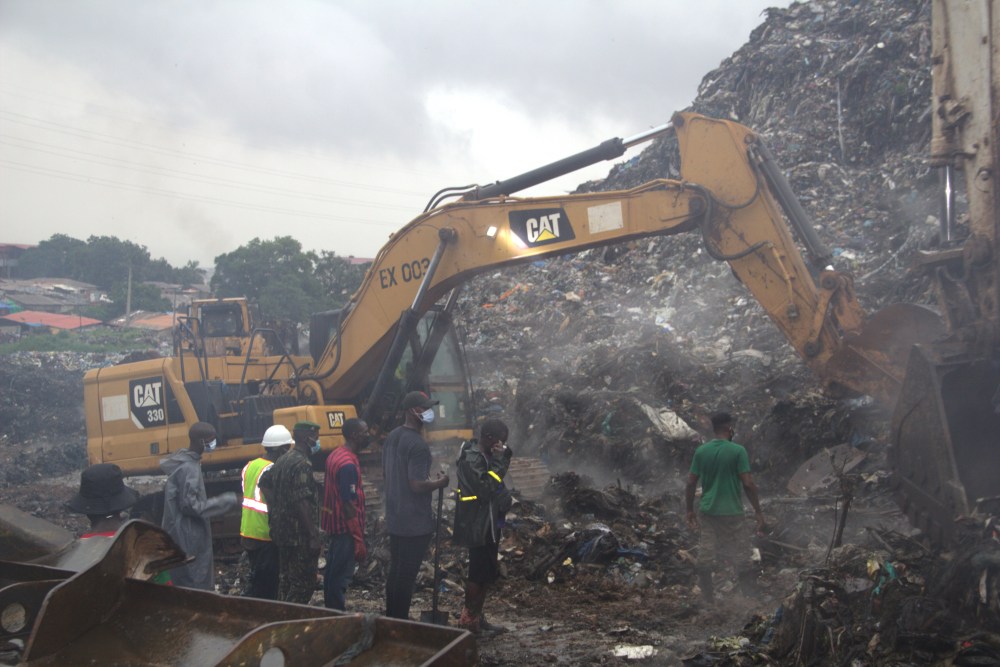
Locals living around the landfill had been given eviction notices, which forced many to leave the area, but many others were still around at the time of the disaster, according to authorities.
“We will ensure that the remaining families are relocated elsewhere,” Dienabou Touré, the minister of territorial administration and decentralization, said at the scene.
Guinea is mineral-rich with huge deposits of bauxite — the largest in the world — and also has iron ore, gold, diamonds and minerals. However, according to the World Bank, 43.7% of the population lives below the national poverty line.