

Mexican governor indicted by the US seeks leave again after contentious return to office
Advertisement
Read this article for free:
or
Already have an account? Log in here »
To continue reading, please subscribe:

Digital Subscription
One year of digital access for only $205*
- Enjoy unlimited reading on winnipegfreepress.com
- Read the E-Edition, our digital replica newspaper
- Access News Break, our award-winning app
- Play interactive puzzles
*First annual payment billed as $205.00 + GST for one year. This annual subscription will automatically renew at $233.00 + GST every 52 weeks (10% off the regular annual price of $259.35). Offer available to new and qualified returning subscribers only. Cancel any time.
To continue reading, please subscribe:
Add Free Press access to your Brandon Sun subscription for only an additional
$1 for the first 4 weeks*
- Enjoy unlimited reading on winnipegfreepress.com
- Read the E-Edition, our digital replica newspaper
- Access News Break, our award-winning app
- Play interactive puzzles
*Your next Brandon Sun subscription payment will increase by $1.00 and you will be charged $17.95 plus GST for four weeks. After four weeks, your payment will increase to $24.95 plus GST every four weeks.
Read unlimited articles for free today:
or
Already have an account? Log in here »
MEXICO CITY (AP) — The embattled governor of Mexico’s Sinaloa state has reversed his decision to return to his post, bowing to an extraordinary backlash from his own ruling party over accusations by U.S. prosecutors he conspired with a powerful cartel to smuggle drugs into the United States.
State lawmakers were expected Sunday to approve Gov. Rubén Rocha Moya’s request for an indefinite leave of absence, about a day and a half after he announced his return by claiming Mexican prosecutors had cleared him of the drug trafficking charges leveled against him by the U.S. Department of Justice in late April.
The rapid reversal demonstrated the authority Mexican President Claudia Sheinbaum wields over her Morena party as she walks a fine line between placating U.S. President Donald Trump, who says cartels control Mexico and has repeatedly offered U.S. military help to fight them, and her progressive movement deeply wary of U.S. intervention.
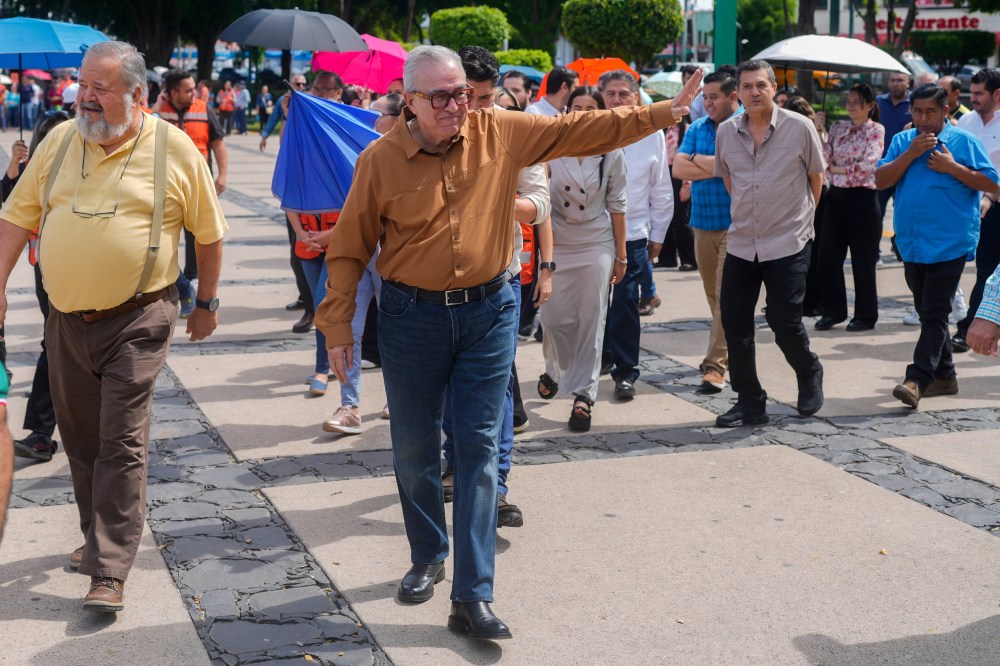
After nearly four months on leave, Rocha Moya announced Friday that he was returning to office, claiming Mexico’s Attorney General’s Office had found “no evidence to support our participation in any criminal conduct.” He declared that he was back “as governor of Sinaloa with my head held high.”
That defiance lasted barely a day, as his return unleashed a torrent of criticism from governors, senators and other prominent figures in Morena, including Sheinbaum.
“No personal interest can ever come before the interests of the people and the nation,” she wrote Saturday in an apparent rebuke of Rocha Moya, without mentioning him by name. “Mexico deserves public servants who understand that positions are temporary, but responsibility to the nation is eternal.”
Morena said its national leadership had no prior knowledge of Rocha Moya’s return, calling it his “personal decision.” The party’s Senate bloc urged respect for the ongoing investigation, while Morena governors declared in a joint statement that “personal or group political projects have no place” when the country’s interests are at stake.
Ricardo Monreal, Morena’s leader in the lower house of Congress, publicly urged Rocha Moya, his longtime ally, to reconsider and remain on leave.
The coordinated response left Rocha Moya isolated. He announced later Saturday that he had asked the state legislature to allow him to step aside indefinitely. “Sinaloa, the nation and the transformation movement come first,” he wrote.
Rocha Moya had been on leave since early May, days after federal prosecutors in New York unsealed a bombshell indictment accusing him and nine other current and former Mexican officials of protecting Sinaloa cartel members in exchange for bribes as they trafficked fentanyl, heroin, cocaine and methamphetamine into the U.S.
The indictment marked the Trump administration’s most significant public action against what it calls official corruption enabling Mexico’s cartels, fueling new tension between the U.S. and Mexican governments. Sheinbaum has denied shielding Rocha Moya but rejected Washington’s request to arrest and extradite the defendants without credible evidence, insisting that any prosecution take place in Mexico.
Rocha Moya, 77, a staunch ally of Sheinbaum’s mentor, former President Andrés Manuel López Obrador, denied wrongdoing and described the charges as a politically motivated attack. He initially stepped aside so he could cooperate with the Mexican investigation without relying on the constitutional immunity attached to his office. Whether taking leave stripped him of that protection — and whether his latest request to step aside indefinitely would do so again — remains disputed among Mexican legal scholars.
After the indictment, the mayor of Culiacán, Sinaloa’s capital, and the state’s deputy attorney general also stepped down from their posts, while two former senior state officials surrendered to U.S. authorities.
Sinaloa has been engulfed for nearly two years in a bloody conflict between rival factions of the cartel that bears the state’s name.