

Chinese artist sentenced to 3 years in prison over satirical Mao artworks
Advertisement
Read this article for free:
or
Already have an account? Log in here »
To continue reading, please subscribe:

Digital Subscription
One year of digital access for only $205*
- Enjoy unlimited reading on winnipegfreepress.com
- Read the E-Edition, our digital replica newspaper
- Access News Break, our award-winning app
- Play interactive puzzles
*First annual payment billed as $205.00 + GST for one year. This annual subscription will automatically renew at $233.00 + GST every 52 weeks (10% off the regular annual price of $259.35). Offer available to new and qualified returning subscribers only. Cancel any time.
To continue reading, please subscribe:
Add Free Press access to your Brandon Sun subscription for only an additional
$1 for the first 4 weeks*
- Enjoy unlimited reading on winnipegfreepress.com
- Read the E-Edition, our digital replica newspaper
- Access News Break, our award-winning app
- Play interactive puzzles
*Your next Brandon Sun subscription payment will increase by $1.00 and you will be charged $17.95 plus GST for four weeks. After four weeks, your payment will increase to $24.95 plus GST every four weeks.
Read unlimited articles for free today:
or
Already have an account? Log in here »
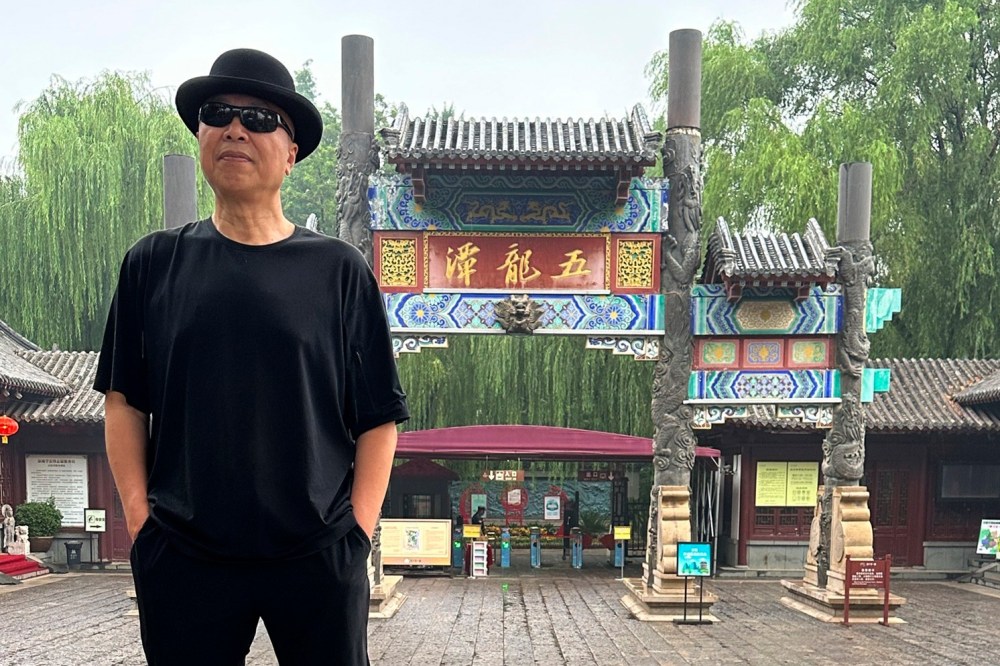
BANGKOK (AP) — Chinese artist Gao Zhen was sentenced to three years in prison Tuesday for “infringing upon the reputation of heroes” through his satirical works of art, including statues of China’s former leader Mao Zedong.
The U.S.-based Gao, who was part of an artistic duo known internationally as the Gao Brothers, was arrested while visiting family in China in August 2024. He has been in official custody since then.
He was sentenced by the Sanhei People’s Court court in northern Hebei province, according to his wife, Zhao Yaliang.
The charges against Gao relate to artistic works that China’s authorities deem insulting to revolutionary figures. One was a 2009 statue called Mao’s Guilt that shows the former leader and founder of modern China kneeling in repentance, and another was the Miss Mao series of caricatures depicting Mao with breasts and an engorged nose.
Shane Yi, a researcher at Chinese Human Rights Defenders, who has been advocating for Gao’s case, described the sentence as “a very clear case of a violation of a person’s freedom of expression.”
Yi said the artist plans to appeal the sentence and noted that the artworks in question were created before the law Gao was sentenced with had been passed.
The court did not immediately respond to a request for comment.
Amnesty International criticized the court sentence, which it described as a deterrent against artistic expression.
“The lengthy pre-trial detention and, ultimately, decision to convict Gao Zhen and sentence him to the maximum three-year prison term under this offense illustrate the authorities’ determination to deter others from engaging in independent artistic expression,” said Amnesty’s China Director Sarah Brooks.
“No artist should face criminal punishment for creating work that challenges official narratives or encourages critical reflection on history,” she said.
Zhao said she hopes to be reunited with her husband and be able to return to the U.S., where the family had immigrated.
“I felt two years was my limit, and I was really disappointed and sad. I haven’t been able to catch my breath,” she said. She had prepared clothes for her husband hoping that he would be released. Chinese courts often count pretrial detention as time served in a sentence.
The Gao Brothers, whose works addressed themes of authoritarianism and censorship, became famous in a time of relative openness in China and were exhibited both inside the country and abroad.
However, in recent years, the state’s increased its controlling grip on certain aspects of expression, especially in regards to political figures with the passage of the law in 2018 that bans criticism of the nation’s heroes.