

Chinese foreign minister calls for US and China to ‘overcome obstacles’ ahead of presidential summit
Advertisement
Read this article for free:
or
Already have an account? Log in here »
To continue reading, please subscribe:

Digital Subscription
One year of digital access for only $205*
- Enjoy unlimited reading on winnipegfreepress.com
- Read the E-Edition, our digital replica newspaper
- Access News Break, our award-winning app
- Play interactive puzzles
*First annual payment billed as $205.00 + GST for one year. This annual subscription will automatically renew at $233.00 + GST every 52 weeks (10% off the regular annual price of $259.35). Offer available to new and qualified returning subscribers only. Cancel any time.
To continue reading, please subscribe:
Add Free Press access to your Brandon Sun subscription for only an additional
$1 for the first 4 weeks*
- Enjoy unlimited reading on winnipegfreepress.com
- Read the E-Edition, our digital replica newspaper
- Access News Break, our award-winning app
- Play interactive puzzles
*Your next Brandon Sun subscription payment will increase by $1.00 and you will be charged $17.95 plus GST for four weeks. After four weeks, your payment will increase to $24.95 plus GST every four weeks.
Read unlimited articles for free today:
or
Already have an account? Log in here »
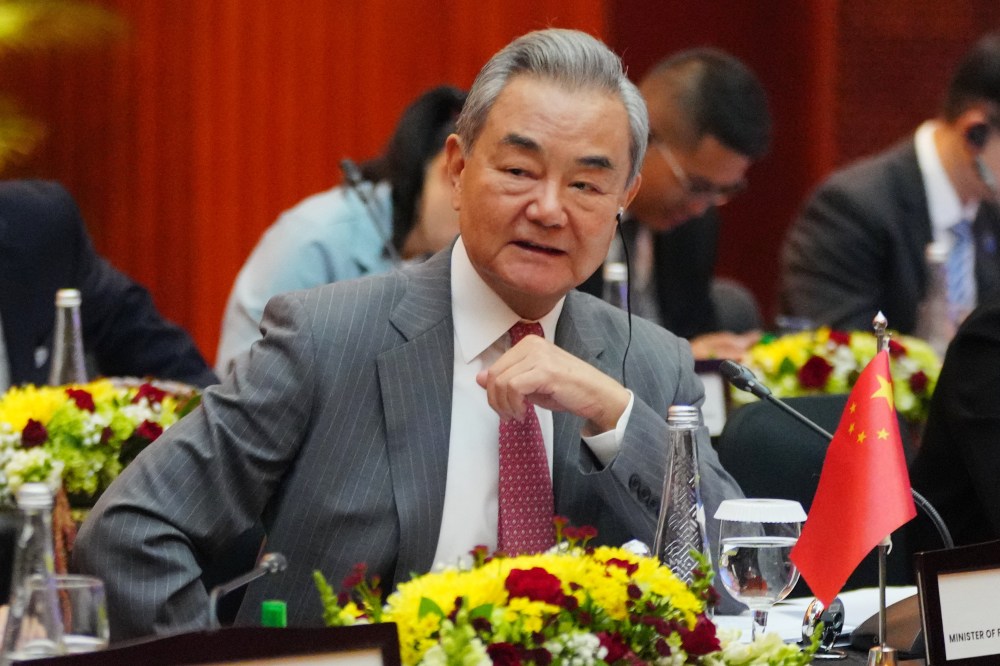
BANGKOK (AP) — China’s foreign minister said his country and the United States should overcome obstacles between the nations ahead of an expected summit next month between U.S. President Donald Trump and Chinese President Xi Jinping.
Wang Yi met with U.S. ambassador to China David Perdue on Wednesday and called on both sides to “focus on the positive agenda, properly manage differences, remove interference and overcome obstacles to high-level exchanges between the two countries,” Chinese state broadcaster CCTV reported Thursday.
China-U.S. relations “still face various risks and challenges,” he acknowledged in a statement released by CCTV.
Trump and Xi met in May in Beijing and pledged to keep the relationship stable and maintain the fragile trade truce. Trump invited Xi to meet Sept. 24 in the U.S., but the exact date of the Chinese leader’s visit has not been confirmed.
Since then, however, the U.S. and China have continued to take targeted economic action against each other, including the U.S. banning imports of new Chinese-made humanoid robots and China banning American entities engaging in trade and other activities in China.
Also on Thursday, China’s Ministry of Foreign Affairs spokesperson Lin Jian said at a regular press conference that China and the U.S. were maintaining communication about the two leaders’ upcoming meeting “within the year.”
China-U.S. tensions had been elevated since Trump’s return to the White House last year, with the U.S. at one point saying tariffs on China would be up to 145%, although the tariff levels came down substantially later. Tensions have eased in recent months and several agreements were made during the leaders’ May meeting, including the setting up of boards of trade and investment between the two countries.
However, the Trump administration has recently been deliberating new tariffs of 7.5% on China as a result of an ongoing U.S. probe against 16 economies on excess industrial capacity and production. An official decision has not yet been finalized or made public. The U.S. also said last month that it was imposing a 12.5% tariff on China as a result of a U.S. probe on forced labor against 60 economies.
In response to the potential 7.5% new tariffs by the U.S., China’s Ministry of Commerce on Thursday told reporters that China “firmly opposes” the U.S. probe on excess capacity, adding that the U.S. was “politicizing economic and trade issues.”
Beijing will continue to closely monitor developments and “reserves the right to take all necessary measures” if needed, the Commerce Ministry added.
Last month, China also hit back against Western criticism of overcapacity in a report titled “China’s Position on the So-called Excess Capacity Issue,” saying China never sought a large trade surplus.
____
AP writer Chan Ho-him in Hong Kong contributed to this report.