

Guinea-Bissau votes in a referendum on granting the president expanded powers
Advertisement
Read this article for free:
or
Already have an account? Log in here »
To continue reading, please subscribe:
Digital Subscription
One year of digital access for only $1.44 a week*
- Enjoy unlimited reading on winnipegfreepress.com
- Read the E-Edition, our digital replica newspaper
- Access News Break, our award-winning app
- Play interactive puzzles
*Billed as $5.77 plus GST every four weeks. After 52 weeks, price increases to the regular rate of $19.95 plus GST every four weeks. Offer available to new and qualified returning subscribers only. Cancel any time.
To continue reading, please subscribe:
Add Free Press access to your Brandon Sun subscription for only an additional
$1 for the first 4 weeks*
- Enjoy unlimited reading on winnipegfreepress.com
- Read the E-Edition, our digital replica newspaper
- Access News Break, our award-winning app
- Play interactive puzzles
*Your next Brandon Sun subscription payment will increase by $1.00 and you will be charged $17.95 plus GST for four weeks. After four weeks, your payment will increase to $24.95 plus GST every four weeks.
Read unlimited articles for free today:
or
Already have an account? Log in here »
BISSAU, Guinea-Bissau (AP) — Guinea-Bissau was voting Sunday in a referendum to decide on granting new presidential powers ahead of December’s general election, which will return the West African nation to democracy after its latest coup.
There was a low turnout across many voting stations after the opposition urged voters to boycott the referendum, saying it would make the head of the military government more powerful.
The military government seized power in November of last year following a disputed election in which former President Umaro Sissoco Embaló and opposition candidate Fernando Dias both claimed victory.
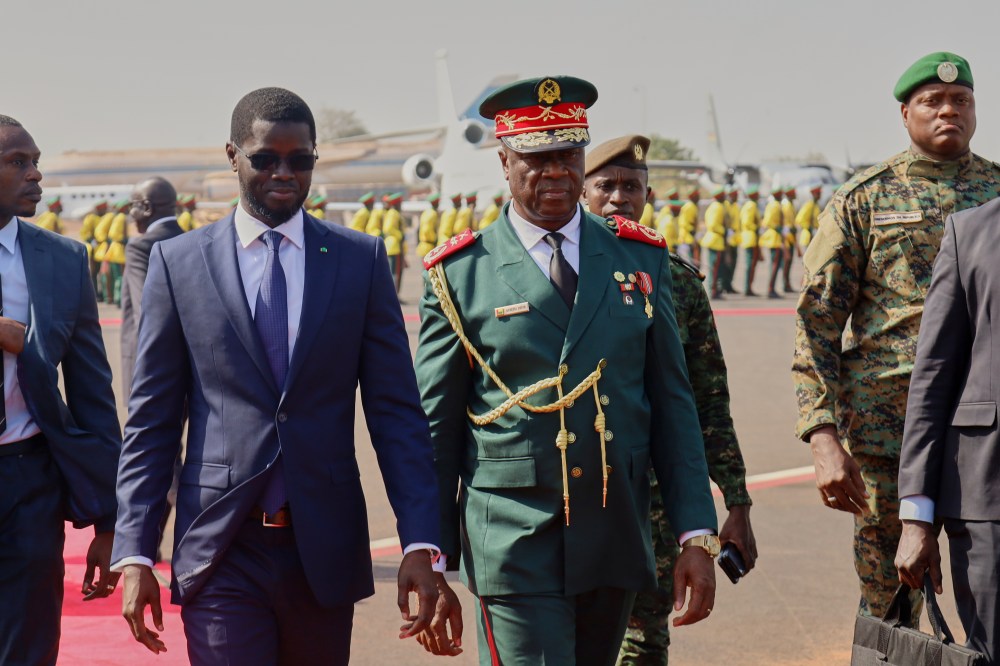
If passed, the new constitution by the self-styled National Transitional Council will grant more powers to the president and reduce parliamentary representation, among other issues.
The authorities argue that a parliament trimmed from 102 to 65 seats would allow for easier and more robust debates, while new presidential powers would underline the higher authority of the president over the prime minister, which they claim is a source of political instability in the country. Opposition groups reject the claim.
“In a community, there is only one leader. No community or village can have two leaders. We revised the constitution to avoid constant conflict between the president of the republic and the prime minister. We clarified the law and helped the public understand that the president of the republic is the national symbol. It is the president who stands for election in presidential polls,” Gen. Tomás Djassi, the head of the armed forces, said.
Opposition urges boycott of referendum
But the opposition has called on voters to boycott the referendum, saying it is a path for the head of the military government to amass power and calling it a “source of political instability at all levels”.
“This constitution significantly weakens the prime minister and the government, subordinates the National People’s Assembly and political parties, and devalues — or even ignores — the popular will expressed at the polls, carrying all the attendant risks of political and social division and tension,” Muniro Conté, spokesperson for the African Party for the Independence of Guinea and Cape Verde, told The Associated Press.
Last year’s coup in Guinea-Bissau worsened West Africa’s democratic crisis, adding it to a growing number of countries in the region under military rule.
Leaders on the continent branded it a “staged” takeover after the military allowed the former president to host a press conference to announce he was being deposed and allowed to leave the country in seemingly favorable circumstances. Skeptics say Embaló had given up the seat to the military after seeing he was losing the election.
Since it gained independence from Portugal in 1973, the only Portuguese-speaking country in West Africa has been rocked by several coups and attempted coups. Before last year’s coup, a failed coup was reported only a month before.
The tiny country of around 2.2 million people has the highest proportion of natural wealth per capita in West Africa, according to the World Bank, but more than half of the country lives in poverty. The country is a hub for drug trafficking between Latin America and Europe, an issue experts say fuels its political instability.
Nearly 915,000 voters are registered to vote in the referendum, but the majority say the constitution is not a problem.
Widespread discontent among citizens over new constitution
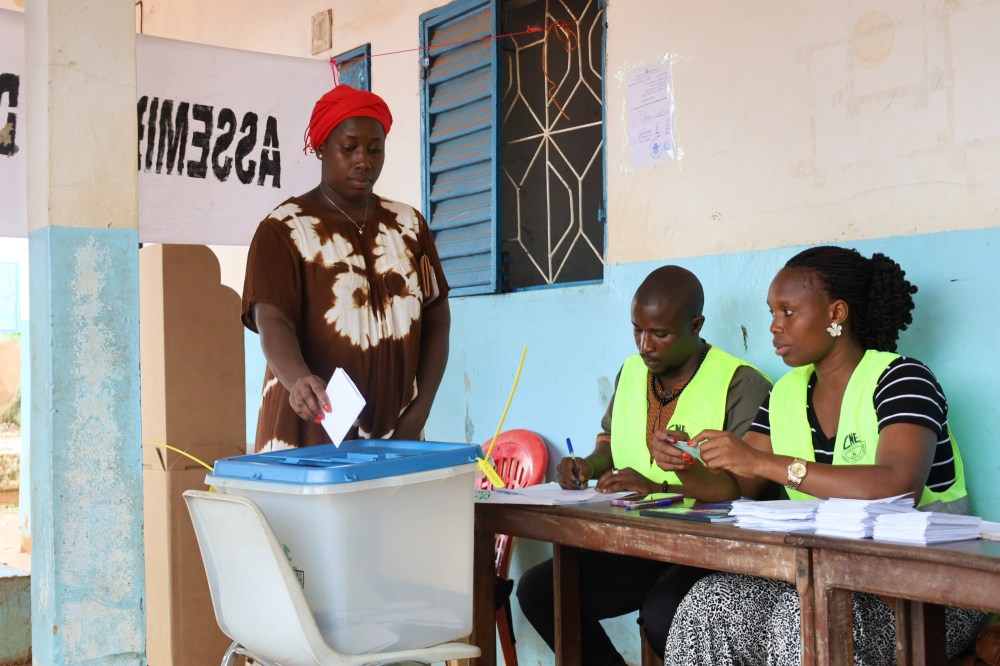
Bacar Camará, a high school teacher in the capital, Bissau, said he would not be voting and disapproves of the referendum, citing a fraught political and social environment.
“The transitional government should focus on creating conditions for better understanding and reconciliation among Guineans,” he said.
Another resident in Bissau, Carolina Djeme, said the constitution is unfamiliar to her.
“I’ll go vote on Sunday. However, I’ll vote ‘no’ because — honestly, and I think this is the case for many other citizens — I don’t know this new constitution well, so I can’t vote ‘yes’,” she said.
Analysts say the military government lacks the legitimacy to change the constitution, which has sparked discontent among the citizens.
“The fundamental question is: Who drafted this constitution, and on whose behalf? To protect which interests or institutions? Who stands to benefit from this constitution?” Paulino Quadé, a Guinean political analyst, said.
———
Adetayo reported from London.