

Why finding missing workers from Nepal’s hydropower tunnels is proving to be difficult
Advertisement
Read this article for free:
or
Already have an account? Log in here »
To continue reading, please subscribe:
Digital Subscription
One year of digital access for only $1.44 a week*
- Enjoy unlimited reading on winnipegfreepress.com
- Read the E-Edition, our digital replica newspaper
- Access News Break, our award-winning app
- Play interactive puzzles
*Billed as $5.77 plus GST every four weeks. After 52 weeks, price increases to the regular rate of $19.95 plus GST every four weeks. Offer available to new and qualified returning subscribers only. Cancel any time.
To continue reading, please subscribe:
Add Free Press access to your Brandon Sun subscription for only an additional
$1 for the first 4 weeks*
- Enjoy unlimited reading on winnipegfreepress.com
- Read the E-Edition, our digital replica newspaper
- Access News Break, our award-winning app
- Play interactive puzzles
*Your next Brandon Sun subscription payment will increase by $1.00 and you will be charged $17.95 plus GST for four weeks. After four weeks, your payment will increase to $24.95 plus GST every four weeks.
Read unlimited articles for free today:
or
Already have an account? Log in here »
NEW DELHI (AP) — Rescuers in Nepal have been combing through dark, debris-filled tunnels at hydropower plants, looking for hundreds of missing workers feared trapped in the Aug. 26 floods.
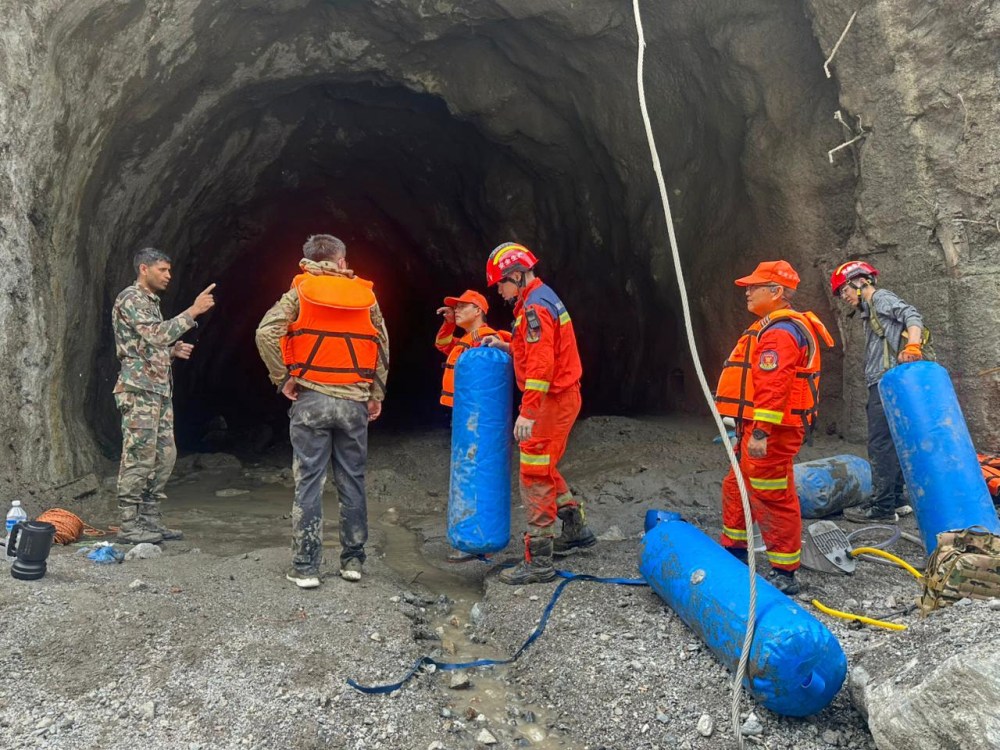
At least 900 workers are missing from a dozen hydropower projects, with about 500 believed to be inside tunnels, according to officials and industry representatives. But access to the tunnels has been hampered by thick mud, debris and damaged infrastructure, making it difficult for rescue teams to reach workers.
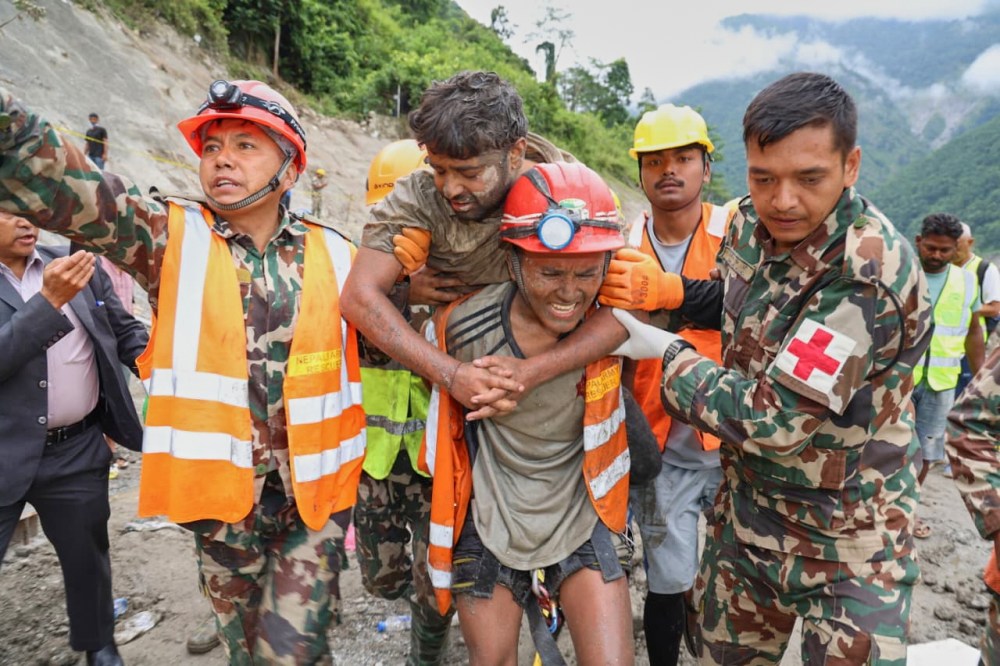
Two workers were rescued Friday, nine days after the disaster that has killed more than 1,200 people across Nepal and China.
Mohan Kumar Dangi, president of the Independent Power Producers Association of Nepal, said floods damaged at least 12 hydropower projects in Rasuwa and Nuwakot districts, with a combined capacity of 670 MW. Four were under construction, seven operational and one in testing phase, he said.
Hydropower projects undergo risk assessments and other studies before construction, but the Aug. 26 flooding was “something unimaginable,” Dangi said.
Flood damage is hampering access to tunnels
The biggest challenge for rescuers is reaching those trapped.
Many of Nepal’s hydropower projects are in remote, mountainous areas where steep terrain and narrow roads can make access difficult. Flooding has worsened conditions, damaging roads and limiting routes to some sites.
Rescuers also are facing tunnels that are blocked or damaged.
The floods swept mud, huge rocks and debris into underground passages, collapsing sections and trapping workers. Even where tunnel entrances are accessible, crews must clear large amounts of debris before reaching deeper sections.
Debris is obscuring the locations of workers
Filmmaker and drone pilot Manish Maharjan, who has been volunteering with the Nepalese army, said some tunnels were “filled with mud like toothpaste in a tube.”
At one hydropower project, he used a drone to search to the end of a tunnel but found no sign of life.
Some workers called for help during the early hours after the floods, while others who escaped said their colleagues remained underground. It was not clear whether rescuers had since made contact with those workers or whether they were still alive.
People trapped underground may survive without food for some time, but limited drinking water and breathable air can quickly become life-threatening.
Nepal’s rescue capacity is being tested
Anil Pokhrel, a disaster risk reduction expert and former head of Nepal’s disaster authority, said the flooding exposed weaknesses in Nepal’s rescue capacity. He said rescuers lost valuable time locating the tunnel’s exact entry point and coordinates and lacked heavy equipment and adequately trained personnel.
“Harsh and remote locations with inclement weather worsened the situation. Also, we didn’t have adequately trained human resources to undertake such operations,” he said.
Nepal has more than a century of experience building tunnels but remains poorly prepared for complex tunnel rescues, Pokhrel said.
“We are focused on tunnel design and construction but are not adequately prepared for rescue operations,” he said.
——
Kafle reported from Kathmandu, Nepal.
Advertisement Advertise With Us
Advertisement Advertise With Us